Brazil has become Latin America’s most important market for EV battery packs. The IEA reports that electric car sales in Latin America grew 75% in 2025, led by Brazil and Mexico. Data from the Brazilian Electric Vehicle Association (ABVE Data) points the same way: electrified light vehicles reached 19.8% of sales in September 2026, and cumulative registrations since 2012 passed one million. Yet lithium-ion cell production is still offshore, so the real competition is in pack assembly, battery management and local content.
This guide ranks ten companies that matter to Brazilian EV programs, including local assemblers, global suppliers and LEAPENERGY, a China-based manufacturer of 400V and 800V EV/REEV battery packs. Rankings are editorial and weigh documented EV-pack activity in Brazil, scale and technology depth. Information is current as of November 2026.
Table 1. Share of Brazilian light-vehicle sales that were electrified (ABVE definition)
| Month | Electrified share of sales |
|---|---|
| September 2025 | 9.2% |
| December 2025 | 12.7% |
| March 2026 | 13.7% |
| June 2026 | 18.3% |
| August 2026 | 21.8% |
| September 2026 | 19.8% |
ABVE counts BEV, PHEV, HEV and HEV Flex as electrified; mild hybrids are excluded. Source: ABVE Data.
1. BYD
- Founded: 1995
- Location: Shenzhen, China; Brazilian operations in Campinas (SP), Manaus (AM) and Camaçari (BA)
- Core products: LFP battery packs for electric buses and passenger EVs, electric bus chassis, stationary storage
- Official website: https://www.byd.com/br
- Category page: Electric buses and vehicles, BYD Brasil
BYD ranks first because it is the only company on this list that builds vehicles, bus chassis and battery packs in Brazil at meaningful scale. Its Brazilian subsidiary was established in 2014, and the Campinas plant has assembled electric bus chassis since 2015. In 2020, BYD started its Manaus factory, presented as Brazil’s first plant dedicated to lithium iron phosphate (LFP) batteries and initially built to supply those bus chassis. In June 2026, BYD told Reuters that it is scaling up local battery production as part of a push toward 50% domestic content in Brazilian-built cars by early 2027.
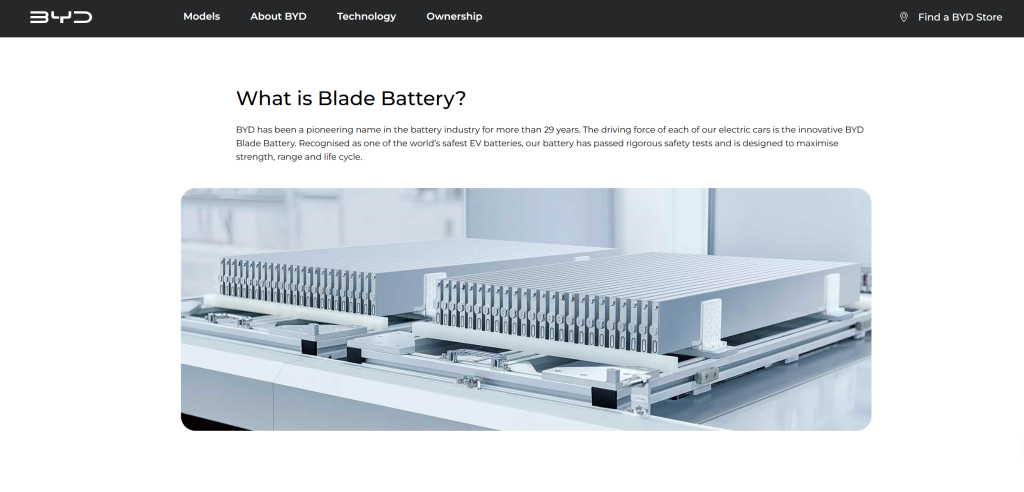
The plan includes pack assembly for passenger vehicles at Camaçari and a BRL 50 to 60 million expansion of the bus battery line. Cell production stays in China, so Brazil’s contribution is module and pack integration. Because Manaus output has so far gone to BYD’s own bus programme, other OEMs should treat BYD as a benchmark rather than an open supplier.
Advantage product: Blade battery for electric buses. BYD now fits its Brazilian-assembled bus chassis with LFP Blade packs, with published capacities of 425 to 499 kWh on the BC12 and 542 to 642 kWh on the BC22. Full recharges take roughly 1.5 to 2 hours with fast charging, and BYD has said Blade pack assembly in Manaus begins in 2026.
2. CATL

- Founded: 2011
- Location: Ningde, Fujian, China
- Core products: LFP and NMC cells, battery systems for passenger and commercial vehicles, energy storage, recycling
- Official website: https://www.catl.com/en/
- Category pages: Passenger vehicles | Commercial applications
CATL does not operate a battery plant in Brazil, but it shapes the market because its cells sit inside several Brazilian programs. Its best-known EV link is with Moura: since 2021, the two companies have supplied lithium battery systems for Volkswagen’s e-Delivery electric trucks, with packs assembled in Belo Jardim from CATL components and national parts. In 2025, CATL held talks with Brazil’s Ministry of Mines and Energy about local battery production.
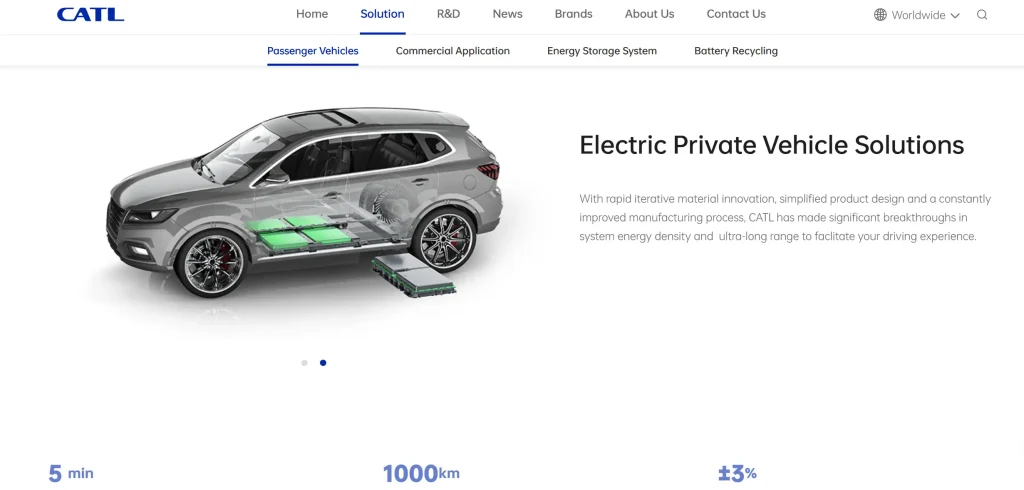
On August 25, 2026, CATL announced a partnership with Moura to bid in Brazil’s first energy storage capacity auction, and it states that it already holds a 45% share of the country’s energy storage market. Those storage wins matter to EV buyers because they build engineering, service and spare-parts capacity in Brazil. Procurement teams should read CATL as a cell and system partner, usually reached through an integrator, rather than as a finished Brazilian-built pack supplier. For programs that already specify CATL cells, the practical question is who performs final assembly, validation and warranty support in Brazil.
Advantage product: LFP cells and commercial-vehicle systems. CATL components supply the LFP battery systems that Moura assembles for Volkswagen’s 11-tonne and 14-tonne e-Delivery trucks. LFP was selected for its cycle life, energy density and ability to handle deep charge cycles.
3. Grupo Moura

- Founded: 1957
- Location: Belo Jardim, Pernambuco, Brazil
- Core products: Lead-acid and lithium batteries, lithium systems for electrified vehicles, 12V and 48V lithium batteries, battery energy storage systems
- Official website: https://www.moura.com.br
- Category page: Lithium batteries
Grupo Moura is Brazil’s best-known battery name and the clearest local route into lithium for commercial EVs. Founded in 1957, it describes itself as South America’s largest battery production center, making more than 11 million units a year, and it supplies lead-acid batteries to around six in ten Brazilian cars. Its lithium division was created in 2017, and its first major EV contract was Volkswagen’s e-Delivery truck, for which it assembles lithium systems in Belo Jardim using CATL cells and some national components before they move to Resende. In April 2025, Moura unveiled 12V and 48V lithium batteries for electrified vehicles at Automec, and it is a partner in a BRL 40.19 million SENAI Park project in Pernambuco to prototype a national low-voltage lithium battery. In 2026 it also teamed with CATL for the storage auction. Its challenge is competing in lithium against global cell makers, which still dominate the segment.
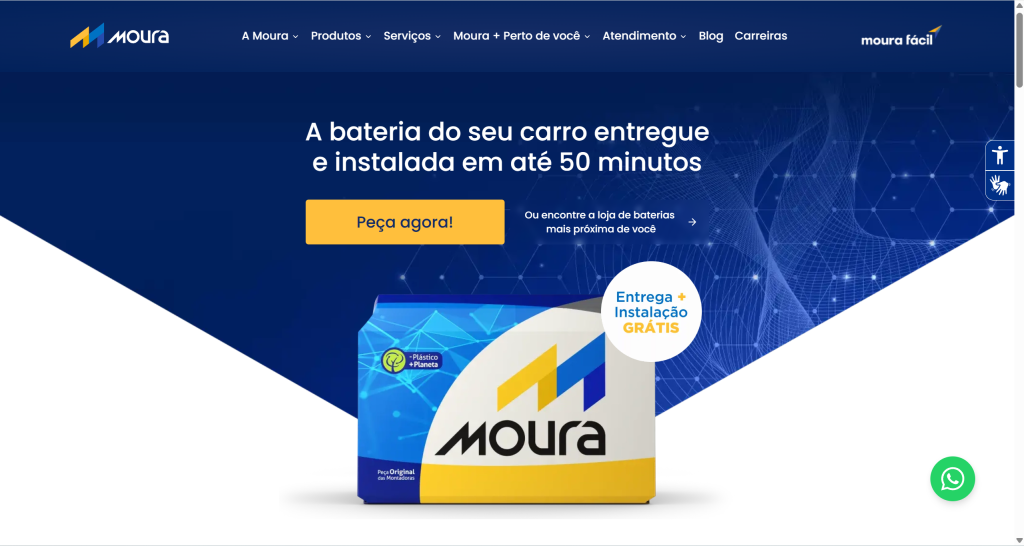
Advantage product: Lithium systems for electrified commercial vehicles. Moura’s lithium projects cover vehicles, trucks, buses and forklifts. The e-Delivery systems use LFP chemistry, while the 12V and 48V units target mild-hybrid platforms that Brazilian automakers are developing.
4. WEG

- Founded: 1961
- Location: Jaraguá do Sul, Santa Catarina, Brazil
- Core products: Electric motors, traction systems, hybrid generator systems, lithium battery packs, drivetrain components
- Official website: https://www.weg.net
- Category page: Electric mobility solutions
WEG is a Brazilian electrical engineering group with a long record in motors and drives, and it builds battery packs for buses, trucks and marine applications. In early 2023 it announced an investment of about BRL 100 million to expand its existing pack building and construct a new factory at its Jaraguá do Sul headquarters. The stated goal was more than 1 GWh of pack capacity a year, covering modules, lithium cells, electronic management, cooling and safety systems, with the new plant scheduled for the first half of 2024. WEG offers the pack as part of a wider electric drivetrain that also includes traction motors, inverters and hybrid generators, which allows vehicle makers to buy one integrated system. Eletra’s Mercedes-Benz-chassis e-Bus range, for example, uses WEG motors and batteries. Buyers should confirm current capacity directly, because most public information on the new plant dates from the 2023 announcement. That integrated approach can shorten supplier coordination, although it also means the pack is usually specified together with WEG’s drivetrain components.
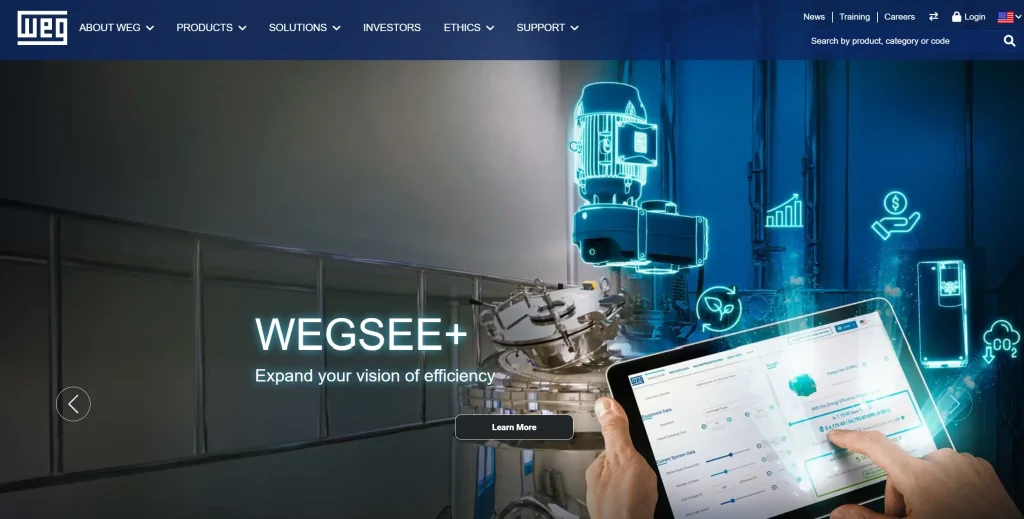
Advantage product: Lithium battery systems with integrated BMS. WEG lists low-voltage to high-voltage lithium packs with air or liquid cooling, an integrated battery management system and protection up to IP6K9K. They are designed to pair with its 24V to 800V traction systems.
5. BorgWarner

- Founded: 1928 (global company); Brazilian operations since 1975
- Location: Auburn Hills, Michigan, USA; battery systems plant in Piracicaba, São Paulo
- Core products: AKASystem battery systems for buses and commercial vehicles, BMS, junction boxes, turbochargers
- Official website: https://www.borgwarner.com
- Category page: Battery systems factory in Brazil
BorgWarner is a US-based automotive supplier that has operated in Brazil since 1975 and is one of the few multinationals assembling EV battery systems locally. After acquiring Akasol in 2021, it announced a battery systems factory in Piracicaba, São Paulo, which opened in 2023 with capacity for about 4,000 systems a year. The plant assembles AKASystem packs for commercial vehicles and supplies the NMC systems used on the Mercedes-Benz eO500U electric bus built in São Bernardo do Campo, where an average bus uses four packs. BorgWarner imports cells and part of each system, while localizing mechanical parts and cables so customers can qualify for BNDES Finame financing, and it plans to raise local content over time. An LFP system developed with FinDreams, BYD’s battery subsidiary, is expected in Brazil in the second half of 2026. The company has said it is negotiating with other manufacturers, so buyers should confirm availability for new programs.
Advantage product: AKASystem AKM CYC. This modular, scalable ultra-high-energy system uses cylindrical cells for intensive duty cycles. The Piracicaba version was described as operating at up to 665 V and storing 98 kWh, with a service life of up to 4,000 charge cycles.
6. LEAPENERGY

- Founded: 2015 (independent business since 2021)
- Location: China; four battery plants in Jinhua and one in Huzhou
- Core products: EV, REEV and PHEV battery packs (400V/800V), commercial vehicle packs, BDU, BMS, low-voltage batteries, energy storage systems
- Official website: https://leap.hiitio.com/
- Category pages: EV/REEV Battery Pack | BDU
LEAPENERGY began in 2015 as the in-house battery division of Leapmotor and became an independent business in 2021, opening its battery systems to OEMs and global customers. According to its company profile, it delivered more than 500,000 packs by 2024, including 292,200 packs in 2024 alone, and runs 18 automated lines with MES traceability and 100% inspection. The company designs and builds EV, REEV, PHEV and low-voltage packs alongside BDUs and BMS, supported by an in-house R&D team working to AUTOSAR and V-model processes. LEAPENERGY has no plant in Brazil, so it suits buyers who want a validated platform from an experienced exporter rather than local assembly: vehicle makers, bus and truck builders and integrators that can specify packs against their own platform requirements. For custom projects, the company states a sample lead time of 3 to 4 weeks, mass production in 6 to 8 weeks and a minimum order of five units, which is negotiable.
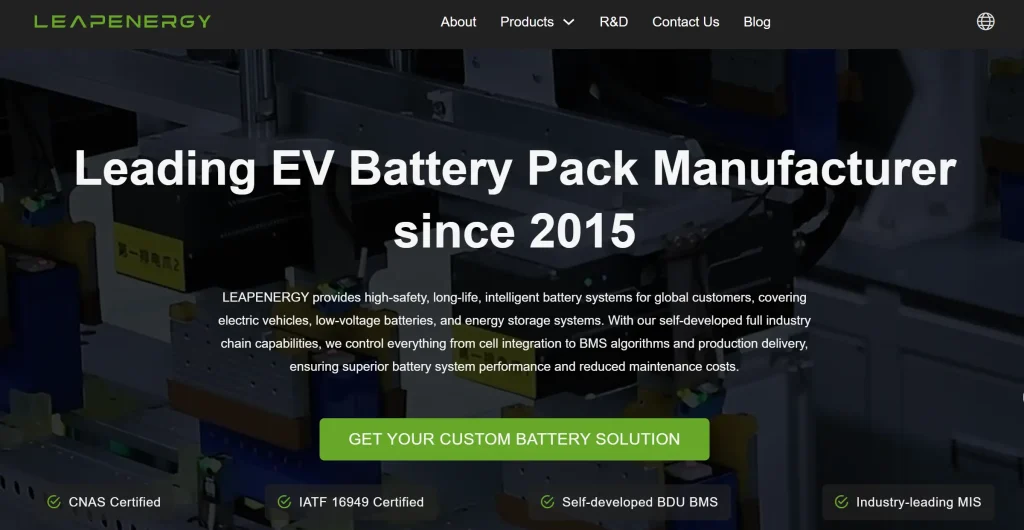
Advantage product: Gen3 EV/REEV battery pack (400V and 800V). The platform supports LFP and NCM cells, CTP and CTC structures, and 40 to 100 kWh of energy, with liquid cooling holding temperature differences to 2°C or less. Fast charging runs at 1.8C, 2.2C or 4C. The Gen3 CTC 2.0 design targets 10 to 15 minutes for 30% to 80% state of charge without thermal propagation. Packs are UN38.3 certified, with IEC 62660 and UL 2580 documentation available on request.
7. UCB Power

- Founded: 1973 (formerly Unicoba)
- Location: São Paulo, Brazil; plants in Manaus (AM) and Extrema (MG)
- Core products: Stationary lithium and lead-acid batteries, LFP batteries for electric two-wheelers (U-Move), energy storage systems
- Official website: https://www.ucbpower.com.br
- Category page: U-Move mobility batteries, listed on the company website
UCB Power, formerly Unicoba, is a São Paulo energy storage company founded in 1973 that operates plants in Manaus and Extrema. IDB Invest describes it as Brazil’s first lithium battery manufacturer, and the company says it has delivered more than 65,000 remote off-grid systems and manufactured over 120 million lithium batteries. Its move into mobility is recent: it produces 65 V, 45 A LFP batteries in Manaus for Riba electric motorcycles and scooters that use battery swapping in São Paulo, and its U-Move brand covers batteries for mobility. In January 2025, IDB Invest announced a US$35 million package, made up of a US$25 million loan to expand capacity in Amazonas and Minas Gerais and a US$10 million credit line for imports. Funding is aimed at storage systems, LFP batteries for hybrid electric vehicles and battery-as-a-service. On the evidence so far, UCB is best seen as a local option for two-wheelers and light hybrids rather than large EV packs.
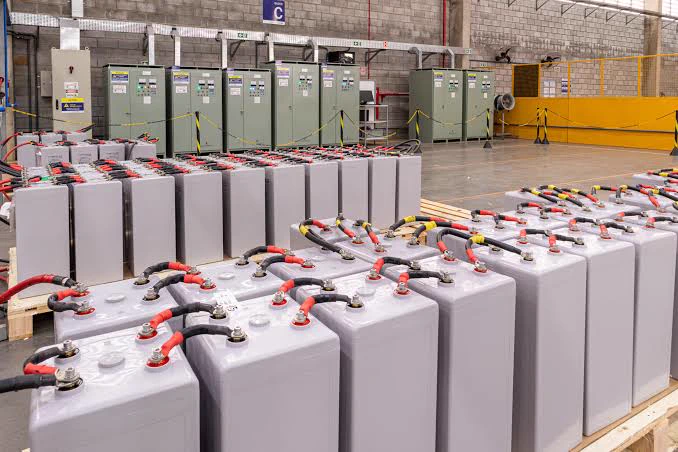
Advantage product: LFP packs for electric two-wheelers. The removable 65 V, 45 A LFP battery built in Manaus is designed for swapping. UCB’s wider LFP range, such as its 48 V, 100 Ah stationary battery with a five-year warranty, uses the same chemistry at larger scale.
8. Suspensys E-Mobility (Randoncorp)

- Founded: 1997 (Suspensys); E-Mobility unit opened April 2023
- Location: Caxias do Sul, Rio Grande do Sul, Brazil
- Core products: Battery assembly and production, e-Sys electric traction axle, custom battery management electronics
- Official website: https://www.suspensys.com.br
- Category page: E-Mobility unit, listed on the company website
Suspensys, part of Randoncorp and based in Caxias do Sul, was founded in 1997 as an axle and suspension specialist for commercial vehicles. On April 12, 2023, it opened Suspensys E-Mobility, a BRL 60 million unit inside its headquarters site, described at launch as a first in Latin America for electrified transport products and the company’s entry into battery assembly and production. The plant is set up to serve light and commercial vehicles, agricultural implements and other industrial uses, including custom electronics and battery-management projects for vehicle makers. A technical paper from the company describes it as the first Brazilian battery assembly plant with 100% Brazilian capital and know-how. Its first use case is the e-Sys electric traction axle for trailers, where module size and battery capacity are matched to the application. Suspensys is a sensible option for trailer, implement and light-commercial programs in southern Brazil, but public information on current output is limited, so buyers should ask for validated capacity.
Advantage product: e-Sys electrification solution. According to the company’s SAE paper, e-Sys combines a battery, an e-powertrain with motors, inverters and drive axle, and a vehicle control unit. The pack is therefore engineered as part of a complete system rather than sold alone.
9. Livoltek Power Brasil

- Founded: Parent Hexing Group founded in 1992; Brazilian factory opened July 2024
- Location: Manaus, Amazonas, Brazil (offices in São Paulo, Fortaleza, Curitiba, Pato Branco and Manaus)
- Core products: Hybrid inverters, EV chargers, energy storage systems, lithium battery modules
- Official website: https://www.livoltek.com.br
- Category page: EV chargers and storage, listed on the company website
Livoltek Power Brasil is the Brazilian arm of Livoltek, part of China’s Hexing Group. It opened its Manaus factory on July 24, 2024, initially for photovoltaic inverters, EV chargers and stringboxes, and the plant was also described as capable of making batteries. In late 2024, the Manaus Free Trade Zone authority SUFRAMA approved a project covering local production of EV and hybrid charging stations and battery modules based on lithium-ion cells, including an 88% reduction in import tax on key components such as the cells. A September 2025 visit reported about 80 workers on a single shift, and in February 2026 the company said it plans a containerized BESS factory in Brazil by 2027. Its chargers received Inmetro conformity certification in April 2026. Livoltek is therefore an emerging battery-module player: strong in charging and storage, with EV pack volumes yet to be shown publicly. Buyers evaluating Livoltek for traction applications should ask for module specifications, cell sourcing and test records, since the public record so far concerns charging and storage products.
Advantage product: Integrated charging and storage portfolio. Livoltek combines hybrid inverters, storage systems and EV chargers under one brand. Its chargers are being installed across GWM Brasil’s dealer network under an August 2025 partnership.
10. FullEnergy

- Founded: Not publicly stated (more than 12 years of electric-mobility experience)
- Location: Porto Feliz, São Paulo, Brazil
- Core products: LiFePO4 traction batteries for golf carts, aerial work platforms, cleaning machines, tow tractors and AGVs
- Official website: https://fullenergy.tech
- Category page: Factory and traction batteries
FullEnergy is a Brazilian manufacturer of LiFePO4 traction batteries with its own engineering team, laboratory and factory in Porto Feliz, São Paulo state. The company says it was founded by people with more than a decade of electric-vehicle experience in CAN programming and controllers, and that it moved its operation from Rio de Janeiro to the interior of São Paulo in 2023, where the plant, lab and team now sit. Its focus is energy for traction equipment, including golf carts, aerial work platforms, cleaning machines, tow tractors and AGVs, plus special projects. The factory receives LiFePO4 cells certified for UN3480 transport, assembles the packs and ships them across Brazil with serial numbers and test records. Public information points to industrial and light electric equipment rather than road-going passenger EVs, but FullEnergy shows how smaller Brazilian assemblers can serve niche segments with custom packs and local service. For fleet owners of this kind of equipment, local service and short communication lines can matter as much as headline specifications.
Advantage product: Traction LiFePO4 batteries. FullEnergy builds custom packs for golf carts, lifting platforms and AGVs, and records a serial number and test result for each unit before shipment.
Table 2. Ranking overview
| Rank | Company | Where it operates for Brazil’s EV packs | Best fit |
|---|---|---|---|
| 1 | BYD | Manaus, Campinas, Camaçari | Buses and its own passenger EVs |
| 2 | CATL | Cell and system supply via partners such as Moura | LFP cells for integrators |
| 3 | Grupo Moura | Belo Jardim (PE) | Commercial trucks, 12V and 48V hybrids |
| 4 | WEG | Jaraguá do Sul (SC) | Buses, trucks, marine |
| 5 | BorgWarner | Piracicaba (SP) | Urban buses with NMC or LFP systems |
| 6 | LEAPENERGY | Export from China | 400V/800V passenger and REEV platforms |
| 7 | UCB Power | Manaus (AM), Extrema (MG) | Two-wheelers, light hybrids |
| 8 | Suspensys E-Mobility | Caxias do Sul (RS) | Trailers, implements, light commercial |
| 9 | Livoltek Power Brasil | Manaus (AM) | Charging, storage, emerging modules |
| 10 | FullEnergy | Porto Feliz (SP) | Industrial and light traction equipment |
What Brazilian Buyers Should Compare
Brazil’s mix of imported cells, local-content incentives and import logistics changes how packs should be evaluated. Use the checklist below, and read our guides on shipping EV battery packs as Class 9 dangerous goods and end-of-line testing before issuing an RFQ. You can also compare other markets in our regional lists for Europe and Australia.
Table 3. Supplier evaluation checklist for Brazil
| Criterion | What to ask | Why it matters in Brazil |
|---|---|---|
| Local content and financing | Which parts, cables and electronics are assembled locally? | BorgWarner localized mechanical parts and cables to qualify for BNDES Finame financing; BYD targets 50% local content by early 2027. |
| Cell chemistry | LFP or NMC, and what cycle life is validated? | BorgWarner’s battery director has cited about 6,000 LFP cycles against 4,000 for NMC, with 10% to 80% charging in roughly 30 minutes. |
| Cell sourcing | Which cell supplier, and where are cells made? | Brazil has no operating lithium-ion cell gigafactory, so packs depend on imported cells. |
| Thermal and fast-charge data | Which C-rate and temperature uniformity are validated? | Bus and fleet operators depend on short turnaround; see our thermal management guide. |
| Certification | UN38.3, IEC 62660, UL 2580, ISO 26262? | Required for transport and OEM homologation of imported packs. |
| Service and traceability | Is there local support and per-unit test records? | Service networks and serial-level records reduce downtime. |
Power Your Brazilian EV Program With LEAPENERGY
Brazil’s EV market is growing faster than local pack capacity, and many programs will need an experienced partner for 400V and 800V platforms. LEAPENERGY designs and builds EV, REEV and PHEV battery packs with CTP and CTC structures, liquid cooling, an intelligent BMS and UN38.3-certified packs, and it supports custom design for structure, size, electrical specifications and interfaces. Share your target energy, voltage platform, cell chemistry, cooling approach and certification requirements, and our engineers will recommend a configuration for your vehicle. Explore the EV/REEV Battery Pack range, review our BDU solutions, or contact LEAPENERGY to request a quote. Our team can also discuss sample and mass-production timelines, minimum order quantities and the test documentation your homologation process requires, so that your engineers can compare options with real data before committing to a platform.
 English
 German
 Chinese
 Spanish