
Why End of Line Testing Matters for Battery Packs
End of line testing is crucial for ensuring battery pack quality and safety before they reach the market. This final step verifies that each pack meets strict standards for performance, reliability, and safety features. OEMs rely on comprehensive testing to identify defects, prevent failures, and confirm compliance with industry regulations like UL, IEC, and UN38.3. Without thorough end of line testing, defective batteries could pose safety risks, cause costly recalls, or fail to meet certification requirements. In short, robust testing at the end of production is essential for delivering safe, high-quality battery packs that meet OEM expectations and customer demands.
Key Expectations from OEMs for Battery Pack End of Line Testing
OEMs have clear expectations when it comes to battery pack end-of-line testing. They want reliable, comprehensive results that ensure safety, quality, and compliance. Accurate testing processes are crucial, as they directly impact product performance and market approval. OEMs look for testing systems that can detect defects early, verify safety features, and validate key parameters like voltage, capacity, and thermal management. Consistency and repeatability are non-negotiable, as they build trust in the production process. Additionally, OEMs expect testing to meet industry standards such as UL, IEC, and UN38.3, ensuring that battery packs are compliant for global markets. Ultimately, the goal is to minimize recalls, improve battery longevity, and guarantee safety for end-users. Reliable data collection and analysis are vital for continuous process improvement, making advanced testing equipment and protocols essential.
Critical Testing Parameters OEMs Require
OEMs have clear expectations for battery pack end of line testing, focusing on key parameters that ensure safety, performance, and longevity. These include voltage, capacity, cycle life, thermal management, and safety features.
Voltage is fundamental; testing ensures the pack maintains consistent voltage levels under various conditions, preventing overvoltage or undervoltage issues. Accurate voltage measurement is vital for safety and performance, aligning with battery testing standards.
Capacity testing verifies the energy storage capability of each pack, ensuring it meets specified ratings. This helps OEMs confirm that the battery can deliver the expected range and power, which is critical for customer satisfaction.
Cycle life testing simulates repeated charge and discharge cycles to predict long-term durability. This parameter is crucial for assessing how well the battery will perform over its lifespan and is often part of certification requirements.
Thermal management testing checks how effectively the battery controls heat during operation. Proper thermal regulation prevents overheating, which can lead to thermal runaway or reduced lifespan. Leak testing of cooling circuits is also part of this process, ensuring system integrity.
Safety features testing covers a broad range of checks, from insulation resistance and dielectric withstand to fault detection and emergency shutdown protocols. Ensuring these safety features function correctly is non-negotiable for market approval and customer trust.
Focusing on these parameters helps OEMs meet industry standards and deliver reliable, safe, and high-performing battery packs for global markets.
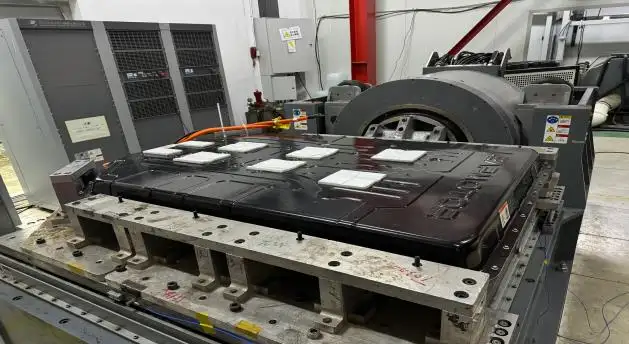
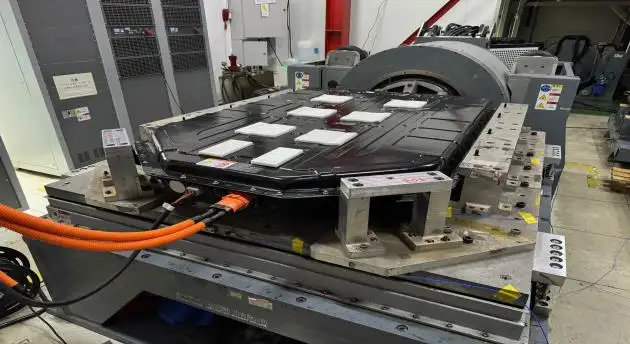
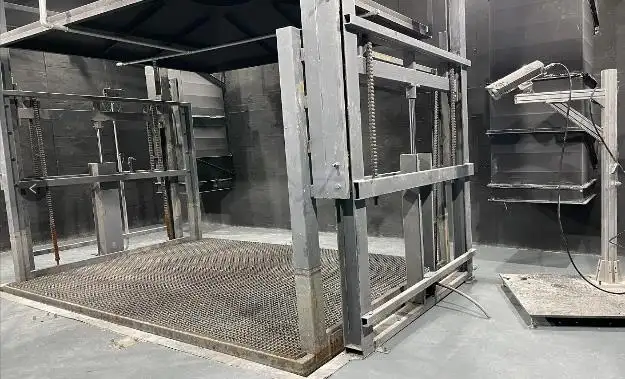
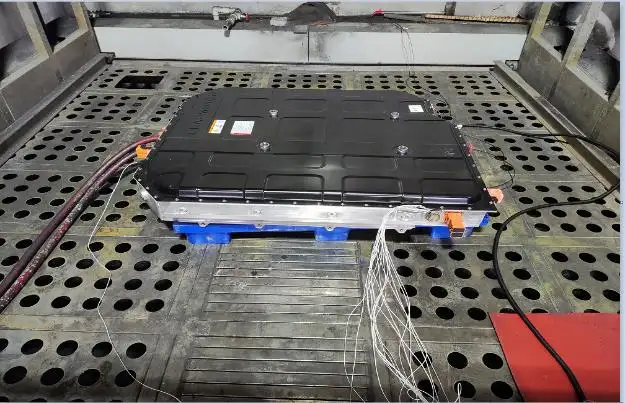
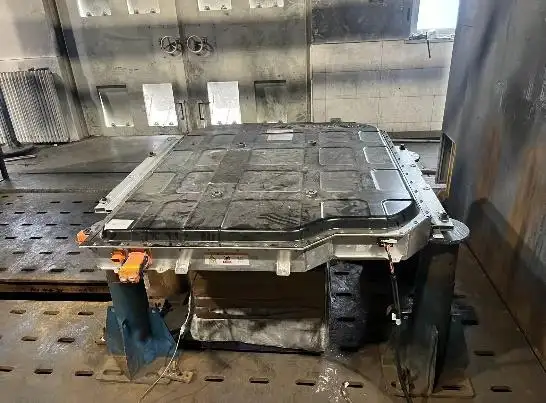

Automated Testing Systems and Equipment for Battery Pack End of Line Testing
I expect an end-of-line battery testing equipment setup to check safety, function, quality, and traceability in one controlled workflow. Manual checks alone can miss defects or create inconsistent results, especially in high-volume production.
Core Equipment OEMs Should Expect
A complete automated battery test system may include:
- High-voltage safety testers for insulation resistance and dielectric withstand checks
- Electrical measurement tools for open-circuit voltage, state-of-charge balance, and contact resistance
- Communication test systems for BMS and CAN or bus communication validation
- Sensor and firmware verification tools for checking calibration, software, and fault responses
- Leak-testing equipment for liquid cooling circuits
- Automated data systems that connect test results to the battery pack serial number and production records
The system should guide the pack through a repeatable sequence, apply the correct safety interlocks, and stop the process when a critical fault is detected. Fast automated or parallel testing can also support production takt time without reducing test coverage.
For high-volume manufacturing, I also look for direct integration with the MES and clear digital records. This supports battery pack traceability and quality control in high-volume production by linking each result to the tested pack, station, and process stage.
What Makes an Automated Test System Reliable?
OEM battery testing requirements are not limited to the hardware. A dependable setup should provide:
- Repeatable test procedures across shifts and production sites
- Clear pass/fail limits for each inspection
- Operator safety controls and emergency protocols
- Automatic result logging with full traceability
- Fast fault identification to reduce troubleshooting time
- Flexible test coverage for different battery pack designs
The goal is simple: every battery pack should leave the line with verified electrical safety, functional performance, communication checks, and a complete test record.
Test Procedures and Protocols
I expect a battery pack inspection process to follow a clear, repeatable workflow. Each step should be documented, traceable, and linked to the pack’s serial number.
Pre-Assembly Checks
Before final assembly, the test team should verify:
- Cell and module identification
- Voltage and state-of-charge balance
- Busbar and voltage-tap continuity
- Weld and interconnection quality
- Sensor placement and connection
- Battery management system hardware and firmware status
These checks help catch defects before they become difficult to isolate inside the finished pack.
End of Line Test Sequence
A typical end-of-line battery testing workflow includes:
- Confirm the pack identity and test recipe.
- Check low-voltage connections, sensors, and communication signals.
- Measure insulation resistance and perform dielectric withstand testing where required.
- Verify high-voltage output, polarity, and contactor operation.
- Validate BMS communication, fault responses, and safety interlocks.
- Check coolant circuit integrity and thermal sensor readings.
- Record voltage, current, resistance, and other required results.
- Assign a clear pass, fail, or review status.
Automated battery test systems can apply the same sequence to every unit, reducing operator variation and supporting consistent OEM battery testing requirements.
Post-Test Verification
After testing, I expect the system to store the results against the pack serial number and flag any failed measurement. Failed packs should be isolated for controlled review rather than returned to production without documented approval. This process supports battery pack defect detection, traceability, and more reliable battery testing compliance.
Data Collection and Analysis
OEMs rely heavily on test data to ensure battery pack quality and safety. Accurate data collection during end of line testing helps identify defects early, reducing rework and recalls. By analyzing test results—such as voltage, capacity, and thermal performance—OEMs can spot patterns indicating potential issues before products reach the market. This process also supports continuous improvement, as insights from testing data guide design tweaks and process adjustments. Implementing robust data analysis for batteries is crucial for meeting industry standards and achieving reliable battery safety certification. Leveraging digital tools and analytics enhances traceability and provides real-time feedback, enabling OEMs to maintain high quality and compliance throughout production.
Compliance and Certification Standards
For OEMs, battery testing compliance is part of product approval—not a final paperwork step. I expect an end of line battery testing process to support the evidence needed for applicable UL, IEC, and UN 38.3 requirements, while keeping every test result linked to the correct battery pack.
A reliable battery certification process should provide:
- Clear test records: Pack serial number, test sequence, results, limits, and pass/fail status.
- Safety verification: Evidence that required electrical, insulation, and functional checks were completed.
- Consistent procedures: Standardized workflows that reduce operator variation and false results.
- Traceable documentation: Records that support audits, customer reviews, and market approval activities.
- Compliance-ready data: Exportable results for quality teams, manufacturing systems, and certification reviews.
The exact requirements depend on the battery design, target market, and intended use. OEMs should define these requirements early and confirm that the test station can measure, store, and report the required data. This approach connects battery pack testing standards, battery safety testing, and production quality assurance in one controlled process. For a broader overview, review this guide to EV battery pack certification standards, including UN 38.3, IEC 62660, and ISO 26262.
Common Challenges in Battery Pack Testing
Battery pack testing can become a production bottleneck when results are inconsistent or difficult to trace. I focus on three common issues:
- False failures: Check test conditions, equipment setup, and calibration before rejecting a pack.
- Inconsistent results: Use clear, repeatable test procedures and apply the same acceptance criteria across production.
- Testing bottlenecks: Automate repetitive checks where practical and organise test sequences around the required takt time.
Strong data traceability also helps identify whether a failure comes from the battery pack, the test equipment, or the process itself. Reviewing common OEM EV battery pack mistakes can support a more reliable battery pack inspection process.
Best Practices for Reliable End of Line Testing
Reliable end of line battery testing depends on more than automated equipment. I focus on keeping the complete battery pack inspection process controlled, repeatable, and easy for operators to follow.
Calibrate and Verify Test Equipment
Calibration helps prevent false failures and inconsistent results. OEMs should expect a documented schedule for checking electrical safety, voltage, resistance, communication, and leak-testing equipment.
Key practices include:
- Use calibrated instruments for every critical measurement.
- Verify test fixtures and connection points before production runs.
- Check reference values at planned intervals.
- Record calibration results and corrective actions.
- Stop production when equipment shows abnormal readings.
Maintain Fixtures and Safety Systems
Worn probes, loose connections, damaged cables, and unstable fixtures can affect battery quality assurance. Regular maintenance keeps the test station dependable and reduces avoidable testing bottlenecks.
Maintenance should cover:
- Test probes, clamps, busbar contacts, and voltage tap connections
- High-voltage cables and insulation surfaces
- Cooling and leak-test connections
- Emergency stops, interlocks, and discharge functions
- Software, communication links, and data logging
A clean, secure connection is especially important when checking busbar and interconnection quality. Following proven EV battery pack busbar interconnect design practices can also support more consistent inspection results.
Train Operators on the Full Workflow
Staff training should cover the complete test sequence, not only how to start a machine. Operators need to understand safe pack handling, correct fixture loading, failure codes, and escalation procedures.
Effective training includes:
- Standard operating procedures for each test stage
- Clear instructions for pre-checks and post-test release
- Practical guidance on high-voltage safety
- Training for handling failed packs without bypassing controls
- Refresher sessions when equipment or software changes
Review Test Data Regularly
Testing data analysis for batteries should be used to identify trends, not just pass or fail individual packs. Reviewing recurring failures can reveal fixture wear, process variation, or assembly defects.
I recommend tracking:
- Failure rates by test type
- Repeated failures by station, shift, or batch
- Retest frequency
- Measurement drift
- Time spent on diagnosis and rework
These battery testing best practices help OEMs improve accuracy, protect battery safety, and maintain reliable production results.

Future Trends in Battery Pack Testing
Battery pack end of line testing is getting smarter and faster, thanks to new tech like AI, IoT, and real-time monitoring. OEMs are demanding more data-driven insights and instant feedback to catch issues early and keep quality high.
- AI-powered analytics spot defects and predict failures before they happen, cutting down on costly recalls and downtime.
- IoT-enabled test systems connect every battery pack to cloud platforms, so you can track performance, trace problems, and optimize processes from anywhere.
- Real-time monitoring means you see test results as they happen, helping you react fast and fine-tune production on the fly.
This shift towards automation and intelligent testing is transforming how OEMs handle battery safety testing, battery pack defect detection, and battery quality assurance. As standards evolve, staying on top of these trends is key for any OEM looking to stay competitive and compliant. For deeper insights into battery pack testing standards and advanced monitoring, check out this guide on insulation monitoring for battery packs.
FAQs about Battery Pack End of Line Testing
OEMs have clear expectations when it comes to testing battery packs at the end of production. The most critical tests include verifying voltage accuracy, capacity, cycle life, thermal management, and safety features. These tests ensure the battery meets safety standards and performs reliably in real-world conditions. To verify test accuracy, OEMs often require calibration protocols, validation against industry standards such as UL, IEC, or UN38.3, and thorough documentation of test results. Common testing mistakes to avoid include inconsistent testing procedures, inadequate calibration, and overlooking environmental factors that can affect results. Proper testing directly impacts battery safety and longevity by catching defects early and ensuring compliance with safety certifications. OEMs typically demand testing facilities to meet certification standards, such as battery safety certification, to guarantee quality and market acceptance. For a comprehensive approach, understanding and addressing these FAQs helps ensure testing processes align with OEM expectations and industry best practices.
 English
  German
  Chinese
  Spanish