
Insulation Monitoring Matters
High-voltage battery packs
For 400V and 800V battery pack architectures, insulation monitoring is a basic safety requirement, not an optional add-on. In real use, insulation can change after delivery because of moisture ingress, vibration, thermal stress, and wear. That is why buyers need continuous high-voltage isolation monitoring instead of relying only on one-time factory testing.
Ungrounded IT systems
In an ungrounded IT power system, the first ground fault may not stop operation right away, but it can quickly become a safety issue if it is not detected early. A good Insulation Monitoring Device (IMD) helps track high-voltage isolation resistance in real time, so buyers can reduce shock risk and protect the pack before a second fault turns into a larger problem.
Real-time beats hi-pot
Dielectric withstand testing (Hi-Pot) is useful as a factory check, but it is only a snapshot. Real-time insulation monitoring gives ongoing visibility during charging, driving, and storage, which matters more for modern packs built for fast charging, AI-powered BMS control, and long service life. For battery buyers, that means better early warning, stronger electric vehicle battery safety, and more reliable battery energy storage system safety.
Battery Safety Standards
I treat insulation monitoring as a buyer requirement, not an optional feature. For high-voltage battery isolation, these are the standards I check first.
| Standard | What it means for buyers |
|---|---|
| UN ECE R100 | Sets the baseline for vehicle battery safety checks, including isolation resistance expectations. |
| ISO 6469-3 | Covers electric vehicle safety, with insulation and high-voltage protection in focus. |
| IEC 61557-8 | The key reference for Insulation Monitoring Devices (IMD) in grounded and ungrounded IT power system use. |
| IEC 61557-9 | The reference for Insulation Fault Location System (IFLS) performance and fault finding. |
| UL 2580 | A major battery safety standard buyers use to evaluate pack safety. |
| ISO 26262 | The main functional safety standard for BMS and safety-related control logic. |
What I look for
- Clear compliance proof, not marketing claims
- IMD data that fits the pack architecture
- BDU integration for safe isolation after a fault
- Functional safety support for BMS-level decisions
- Test reports tied to real validation, not just lab language
For buyers comparing suppliers, I also check whether the pack program aligns with UL 2580 and ISO 26262 EV battery certifications, since those two standards are central to battery safety and functional safety.
Simple buyer rule
If a supplier cannot show how its insulation monitoring device (IMD), ground fault detection, and battery pack safety strategy map to these standards, I would treat that as a risk.
How Insulation Monitoring Works
In an ungrounded IT power system, I treat an Insulation Monitoring Device (IMD) as a live check on high-voltage isolation resistance. It helps catch first ground fault detection early, before the pack moves from a warning state to a safety problem.
Main measurement methods
- Passive bridge resistance measurement
This method watches the insulation balance in the system and looks for changes that point to leakage or a developing fault. - Active low-frequency signal injection
The IMD sends a small low-frequency signal into the system and reads the response to estimate insulation resistance more directly.
What affects stability
- Y-capacitance in cables, modules, and the pack can slow the response and make readings less stable.
- Higher capacitance can also make the IMD less responsive to fast changes, especially in 800V battery pack architecture and larger battery energy storage system safety setups.
Symmetrical ground faults
- When both sides drift toward ground in a similar way, the fault can be harder to spot with a simple alarm.
- That is why ground fault detection needs real-time logic, not just a one-time dielectric withstand testing (Hi-Pot) result.
What buyers should remember
- Passive detection is simple, but it may be less direct.
- Low-frequency signal injection gives better active monitoring in many high-voltage battery safety designs.
- Good insulation monitoring supports thermal runaway prevention, ISO 26262 functional safety, and safer Battery Disconnect Unit (BDU) integration in EV and BESS platforms.
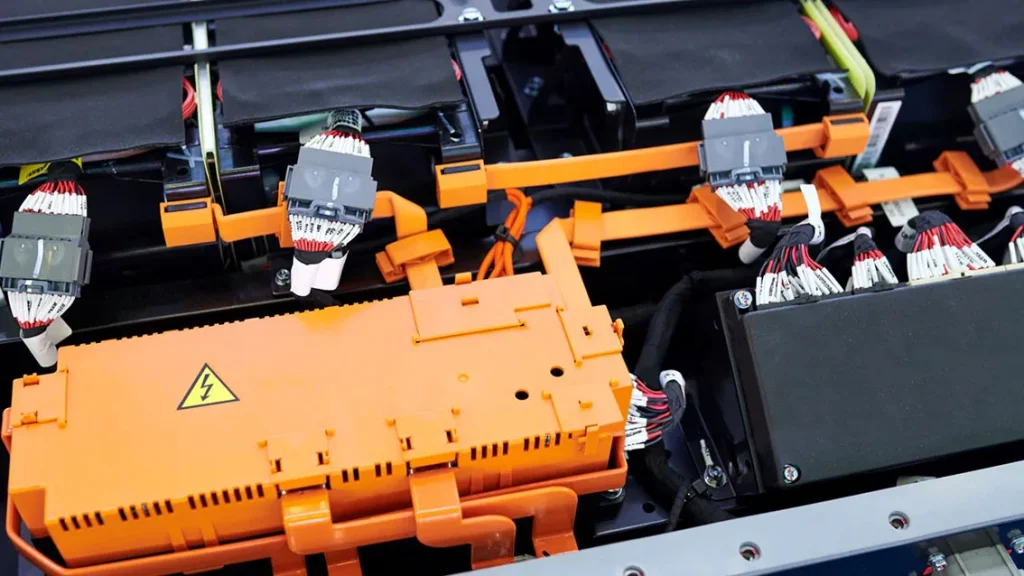
Insulation fault location in battery systems
Insulation Fault Location Systems (IFLS) are critical for identifying the exact module or branch where an insulation fault occurs in high-voltage battery packs. By injecting low-frequency signals and monitoring the system’s response, IFLS can detect even small changes in insulation resistance, pinpointing the faulted area quickly and accurately. This precise fault location helps prevent unnecessary system shutdowns and reduces downtime.
In large battery packs and BESS systems, fault location matters because a single insulation issue can affect the entire system’s safety and performance. Without accurate fault detection, operators risk thermal runaway, fire, or system failure. By knowing exactly where the fault is, maintenance can be targeted efficiently, minimizing disruption and avoiding costly full-system shutdowns.
Selective isolation is a key feature that allows the faulty module or branch to be disconnected without shutting down the whole system. This approach maintains system availability, enhances safety, and reduces operational costs. Advanced insulation fault location systems enable this level of precision, ensuring reliable operation even in complex, high-voltage environments.
Insulation resistance in high-voltage battery packs can drop due to several factors that compromise system safety and reliability. Moisture ingress and condensation are common causes, especially in humid environments, leading to increased leakage currents and reduced insulation effectiveness. Coolant leaks and liquid contamination can also degrade insulation barriers, creating potential fault paths. Over time, cable wear, busbar contamination, and seal degradation weaken insulation integrity, often accelerated by vibration and mechanical stress. Vibration, shock, and long-term mechanical stress from vehicle operation or storage conditions can cause micro-damage, reducing resistance. Additionally, thermal cycling, fast charging, and dielectric aging contribute to insulation breakdown, as repeated heating and cooling cycles weaken dielectric materials. Monitoring these factors with advanced insulation fault detection systems helps prevent faults and ensures safety in high-voltage systems. For more on how to improve durability, see designing sustainable EV battery packs.
How BMS and BDU Integration Improves Safety
I treat insulation monitoring as a control signal, not just a test result. When IMD data feeds into the BMS, I can set alarms, escalate pre-warning logic, and catch insulation drift before it becomes a pack-level fault.
What the integration does
- BMS + IMD: turns insulation readings into real-time warnings
- BDU contactors: isolate the pack when a fault crosses the safety threshold
- Layered protection: works across the cell, module, pack, and software levels
- AI-powered diagnostics: helps spot insulation problems early, before they turn into downtime
This matters because battery safety is never just one layer. In my view, the stronger setup is the one that combines high-voltage isolation, ground fault detection, and Battery Disconnect Unit (BDU) integration into one coordinated response. That is also where how BDU integrates with BMS to enhance EV battery safety becomes a practical design reference for buyers.
Buyer takeaway
A good safety architecture should not wait for a hard fault. It should use AI-powered BMS pre-warning, insulation data, and fast isolation logic to reduce risk, protect the pack, and support thermal runaway prevention.
What battery pack buyers should check before buying
When selecting a high-voltage battery pack, verifying certification proof and test reports is essential. Look for compliance with safety standards like UL 2580 and ISO 26262, which ensure the system meets rigorous safety and functional safety requirements. These certifications confirm the battery’s ability to operate reliably under various conditions.
Ingress protection and environmental ratings are critical for durability. A robust battery pack should have at least IP55 or IPX9K ratings, indicating resistance to dust, water, and high-pressure washdowns. This is especially important for EV and energy storage systems exposed to harsh environments.
Temperature range and vibration resistance are also key. A dependable battery must operate safely from -40°C to 55°C and withstand vibration testing equivalent to 400,000 km of travel. These specs ensure long-term performance, even in extreme conditions.
Production testing and end-of-line inspection guarantee quality consistency. Automated, AI-driven testing processes help catch defects early, reducing the risk of faulty units reaching the market. This directly impacts the total cost of ownership (TCO) and maintenance savings over the system’s lifespan.
Finally, consider how the battery pack’s certification and testing impact your service and operational costs. A system with proven durability and safety features minimizes downtime, lowers maintenance expenses, and enhances overall reliability. Ensuring these factors are in place helps protect your investment and ensures compliance with global safety standards.
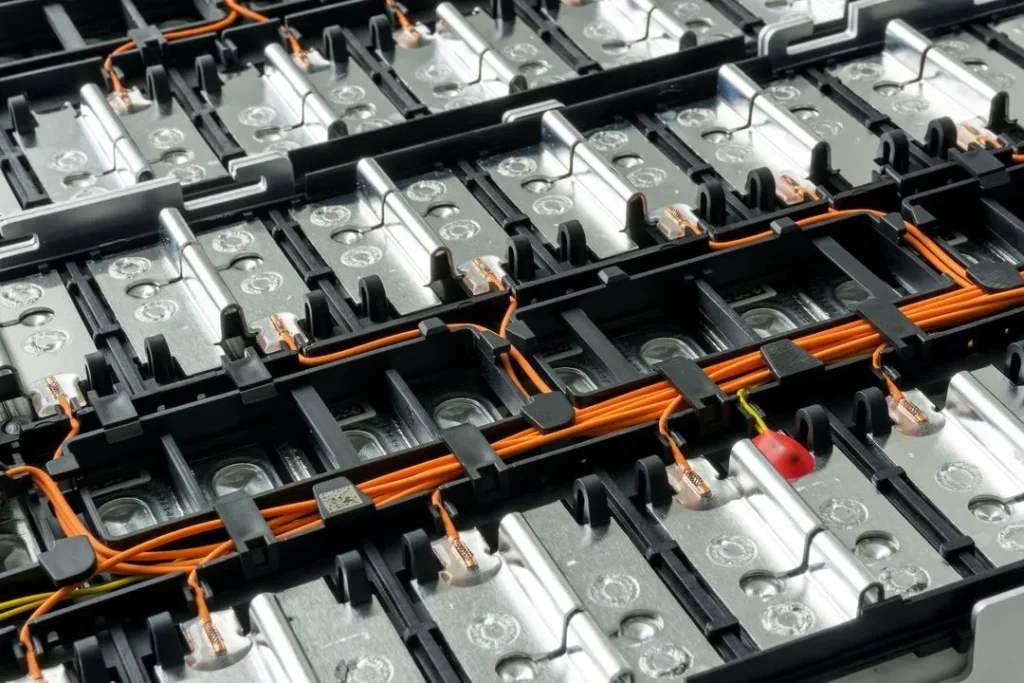
Battery Pack Buyers: How I Compare Insulation Monitoring Suppliers
When I compare insulation monitoring suppliers, I look for proof, not just claims. For high-voltage battery isolation, I want the IMD, BMS, and Battery Disconnect Unit (BDU) to work as one system across 400V and 800V platforms.
What I check first
- IMD accuracy and response speed
I want clear ground fault detection and stable alarms, especially in ungrounded IT power systems where the first ground fault matters. - 400V/800V and BESS compatibility
The solution should fit EV packs and battery energy storage system safety needs without forcing a redesign. - IT topology support
Good insulation monitoring should handle the realities of ungrounded systems, not just lab conditions. - Ruggedization
I look for protection against moisture ingress, vibration, temperature swings, and liquid-cooled pack stress. - Quality proof
I trust suppliers more when they can show UL 2580 battery safety standard, ISO 26262 functional safety, CNAS lab validation, automated production, and end-of-line inspection.
What stands out
For pack integration, I also keep a BDU supplier selection guide for EV and ESS in the review set, and I verify claims against global EV battery regulations and compliance updates.
My rule is simple: if the supplier cannot prove measurement quality, system fit, and manufacturing control, I keep looking.
FAQ: What Battery Pack Buyers Need to Know About Insulation Monitoring
I treat insulation monitoring as a core safety item, not a nice-to-have. In high-voltage battery packs and BESS systems, it helps buyers catch isolation problems early and keep the pack controlled under real operating stress.
Quick Answers
| FAQ | Short answer |
|---|---|
| What is an insulation monitoring device in a battery pack? | An Insulation Monitoring Device (IMD) checks high-voltage isolation resistance between live parts and the pack chassis or ground. It helps detect a first ground fault before it turns into a larger safety issue. |
| Why does an ungrounded battery system need insulation monitoring? | In an ungrounded IT power system, the first fault may not trip the system right away, so continuous monitoring is needed to spot leakage early and reduce shock risk. |
| How is insulation monitoring different from hi-pot testing? | Hi-pot testing is a factory withstand test. Insulation monitoring is continuous in-service checking, which is more useful for real-world operation, moisture, vibration, and aging. |
| What standards apply to insulation monitoring in EV and BESS packs? | Buyers should verify the pack against the applicable safety and functional safety requirements for the market, including UL 2580 and ISO 26262 where relevant. |
| What is the difference between passive detection and active signal injection? | Passive bridge resistance measurement reads the insulation balance directly. Active low-frequency signal injection sends a test signal into the system to improve detection in some operating conditions. |
| How does insulation fault location work in a battery system? | An Insulation Fault Location System (IFLS) helps identify which module or branch has the fault, so the full pack does not always need to be shut down. |
| What causes false insulation alarms in high-voltage packs? | Common causes include moisture ingress, coolant contamination, cable wear, busbar contamination, seal degradation, vibration, thermal cycling, and dielectric aging. |
| How can buyers reduce maintenance risk with better insulation monitoring? | I look for IMD data tied to BMS alarms, BDU integration, layered safety logic, and factory testing with strong quality control. That is where AI-powered BMS pre-warning and tighter lifecycle tracking help lower service risk. |
What I Check First
- IMD accuracy and response speed
- 400V and 800V system compatibility
- IT topology support for EV and BESS use
- BMS and Battery Disconnect Unit (BDU) integration
- Environmental robustness for moisture, vibration, and thermal stress
- Production testing and end-of-line inspection
- Functional safety support under UL 2580 and ISO 26262
- Service impact and total cost of ownership
Buyer Takeaway
For me, the best insulation monitoring setup is the one that does more than warn. It should work with the BMS, support fault location, and fit the pack’s real duty cycle, whether that is an 800V battery pack architecture or a stationary battery energy storage system. I also review related system checks like HVIL checks before ordering battery packs when I compare overall pack safety.
 English
  German
  Chinese
  Spanish