Australia’s EV market has changed gear. Battery-electric vehicles made up 23.3% of new vehicle sales in June 2026, according to FCAI data reported by Xinhua, and BYD alone sold 52,335 vehicles in the first half of the year. Yet local cell and pack production is still small: Australia has fewer than a dozen sub-gigawatt-hour assembly plants, so most packs reach the market through global suppliers and specialist local integrators. This guide ranks ten manufacturers by global scale, EV pack technology and visible presence in the Australian market.
1. CATL

- Founded: 2011
- Headquarters: Ningde, Fujian, China
- Core products: EV cells and packs (Shenxing fast-charging LFP, Qilin, Freevoy dual-power), Naxtra sodium-ion batteries, TECTRANS commercial-vehicle systems
- Website: www.catl.com
About CATL. Contemporary Amperex Technology Co. Limited (CATL) is the benchmark against which every other pack maker is measured. Spun out of Amperex Technology in 2011, it holds roughly 38% of the global EV battery market and works with more than 200 vehicle manufacturers worldwide. CATL does not build EV packs in Australia, but its footprint is growing: its local subsidiary, CATA, signed a cooperation framework with infrastructure provider Zinfra in 2026, and Australian charger maker eLumina has said it will source LFP cells from CATL. For importers, converters and fleet buyers, CATL chemistry is often the invisible common denominator in the vehicles and systems they specify.
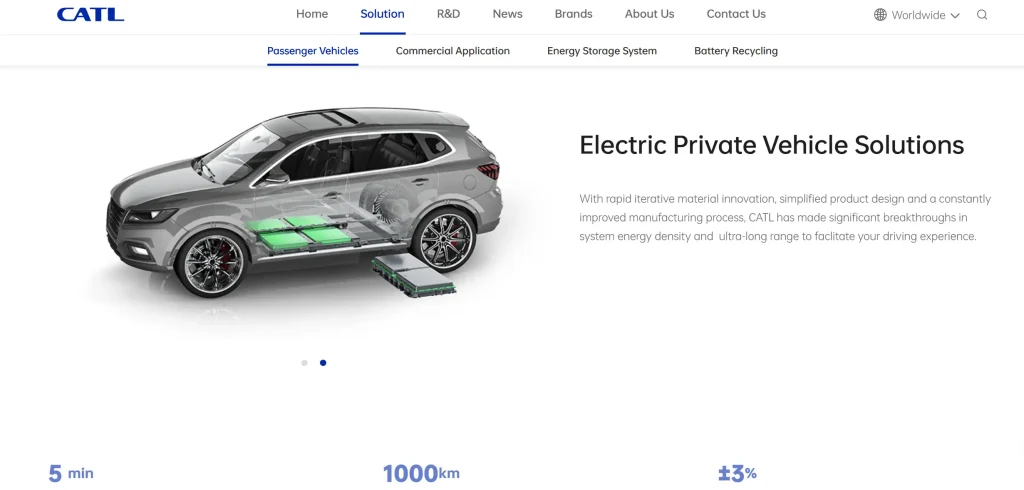
Standout product. Shenxing fast-charging LFP is CATL’s headline technology. The Shenxing Pro variant targets 758 km of WLTP range from an LFP chemistry and adds extended protection after thermal-runaway events.
2. BYD (FinDreams Battery)
- Founded: 1995
- Headquarters: Shenzhen, Guangdong, China
- Core products: Blade Battery LFP packs, xEV batteries, energy storage batteries, battery management systems and high-voltage components
- Website: www.byd.com | www.fdbatt.com
About BYD. BYD started life in 1995 as a battery maker and still builds nearly all of its own packs through its FinDreams Battery arm. In Australia the effect has been dramatic: BYD sold 52,335 vehicles in the first half of 2026, up 124% year on year, and ranked second only to Toyota in June sales. That volume makes it one of the largest consumers of EV battery packs in the country. Its vertically integrated model, covering cells, packs, battery management systems and high-voltage components, delivers cost and quality control that few rivals can match, and it has helped push lithium iron phosphate (LFP) into the mainstream for Australian buyers who once assumed nickel-based packs were the only premium option.
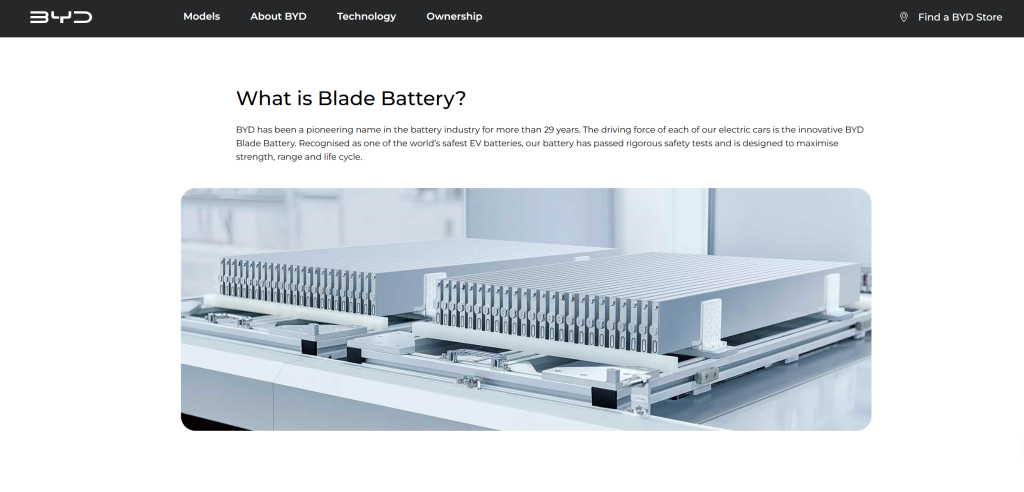
Standout product. The Blade Battery is an LFP design that needs neither nickel nor cobalt. Its long, thin cells are built into the pack structure to improve space efficiency, and BYD has since launched Blade Battery 2.0 on newer models.
3. LG Energy Solution

- Founded: 2020 (spun off from LG Chem; battery research since 1992)
- Headquarters: Seoul, South Korea (Australian office: Mulgrave, Victoria)
- Core products: Cylindrical and pouch cells, NCM and LFP chemistries, modules and packs for passenger and commercial EVs, energy storage
- Website: www.lgensol.com
About LG Energy Solution. LG Energy Solution (LGES) became an independent company in December 2020, but its battery know-how stretches back three decades, and it supplies major automakers such as GM, Stellantis and Hyundai from six global production sites. Australia matters to LGES as a materials source as much as a market: a six-year agreement with Australian Mines secures 71,000 tonnes of nickel and 7,000 tonnes of cobalt from the Sconi project in Queensland, enough, LGES says, to power 1.3 million EVs. The company also maintains a sales and support office in Victoria. For buyers who value traceable supply chains and proven automotive-grade quality, LGES remains a safe, well-documented choice.
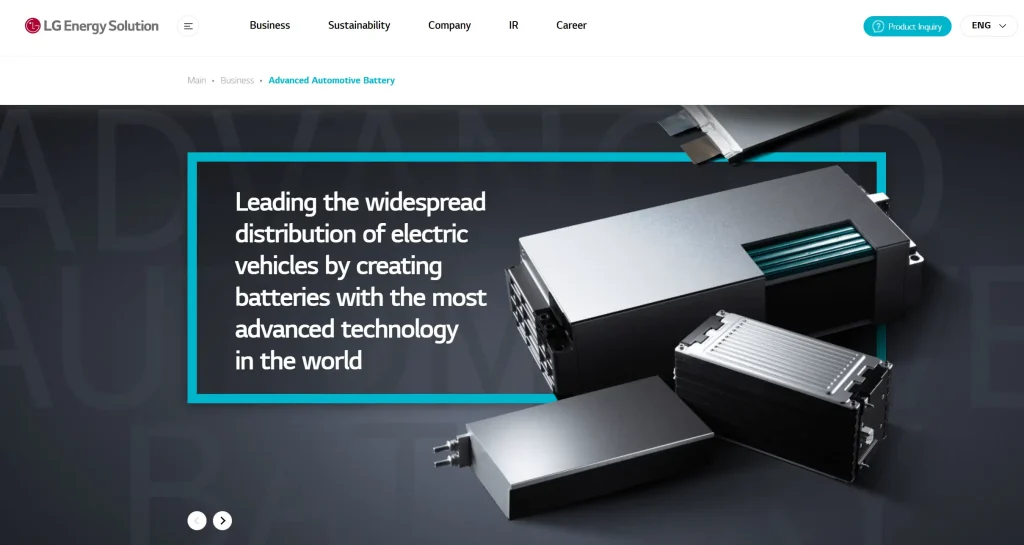
Standout product. LGES offers both NCM and LFP chemistries in cylindrical and pouch formats, plus a dedicated Commercial EV line, so pack builders can match energy density, cost and form factor to the vehicle.
4. Tesla
- Founded: 2003
- Headquarters: Austin, Texas, USA (Australian operations based in Sydney and Melbourne)
- Core products: In-house EV battery packs for Model 3, Model Y and Model Y L, Powerwall home batteries, Megapack utility storage
- Website: www.tesla.com/en_au
About Tesla. Tesla designs and builds its own battery packs rather than buying finished systems, which makes it one of the most influential pack engineers in the Australian market. In 2022 it held about 70% of local EV sales; by 2026 that share has fallen to roughly 29% as BYD and others have arrived, yet Tesla remains the reference point for software-defined vehicles, over-the-air updates and charging integration. Its Australian range uses both lithium iron phosphate and nickel-based chemistries, and the six-seat Model Y L was approved for local sale in early 2026. Beyond cars, Tesla’s Powerwall and Megapack products give households and utilities a second link to its battery expertise. For pack designers, the company shows how structural integration and thermal management can lift range without adding cost.
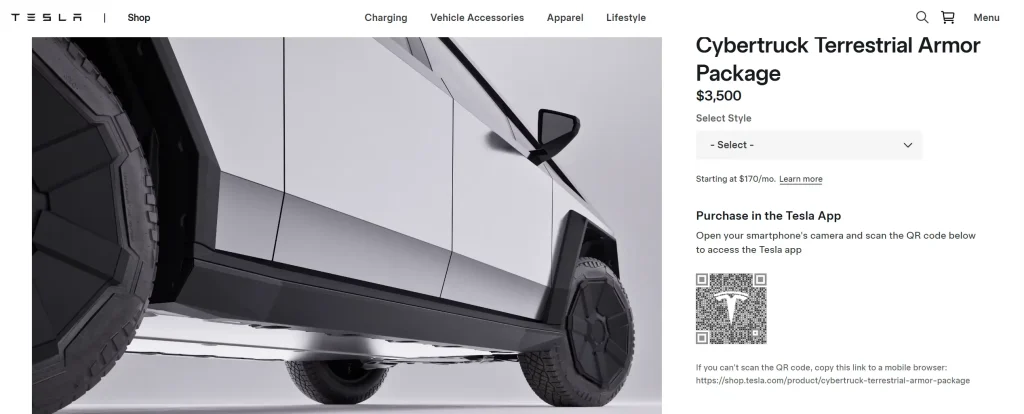
Standout product. The Model Y pack pairs a structural, cell-to-pack-style layout with active liquid thermal management and fast-charging support through the Supercharger network.
5. LEAPENERGY

- Founded: 2015
- Headquarters: Zhejiang, China
- Core products: EV/REEV/PHEV battery packs, commercial and logistics vehicle batteries, BDU, BMS, lithium modules, low-voltage and 12V batteries, residential energy storage
- Website: leap.hiitio.com
- Product category: EV/REEV Battery Pack
About LEAPENERGY. LEAPENERGY began in 2015 as the battery division of Leapmotor and became an independent battery-system specialist in 2021. Since April 2025, HIITIO has served as its authorised distributor, bringing its EV, PHEV and energy storage solutions to overseas B2B customers. What sets the company apart is control over the full chain: cell integration, in-house BMS algorithms, self-developed battery disconnect units (BDU) and automated production, all supported by a CNAS-accredited laboratory and IATF 16949 certification. By its own figures, LEAPENERGY runs 18 automated lines with 100% AI inspection and is scaling capacity from 420,000 packs in 2024 toward 950,000. Flexible LFP and NCM cell sourcing through partners such as CATL and CALB lets Australian OEMs, converters and fleet integrators specify packs around their own platforms.
Standout product. The Gen3 CTC 2.0 pack scales to 100 kWh and supports both 400V and 800V platforms. LEAPENERGY targets a 10-15 minute charge from 30% to 80% SOC and uses liquid cooling that holds cell temperature difference to about 2°C. It also reports dual UL 2580 and ISO 26262 certification and non-propagating thermal events, important for safety-conscious Australian buyers.
6. Janus Electric
- Founded: 2020
- Headquarters: Fountaindale, New South Wales (ASX: JNS)
- Core products: Diesel-to-electric conversion kits, swappable battery packs, Charge & Change stations, fleet software
- Website: januselectric.com
About Janus Electric. Janus Electric is an Australian heavy-vehicle electrification company that replaces the diesel engine in an existing Class 6-8 truck with an electric drivetrain and a swappable battery system. Listed on the ASX through a reverse takeover in 2025, it builds its conversion kits and battery packs at a production and assembly facility in New South Wales. The company reports 25 converted trucks, more than 3,500 battery swaps and about 1.13 GWh of energy used across more than 600,000 kilometres, supported by ten Charge & Change stations. Janus is not a truck maker. It is a pack-and-platform specialist that sells through dealers and fleet owners, and it increasingly offers battery-as-a-service so operators avoid battery-ageing risk.
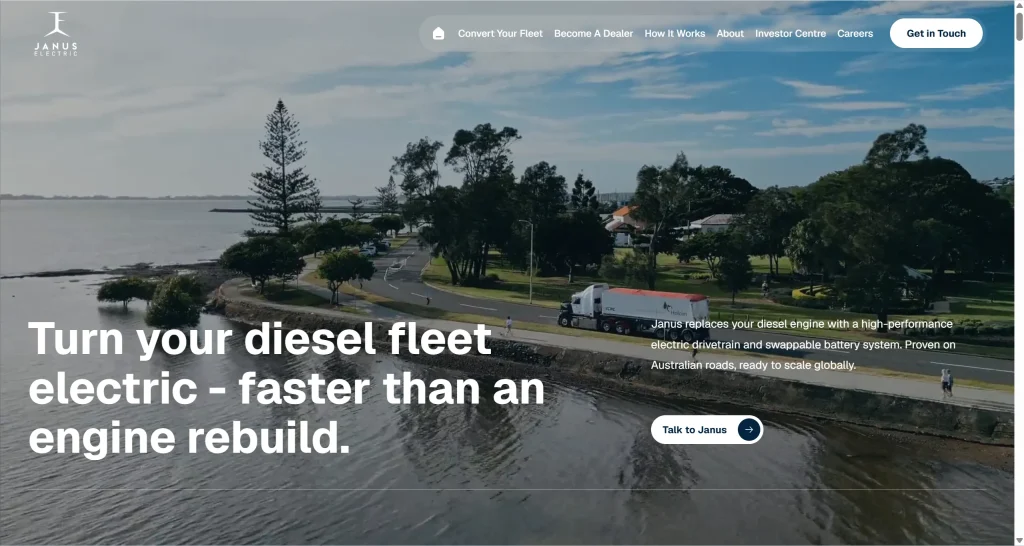
Standout product. The swappable battery pack, with a full swap taking about four minutes, is Janus’s defining product. Trucks stay in service while depleted packs recharge on slow, grid-friendly power.
7. PowerPlus Energy

- Founded: 2017
- Headquarters: Scoresby, Victoria
- Core products: Australian-made LFP rack batteries, battery cabinets, residential and commercial BESS
- Website: www.powerplus-energy.com.au
About PowerPlus Energy. PowerPlus Energy is a Melbourne manufacturer of lithium iron phosphate storage batteries, founded in 2017 and majority-owned by ASX-listed PPK Group since 2023. It designs, engineers and manufactures its systems locally, with UL certification, ISO 9001 and the Australian Made and Owned mark behind them. In 2026 the federal government granted it $2.3 million toward a $6.7 million factory upgrade intended to automate production and lift annual output from around 50 MWh. Its range is primarily stationary rather than automotive, but the same LFP rack technology supports depot charging, off-grid sites and mobile power trailers, including units supplied for emergency response. For fleets electrifying depots, that makes PowerPlus a relevant and locally supported partner.
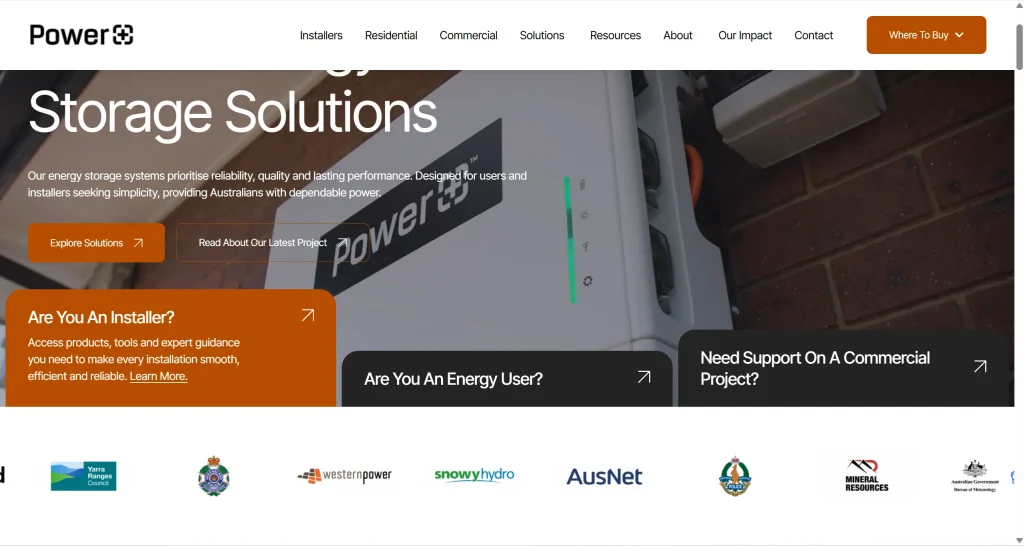
Standout product. The Eco4847P and LiFe4851 rack batteries, paired with Slimline and T Rack cabinets, are the workhorses, while the Whispr series offers all-in-one storage for homes.
8. Li-S Energy
- Founded: 2019
- Headquarters: Brisbane, Queensland (production in Geelong, Victoria; ASX: LIS)
- Core products: Lithium-sulfur and lithium-metal cells and battery packs
- Website: www.lis.energy
About Li-S Energy. Li-S Energy is an ASX-listed developer commercialising lithium-sulfur and lithium-metal cells based on Deakin University research. Listed in 2021 and headquartered in Brisbane, it runs a pilot pouch-cell line in Geelong inside what it describes as Australia’s largest battery dry room. In February 2026 it won $7.86 million from ARENA to plan a giga-scale cell plant, and in August 2026 it shipped its first cells to the US Army’s DEVCOM. Drones and defence lead the commercial roadmap, but electric vehicles remain a stated target: the company previously agreed to develop cells for Janus Electric’s swappable truck packs, and it continues to work on pack integration, battery management systems and regulatory approvals.
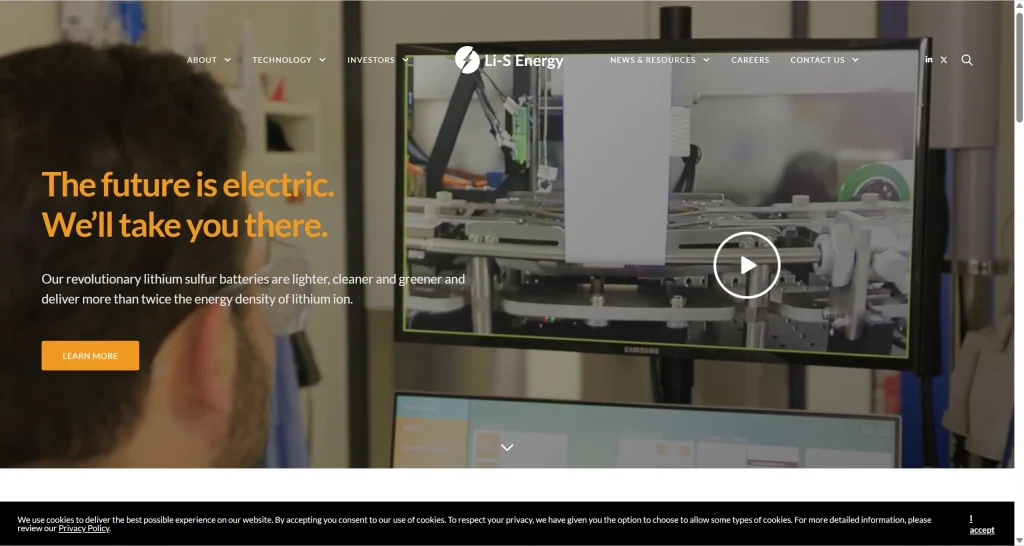
Standout product. The 20-layer semi-solid-state lithium-sulfur cell has reached 498 Wh/kg on first discharge in a 10 Ah format, more than double typical lithium-ion energy density.
9. eLumina

- Founded: 2022
- Headquarters: Yatala (Gold Coast), Queensland
- Core products: Battery-integrated EV chargers (D1, D3, DS400), D2/D2+ fast chargers, LFP battery energy storage (L233C)
- Website: eluminaglobal.com
About eLumina. Founded in 2022, eLumina opened a $20 million manufacturing and development centre in Yatala in October 2024, billed as the first Australian factory able to build both community lithium batteries and EV chargers. The 2,500 sqm site includes a dry room for cell research and was designed for about 300 batteries and chargers a year, with a larger plant planned. Its differentiator is pairing LFP storage with DC fast charging, so chargers can operate in regional and remote locations where grid supply is weak. NRMA has selected its D1 chargers for sites such as Mittagong, and its D2 units have replaced Tritium chargers elsewhere. It is not an EV pack maker in the strict sense, but its battery systems are central to Australia’s charging network.
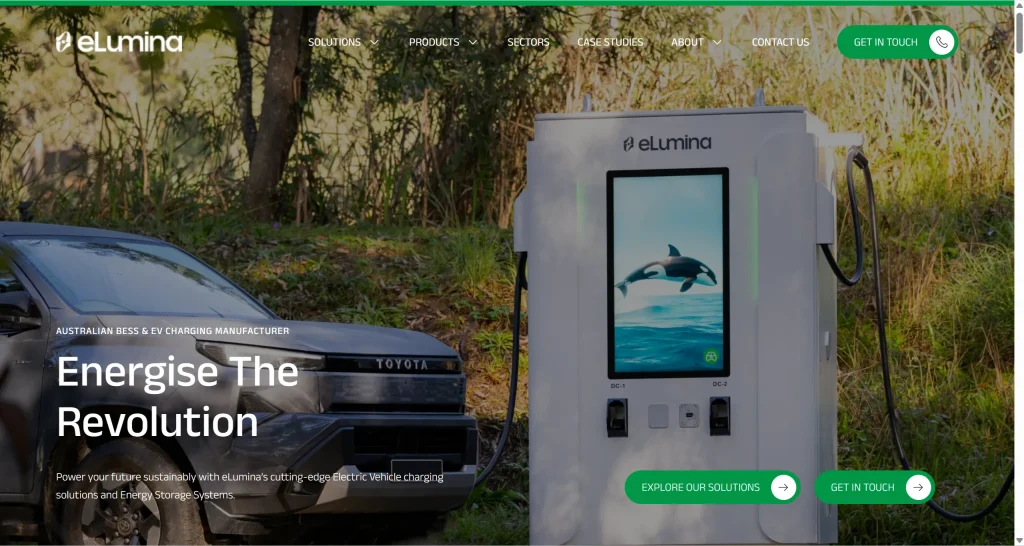
Standout product. The D1 battery-integrated charger combines roughly 190 kWh of integrated LFP storage with a 204 kW output that can draw as little as 40 kW from the grid.
10. Zenaji

- Founded: 2017
- Headquarters: Mentone, Victoria
- Core products: Lithium titanate (LTO) batteries: Aeon (residential), Eternity (commercial and utility)
- Website: zenaji.com
About Zenaji. Zenaji began in 2017 as a team of engineers and physicists building lithium titanate oxide (LTO) batteries, a chemistry that trades energy density for exceptional cycle life and temperature tolerance. Its Aeon module is rated for around 22,000 cycles, carries a 20-year warranty, operates from -40°C to 60°C and allows 100% depth of discharge. The company has also introduced a global licensing model so overseas partners can manufacture and rebrand its LTO systems. Zenaji is a stationary-storage specialist rather than an EV pack maker, but LTO is favoured wherever packs face rapid, repeated cycling, which is why its Eternity range is worth watching for fast-charging hubs and heavy-duty electric transport pilots.
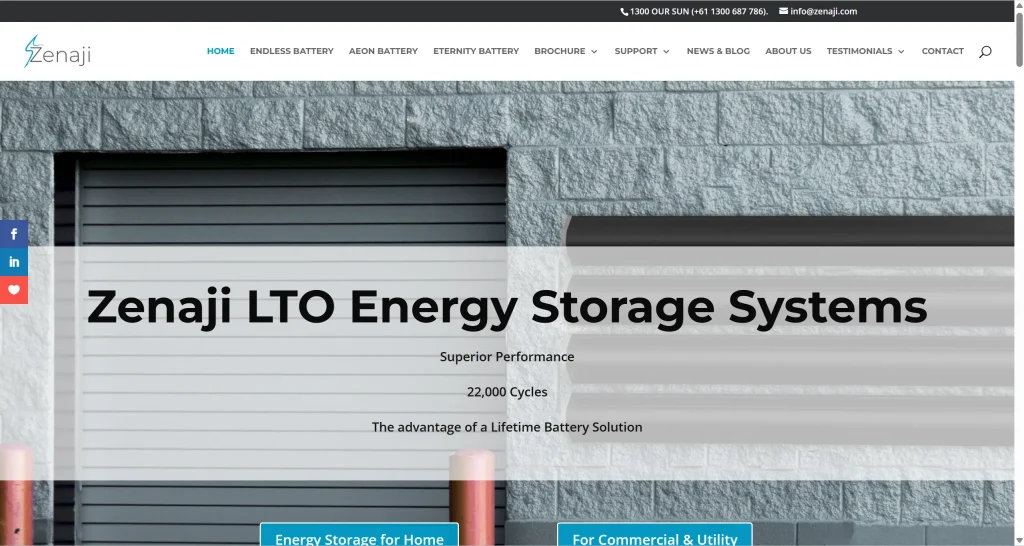
Standout product. The Eternity system extends Aeon’s LTO technology to commercial and utility sites that value longevity and safety over upfront cost.
Power Your Next EV Project with LEAPENERGY
Whether you are converting a diesel fleet, launching a new vehicle platform or specifying packs for Australian logistics and passenger applications, LEAPENERGY can deliver a battery pack designed around your requirements. Our EV/REEV/PHEV battery packs combine 400V and 800V architectures, liquid cooling and an AI-powered BMS with automotive-grade manufacturing, in capacities up to 100 kWh and backed by UL 2580 and ISO 26262 certification. We also supply BDUs and commercial-vehicle batteries, and our engineers support integration from first sample to series production. With 18 automated lines, an in-house CNAS laboratory and flexible LFP or NCM cell options, we can adapt a proven platform to your vehicle, climate and compliance needs, whether you require a single prototype batch or volume supply for the Australian market. Learn more about our R&D capabilities, read the LEAPENERGY blog, or contact our team for a customised quotation and technical consultation today.
 English
 German
 Chinese
 Spanish