
An EV battery pack is only as strong as its weakest cell. In a series string, the same current flows through every cell, so the cell with the lowest capacity or the highest resistance reaches its voltage limit first and sets the limit for the entire pack. That is why OEMs and pack buyers increasingly treat cell voltage consistency as a core quality indicator rather than a lab detail.
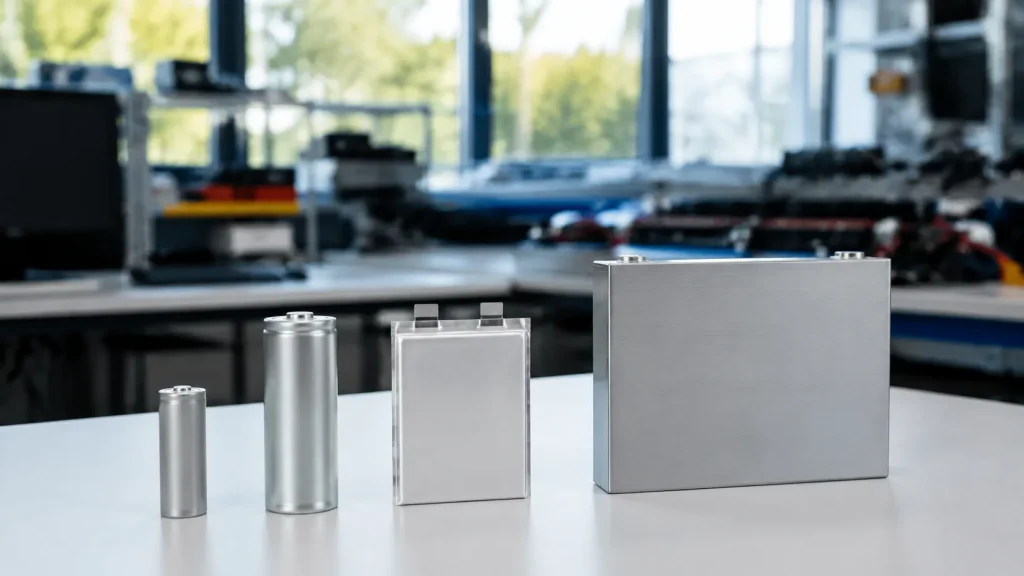
This guide explains what voltage consistency really measures, how inconsistency erodes range, lifespan, and safety, and what to ask your battery pack supplier before you finalize a specification.
What Is Cell Voltage Consistency?
Cell voltage consistency describes how closely the cells in a pack track each other in voltage, at rest, during charge and discharge, and across the pack’s service life. Voltage is the visible symptom. Underneath it sit several cell-level properties:
- Capacity: the usable amp-hours of each cell
- Internal resistance (DCIR): drives voltage sag under load and heat generation
- State of charge (SOC): where each cell sits within its operating window
- Temperature: warmer cells age faster and behave differently under load
- Self-discharge rate: small differences compound during storage and idle time
A widening voltage spread is usually the first measurable sign that cells are drifting apart. Catching it early is far cheaper than diagnosing a pack that has already lost range.
Why Voltage Inconsistency Hurts Pack Quality
Inconsistency rarely causes a single dramatic failure. It works quietly, reducing usable energy and accelerating aging until the pack no longer meets its warranty targets. The table below summarizes where the damage shows up.
Table 1: How cell inconsistency affects pack quality
| Quality dimension | What happens when cells drift apart | Typical consequence |
|---|---|---|
| Usable capacity | The weakest cell hits its voltage cutoff first | Less usable energy than the nameplate rating |
| Cycle life | Cells under higher stress age faster, widening the gap | Earlier end of life for the whole pack |
| Fast charging | The highest-voltage cell reaches the upper limit first | Earlier current taper and longer charge times |
| Thermal safety | Higher-resistance cells generate more heat | Local hot spots and higher abuse risk |
| SOC and range estimation | Pack-level estimates are distorted by outlier cells | Range anomalies and driver complaints |
| After-sales cost | One outlier cell can trigger a pack-level fault | Module replacement and warranty claims |
The impact is measurable. A Chalmers University study of real-world EV battery data found that cell-to-cell inconsistency reduced usable pack-level state of health by 6.2% and 7.5% in the two fleets analyzed, and shortened pack lifetime by 17.7% and 22.8% relative to the average lifetime of the individual cells. Similarly, NREL’s battery lifetime research reports that a teardown of an aged automotive pack showed roughly ±5.5% variation in cell capacity at end of life, which is why uniform temperature and balancing strategy matter so much.
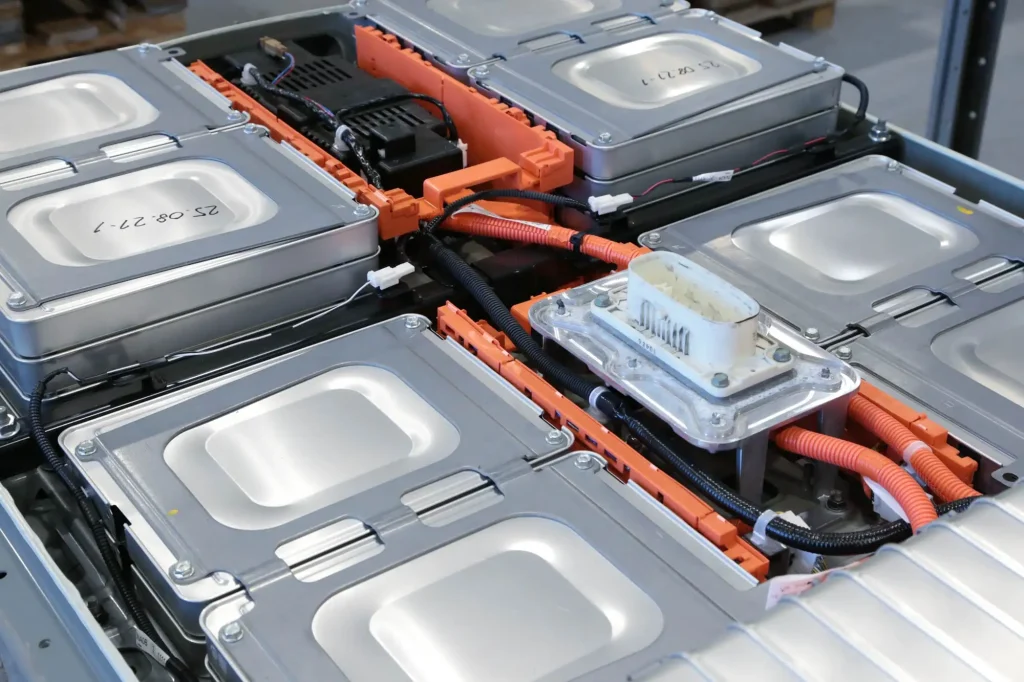
Where Inconsistency Comes From
Understanding the source of drift makes it easier to design against it. The most common contributors are:
- Manufacturing tolerance: even cells from the same line differ slightly in capacity, resistance, and self-discharge.
- Thermal gradients: cells near the coolant inlet run cooler than cells at the far end of the pack, so they age at different speeds.
- Interconnect resistance: weld quality and busbar design change the effective resistance seen by each cell.
- Uneven aging: small early differences grow over time because stressed cells degrade faster.
- Storage and handling: cells with higher self-discharge drift in SOC while a pack sits idle.
As we explain in our guide on why identical cells still need BMS supervision, matching cells at the factory is only the starting point.
How to Control Voltage Consistency: A Four-Layer Approach
No single feature solves inconsistency. High-quality packs combine four layers of control.
1. Cell Screening and Grading
Consistency starts before assembly. Cells are grouped by measured capacity, DCIR, open-circuit voltage, and self-discharge so each module starts as uniform as possible. Cell-level performance baselines, including capacity, power, storage life, and cycle life, are typically defined with test methods such as those in IEC 62660-1, which covers performance and life testing of lithium-ion cells for electric vehicle propulsion.
2. Thermal Design
Temperature is the most controllable cause of aging divergence. A liquid-cooled pack with a tight cell-to-cell temperature difference keeps aging rates closer together. For a deeper look, see our overview of EV battery thermal management systems.
3. BMS Monitoring and Balancing
The battery management system measures every cell, estimates SOC and SOH, and corrects SOC drift through balancing. Key considerations include:
- Passive balancing bleeds excess charge from higher cells as heat. It is simple and cost-effective for modest balancing demand.
- Active balancing moves energy between cells. It is more efficient but adds cost and complexity, and it suits large or fast-charging packs. Our article on choosing the right cell balancing strategy compares both approaches.
- Chemistry matters. LFP cells have a very flat voltage curve across much of the SOC range, so voltage alone is a weak SOC indicator and algorithm quality becomes critical. See why SOC accuracy matters to pack buyers.
Remember that balancing corrects SOC imbalance. It cannot fix cells that differ in capacity or resistance, which is why layers 1 and 2 matter just as much.
4. End-of-Line Testing and Traceability
Final testing catches outliers before they ship. Look for serial-number-linked records of voltage, insulation, BMS communication, and cooling circuit integrity. Read more in what OEMs should expect from end-of-line testing and our piece on battery pack traceability and quality control.
What to Ask Your Battery Pack Supplier
Specification sheets rarely show consistency directly. These questions help you evaluate it.
Table 2: Supplier evaluation checklist for cell consistency
| Topic | Why it matters | What to request |
|---|---|---|
| Cell grading criteria | Sets the starting consistency | Matching parameters (capacity, DCIR, OCV, self-discharge) and the grading method |
| Voltage sampling | Detects drift early | Number of monitored channels, measurement accuracy, and sampling rate |
| Balancing strategy | Corrects SOC drift | Passive or active, balancing current, and trigger conditions |
| Thermal uniformity | Limits aging divergence | Cell-to-cell temperature difference under fast charging |
| SOC and SOH accuracy | Drives range and warranty decisions | Validation data across temperature and aging |
| EOL testing and traceability | Stops outliers from shipping | Test items, pass/fail limits, and serial-number-linked records |
Design Features That Support Consistency in Practice
Consistency is a system outcome, so it helps to see how the layers combine in a real product. LEAPENERGY’s third-generation EV/REEV battery pack shows how:
- Standardized cell formats: three prismatic cell widths (148, 208, and 300 mm) cover multiple vehicle platforms, with cells sourced from CATL, CALB, Gotion, ZENERGY, and EVE.
- Liquid cooling: the thermal management system targets a temperature difference of ≤2℃ across the pack.
- Integrated BMU and BDU: the BDU integrates the battery management unit, which monitors cell voltage, temperature, and current and supports both active and passive balancing.
- AI-based BMS: SOC accuracy below 3% and fault pre-warning of more than 30 days, supported by the validation and algorithm work described on our R&D page.
- Layered safety: 40+ abuse tests and a no-thermal-propagation design protect the pack if a cell does fail.
Build Your Next Pack on a Consistent Foundation
If voltage consistency is on your spec sheet, it should be on your supplier’s too. LEAPENERGY’s third-generation EV/REEV battery pack supports 400V and 800V platforms from 40 kWh to 100 kWh, built on three standard prismatic cell widths with cells sourced from CATL, CALB, Gotion, ZENERGY, and EVE. Liquid cooling holds the cell temperature difference to ≤2℃, while our self-developed AI BMS delivers SOC accuracy below 3% and more than 30 days of fault pre-warning, working together with an integrated BMU and BDU for tighter cell supervision. Every pack is backed by 40+ abuse tests and a no-thermal-propagation design, and our packs are UN38.3 certified, with UL 2580 and ISO 26262 credentials across our battery systems. Whether you need a standard configuration or a fully customized design, our engineers can support you from specification to mass production. Samples ship in 3-4 weeks, with an MOQ of 5 units. Get a quote within 24 hours or email sales@hiitio.com to discuss your platform.
FAQ
What is an acceptable cell voltage difference in an EV battery pack?
There is no single universal figure. Acceptable spread depends on chemistry, SOC, temperature, load, and whether it is measured at rest or under current. The best approach is to ask your supplier for the acceptance limits, the test conditions behind them, and how they are enforced at end-of-line testing.
Can a BMS fully fix cell inconsistency?
No. Balancing corrects SOC imbalance, but it cannot compensate for cells that differ in capacity or internal resistance. Good outcomes come from combining cell grading, thermal design, BMS balancing, and end-of-line testing.
Is active balancing always better than passive balancing?
Not always. Active balancing is more energy-efficient and suits large or fast-charging packs, but it adds cost and complexity. Passive balancing can be sufficient for simpler packs with modest balancing demand. The right choice depends on pack size, duty cycle, and budget.
Do LFP packs need the same consistency control as NCM packs?
Yes, and in some ways more. LFP’s flat voltage curve makes voltage-based SOC estimation harder across much of the range, so cell uniformity and strong BMS algorithms are essential for accurate range and effective balancing.
How can I verify consistency before committing to mass production?
Request cell grading criteria, BMS validation data, and sample end-of-line test records, then evaluate sample packs under your own duty cycle. LEAPENERGY samples typically ship in 3-4 weeks, and the MOQ is 5 units, negotiable by project.
 English
 German
 Chinese
 Spanish