
If you’re trying to understand what really matters about BMS in 2026, you’re in the right place.
Whether you mean Battery Management Systems or Building Management Systems, the game is changing fast—and the winners are using AI, predictive analytics, wireless architecture, and smarter safety controls to stay ahead.
In this deep dive, I’ll break down the most important 2026 BMS trends, the features that actually matter, and what buyers, engineers, and facility teams need to know before they choose a system.
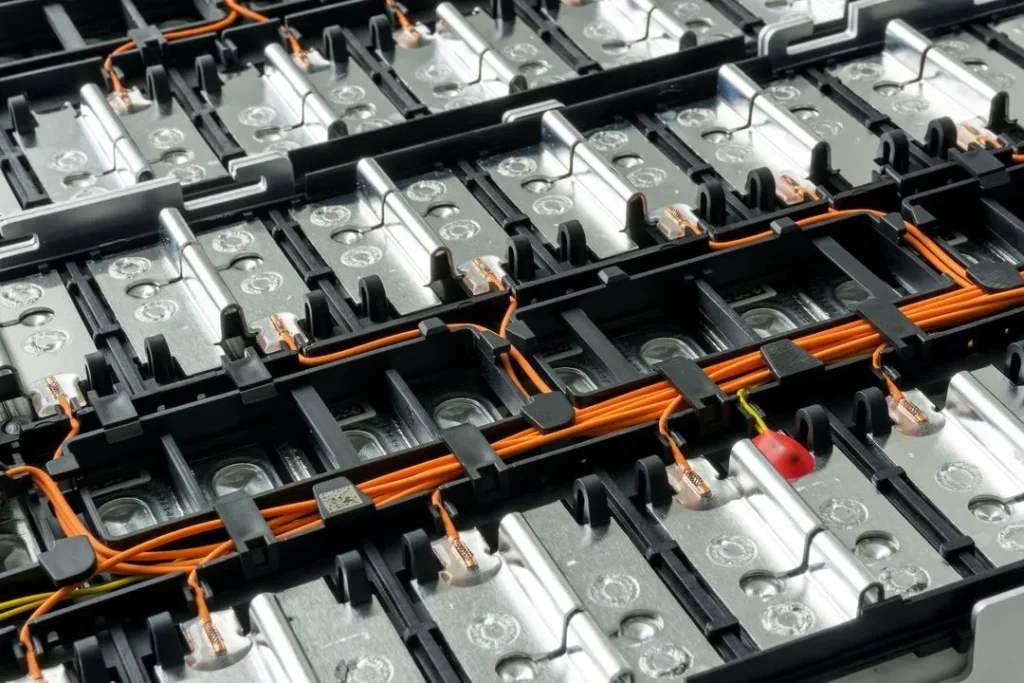
Battery Management System 2026
I treat the Battery Management System 2026 as the control center of the entire pack. It is not just watching voltage and temperature – it is the intelligent layer that helps battery systems stay safe, efficient, and predictable across EVs and energy storage.
What a Modern BMS Does
A modern BMS keeps the pack within safe operating limits and turns raw cell data into usable decisions. In my view, that means three things:
- Monitoring: it tracks battery conditions in real time.
- Protection: it helps prevent damage before a fault spreads.
- Balancing: it keeps cells working together instead of drifting apart.
Why It Matters More in 2026
In 2026, battery systems are more demanding, especially on 400V and 800V platforms. That makes precise control a must, not a nice-to-have.
- SOC accuracy: AI-driven systems can deliver less than 3% State of Charge accuracy.
- Fault warning: advanced diagnostics can provide a 30-day pre-warning window.
- Thermal safety: a 4-layer protection structure helps prevent thermal runaway propagation.
- Maintenance: smarter battery management can reduce post-sales maintenance costs by 30%.
The Core Job
A strong BMS does more than report battery status. It helps manage the pack as a whole, supports long-life performance, and gives operators the visibility they need for safer, more reliable energy systems.
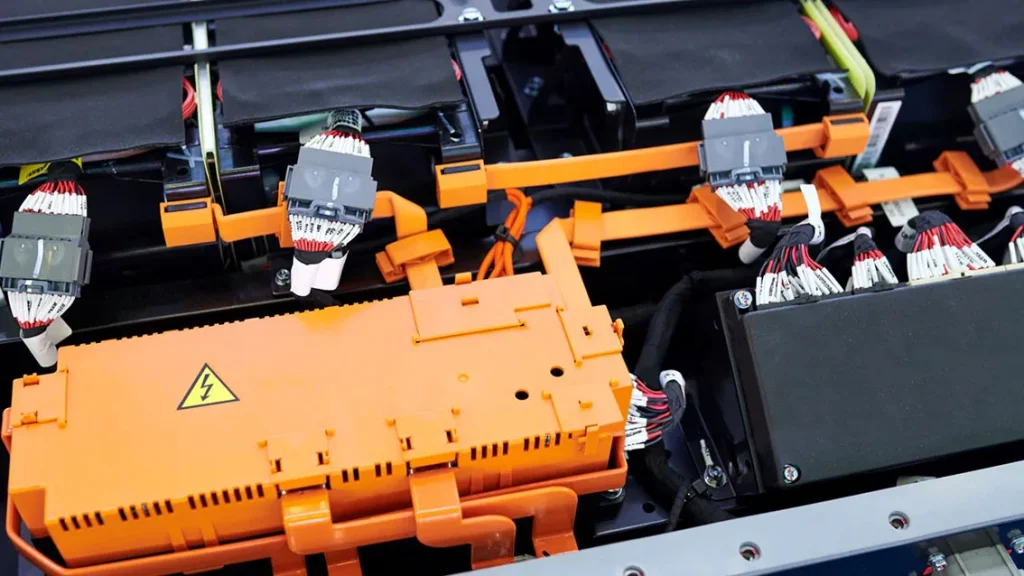
Essential Functions: State of Charge (SoC) and State of Health (SoH) Estimation
Accurate battery management hinges on precise estimation of State of Charge (SoC) and State of Health (SoH). SoC calculation methods combine voltage, current, and temperature data to determine the exact remaining capacity, avoiding costly guesswork. Meanwhile, SoH algorithms analyze degradation patterns to predict battery lifespan and performance decline before issues arise. Modern BMS also integrate State of Power (SoP) and State of Energy (SoE) metrics, providing a full picture of usable power and energy reserves.
In 2026, AI-driven algorithms push estimation accuracy to under 1%, far surpassing legacy systems. These advanced models continuously learn from real-world usage and environmental conditions, delivering predictive insights that optimize battery utilization and extend service life. This level of precision is critical for high-demand applications like EVs and commercial energy storage, where performance and reliability cannot be compromised. For deeper insight into AI-powered battery health prediction, explore our detailed analysis of AI-driven EV battery health prediction prospects and future trends.
Cell Balancing
In a Battery Management System 2026, I treat cell balancing as a core safety and life-extension task, not a side feature. The goal is simple: keep cells aligned so the pack stays stable, charges cleanly, and avoids uneven stress in high-density lithium-ion pack monitoring.
Active vs Passive Balancing
- Passive balancing is simple and low cost, but it wastes extra energy as heat.
- Active balancing moves charge between cells more efficiently, which helps preserve usable energy.
- For EV battery packs, active balancing is usually the better fit when you want tighter control and better thermal discipline.
- For some grid storage setups, passive balancing can still make sense when simplicity matters more than energy recovery.
| Method | How it works | Main benefit | Main tradeoff |
|---|---|---|---|
| Passive | Burns off excess charge | Simple and affordable | More heat, more energy loss |
| Active | Redistributes charge | Better efficiency and control | More complex system design |
Thermal Impact
High-capacity lithium cells create a real thermal challenge. If balancing is poorly managed, the pack adds avoidable heat on top of normal charging load. That is why I favor balancing logic that works with the BMS protection circuit and liquid cooling strategy, especially on 400V and 800V platforms where temperature control has to stay tight.
Safety Architectures and Thermal Runaway Protection
In 2026, robust safety architectures are non-negotiable for Battery Management Systems (BMS) to prevent catastrophic failures. Early detection of cell failure and thermal runaway is critical, achieved through continuous monitoring of voltage, temperature, and current anomalies. Strict over-voltage, under-voltage, and over-current protection limits are enforced to safeguard battery cells from stress and damage.
Advanced insulation monitoring and ground fault detection systems are essential in high-voltage packs, ensuring electrical isolation integrity and preventing hazardous leakage currents. Compliance with ISO 26262 functional safety standards is mandatory, guaranteeing that safety mechanisms are designed and validated to the highest automotive safety integrity levels.
This multi-layered safety approach, integrating cell-level to pack-level protections, effectively eliminates thermal runaway propagation risks. It ensures reliable operation and aligns with industry-leading battery pack protection circuit standards, as detailed in our comprehensive EV battery pack manufacturer custom solutions with advanced BMS and safety offerings.
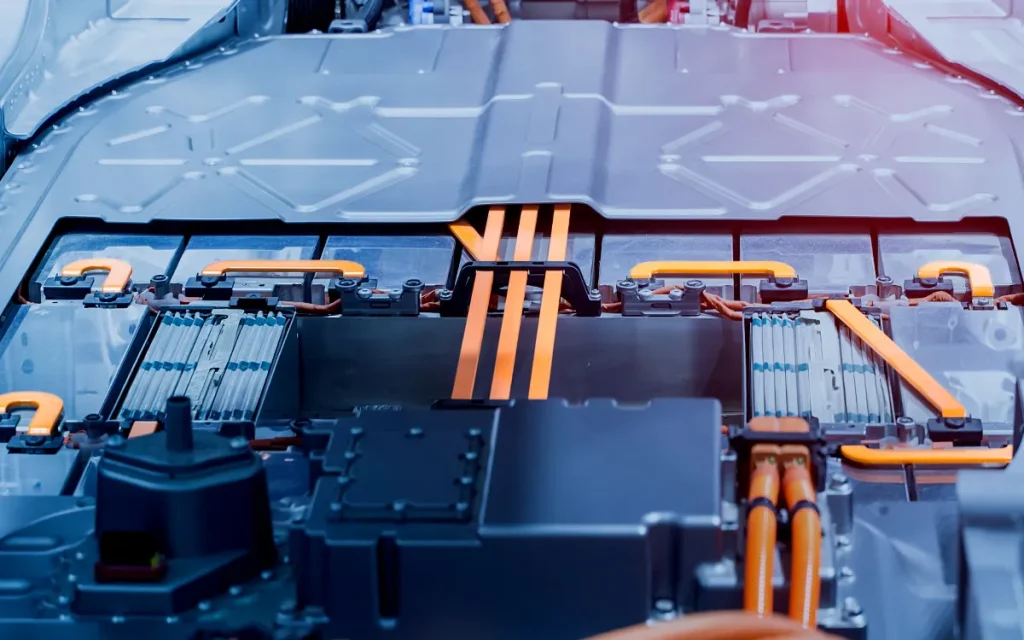
Cloud-Connected BMS 2026
I treat a Battery Management System in 2026 as a predictive layer, not a basic monitor. The strongest systems use AI-driven diagnostics and a closed-loop big data platform to improve State of Charge estimation, spot faults early, and keep safety tight across the pack. That matters when you want less guesswork, faster service decisions, and full traceability from manufacturing to second-life recycling. For the bigger pack-level picture, I also keep this 2026 electric battery pack technology and trend guide close by.
What Changes Most
- AI BMS turns live pack data into predictive maintenance signals
- SOC accuracy below 3% supports better energy planning
- 30-day fault pre-warning helps catch issues before they spread
- Big-data traceability strengthens service, compliance, and recycling decisions
- A connected, safety-first platform supports high-voltage battery systems without adding complexity
BMS in 2026: Next-Gen Chemistries
I do not treat battery chemistry as a one-size-fits-all problem. In a modern Battery Management System 2026, the BMS has to adapt to how each chemistry behaves in real use, from daily driving to second-life storage.
- LFP battery management: I pay close attention to State of Charge estimation because the flat LFP discharge voltage curve can make the pack look more stable than it really is.
- Solid-state battery management: I keep protection logic tight and flexible, since solid-state cell architectures need BMS design that matches a different operating profile.
- Sodium-ion energy storage: I adjust sense algorithms so the pack stays readable and controllable across changing load conditions; this matters when comparing sodium-ion vs. lithium-ion battery pack feasibility for EVs in 2026.
- Second-life use: I rely on clean pack history, traceability, and battery pack protection circuit data so reused batteries can move into storage roles with less risk, especially in sustainable EV battery pack design for recycling and second-life use.
For me, the real job is simple: keep the lithium-ion pack monitoring accurate, keep protection consistent, and make every chemistry useful for longer.
BMS Communication Protocols and System Integration
In 2026, robust communication protocols like CAN bus, CAN-FD, and IsoSPI are essential for seamless Battery Management System (BMS) integration. These standards enable reliable, high-speed data exchange between the BMS and critical components such as inverters, Vehicle Control Units (VCUs), and IoT gateways. This interoperability ensures precise battery monitoring and control across complex energy systems.
Securing these connected platforms is equally vital. Advanced cybersecurity measures protect against unauthorized access and data breaches, safeguarding battery performance and user safety. Implementing encrypted communication and intrusion detection fortifies the entire battery ecosystem against evolving cyber threats.
For comprehensive insights on system-level safety diagnostics and architecture, exploring our detailed EV battery system architecture and safety diagnostics resource is highly recommended.
BMS in 2026 FAQs
I keep these BMS in 2026 FAQs short and practical. The main shift is clear: modern battery management is no longer just monitoring voltage. It is about predictive control, safety, and traceability.
| Question | Short answer |
|---|---|
| Centralized vs distributed BMS | A centralized BMS keeps control in one main unit, while a distributed BMS spreads sensing and control closer to the cells. Distributed layouts can improve packaging and wiring efficiency in larger packs. |
| How long does a BMS module last? | There is no fixed number. A BMS module is built for long-life use, but real service life depends on pack design, operating stress, thermal control, and validation quality. |
| Can software fix a degrading battery pack? | Software cannot reverse physical wear, but it can detect degradation early, optimize control, and reduce avoidable maintenance. That is where the role of BMS in EV battery packs becomes critical. |
| How does a BMS handle extreme cold or heat? | It relies on thermal coordination, layered protection, and validated system testing. In advanced packs, liquid cooling and tight temperature control help keep performance stable. |
What I focus on
- Safety first: A strong BMS works with pack-level protection, not around it.
- Early warning: AI-driven diagnostics and fault prediction help catch issues before they become failures.
- Stable control: Accurate SoC and thermal management matter more as packs move into higher-voltage platforms.
- Real-world durability: Testing, traceability, and compliance matter just as much as software.
Quick take
A good BMS in 2026 should do three things well:
- Protect the pack under stress
- Predict problems before downtime starts
- Perform consistently across real operating conditions
For global EV programs, that combination is what keeps battery systems safe, efficient, and ready for long-term use.
 English
  German
  Chinese
  Spanish