
Understanding 800V EV Battery Packs
Let’s clear up the basics of 800V EV battery architecture and what it means for DC fast charging. If you’re wondering why automakers are pushing higher voltages or how it changes the charging game, you’re in the right place.
What Is an 800V EV Battery Pack?
- 800V battery packs use cells and wiring designed to operate at 800 volts, compared to the traditional 400V systems found in most electric vehicles.
- This high voltage setup allows EVs to charge faster and more efficiently, especially when paired with ultra fast DC chargers.
Key Differences: 400V vs. 800V EV Systems
| Feature | 400V System | 800V System |
|---|---|---|
| Voltage | 400 volts | 800 volts |
| Max Charging Power | ~150 kW | Up to 350 kW or more |
| Cable Thickness | Thicker (more heat) | Thinner (less heat) |
| Efficiency | Lower | Higher |
| Weight | Heavier cabling | Lighter cabling |
| Infrastructure | Widely available | Growing, but less common |
- 800V battery packs can deliver more power with less heat, thanks to thinner cables and increased efficiency.
- Higher voltage means less current is needed for the same power, which reduces energy loss and heat buildup.
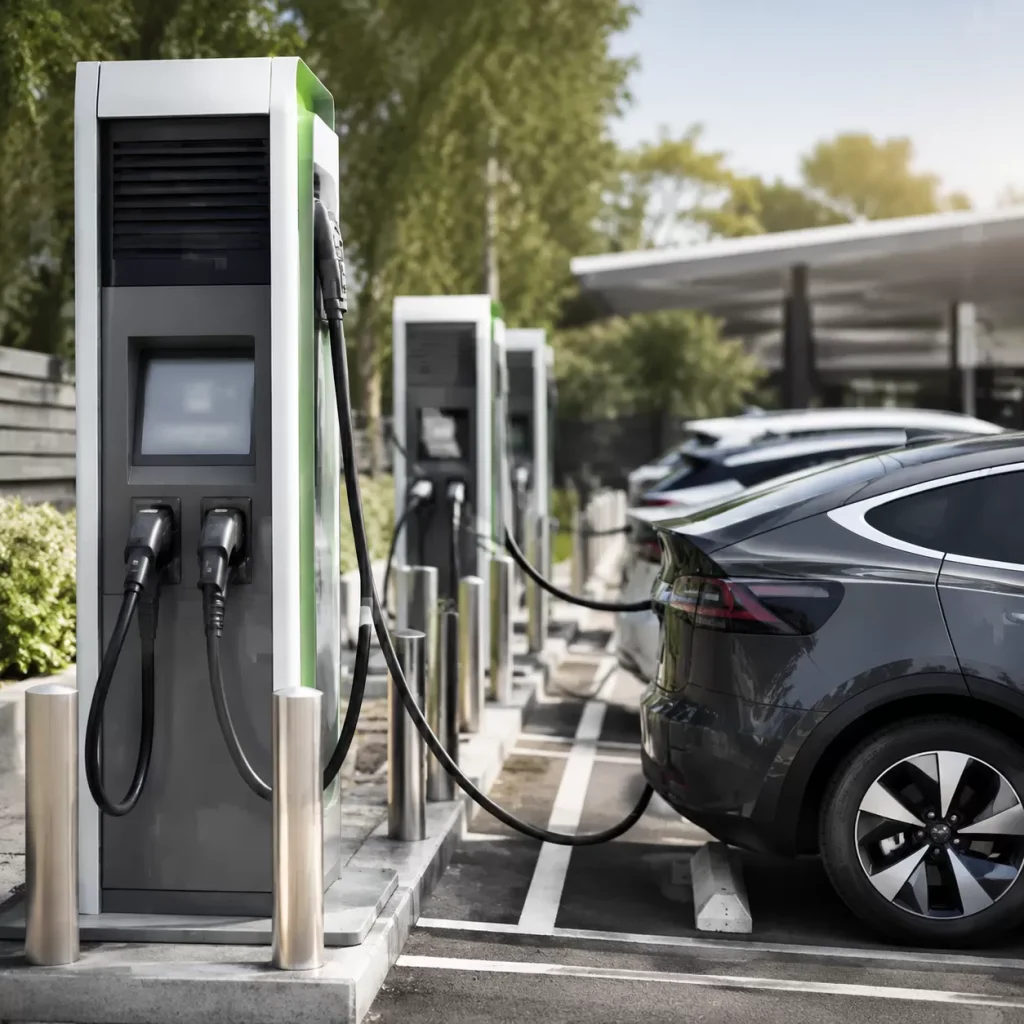
Benefits of 800V Battery Packs for DC Fast Charging
- Faster charging times: 800V systems can accept higher power, cutting charging sessions from 30-40 minutes (400V) to under 20 minutes.
- Improved efficiency: Less energy lost as heat during charging, which is critical for high-power stations.
- Lighter, cooler cables: Makes charging hardware easier to handle and safer.
Current 800V EV Models on the Market
Here are some real-world examples using 800V battery architecture:
| Model | Voltage | Max DC Charging Power |
|---|---|---|
| Porsche Taycan | 800V | Up to 270 kW |
| Hyundai IONIQ 5/6 | 800V | Up to 350 kW |
| Kia EV6 | 800V | Up to 350 kW |
| Lucid Air | 800V | Up to 300 kW |
| Audi e-tron GT | 800V | Up to 270 kW |
- These models highlight the shift toward high voltage EV battery architecture for faster, more practical charging.
Impact on Charging Infrastructure Design
- 800V EV battery charging infrastructure needs to handle higher voltages and power levels.
- Chargers, cables, connectors, and even site electrical supplies must be upgraded to support ultra fast DC chargers for 800V systems.
- Standards like CCS Combo 2 are evolving to ensure compatibility.
Technical Challenges with Higher Voltage
- Insulation and safety: 800V systems require robust insulation and stricter safety standards (IEC 61851).
- Cooling: High-power charging generates more heat, demanding advanced thermal management and liquid cooled EV charging cables.
- Hardware compatibility: Not all chargers or connectors are ready for 800V—legacy 400V stations may not support these vehicles.
Bottom line: 800V battery packs are changing the EV landscape, but they bring real challenges for charging infrastructure. As the market grows, solutions like modular chargers, smart load management, and LEAPENERGY’s expertise in energy storage will play a big role in making ultra-fast charging practical and safe.
Why DC Fast Charging Matters for 800V Systems
DC fast charging is a game-changer for 800V EV battery packs, especially in the U.S. market where quick turnarounds are expected. The main advantage? 800V systems let you charge much faster than 400V platforms. That means less time waiting at the station and more time on the road. For example, while a typical 400V EV might max out at 150 kW, an 800V setup can handle 350 kW or more—cutting charging times nearly in half for many models.
Charging Speed: 400V vs. 800V Platforms
- 400V EVs: Usually limited to 150 kW, taking 30-40 minutes for an 80% charge.
- 800V EVs: Support up to 350 kW (or higher), shrinking that wait to 15-20 minutes for the same charge.
This speed boost isn’t just about convenience. It shapes how drivers use their EVs, making road trips and daily commutes way less stressful.
Efficiency Gains from High-Voltage DC Fast Charging
Higher voltage means lower current for the same power, reducing energy loss and heat. That’s why 800V DC fast charging is more efficient—less wasted energy, less stress on cables, and fewer cooling headaches. For U.S. customers, this translates to lower operating costs and more reliable charging experiences.
User Expectations for Fast Charging Times
American drivers expect charging to be nearly as quick as filling up a gas tank. With 800V battery packs, ultra-fast DC chargers deliver on that promise, making EVs a practical option for everyone—from families to fleet managers.
Consumer Behavior & Charging Network Planning
Fast charging isn’t just about speed; it changes how people plan their routes, where they stop, and even which EV they buy. Charging station operators use this data to decide where to build new high-power stations and how to scale their networks. Understanding these patterns is key for anyone rolling out 800V DC fast charging infrastructure.
DC Fast Charging Shapes EV Ownership
In short, 800V DC fast charging turns EV ownership from a compromise into a real upgrade. Drivers get faster, more efficient charging, and the infrastructure keeps pace with their needs. For more technical insight on how battery safety factors into this, check out how battery disconnect units (BDUs) enhance EV safety.
Bottom line: DC fast charging for 800V battery packs isn’t just a perk—it’s the foundation for mainstream EV adoption in the U.S.
Core DC Fast Charging Infrastructure Requirements for 800V EV Battery Packs
When it comes to 800V EV battery packs, DC fast charging infrastructure needs to step up its game. Here’s what matters most for reliable, ultra-fast charging:
Power Delivery for 800V DC Fast Charging
- Minimum Power: 150 kW
- Optimal Power: 350 kW
- Emerging Power: 500 kW+
Higher voltage means faster charging, but only if the station can deliver enough juice. For context, check out how battery pack voltage options impact charging speed and efficiency.
Voltage & Current Compatibility
- Chargers must match 800V battery architecture.
- Need flexible systems that can handle both 400V and 800V vehicles.
- Chargers must adapt voltage and current to avoid damaging batteries.
DC Fast Charger Architecture
- High-voltage converters and rectifiers are key.
- Stations need robust hardware that can reliably push high power.
Hardware Compatibility & Connector Standards
- CCS Combo 2 is the go-to connector for 800V charging in the US.
- High-current cables require extra insulation and durability.
- Contact resistance must be low for safe, efficient charging.
Mechanical Design & Cooling
- Plug connections must be tough and safe.
- Liquid-cooled cables help prevent overheating during ultra-fast sessions.
- Chargers need cooling systems to handle heat from high-power charging.
- Battery packs require their own thermal management strategies.
For a deeper look, see how fast charging affects EV battery cycle life.
Grid Integration
- Transformers and substations may need upgrades for high-power demand.
- AC supply must support multiple high-wattage chargers.
- On-site panels and protection devices keep things safe.
- Smart load management is critical when several cars are charging at once.
Safety Standards & Regulations
- Must comply with international standards like IEC 61851.
- High-voltage insulation, creepage, and clearance rules are strict.
- Proper grounding, bonding, and fault detection are non-negotiable.
- Emergency shutdowns and user protection mechanisms are a must.
Table: 800V DC Fast Charging Infrastructure Essentials
| Requirement | Details | Why It Matters |
|---|---|---|
| Power Delivery | 150–500 kW+ | Enables ultra-fast charging |
| Voltage/Current Compat. | Flexible charger architecture | Supports 400V & 800V EVs |
| Connector Standard | CCS Combo 2 | US-wide compatibility |
| Cable Design | Liquid-cooled, high insulation | Prevents overheating |
| Grid Integration | Upgraded transformers/substations | Handles peak loads |
| Safety Standards | IEC 61851, insulation, grounding | Protects users & equipment |
Building out 800V DC fast charging means tackling these requirements head-on. It’s about speed, safety, and future-proofing our EV infrastructure for the next wave of electric vehicles.
Key Challenges in Deploying 800V DC Fast Charging Infrastructure
Setting up 800V DC fast charging stations isn’t just about installing a high-power charger; it comes with several hurdles. First, the high capital expenditure is a big concern. These stations require expensive high-voltage chargers, transformers, and extensive site work, which can make initial investments steep. For charging operators, figuring out the return on investment can be tricky, especially with the current limited availability of 800V-compatible charging hardware.
Another challenge is the regional variability in hardware standards and supply chains. Not all regions or hardware suppliers support 800V systems yet, which complicates deployment. Plus, many existing legacy 400V infrastructure limitations pose compatibility issues, making upgrades necessary before supporting higher voltages.
Grid capacity and reliability are also major concerns. Urban areas often face grid congestion and peak load issues, while rural and highway corridors may struggle with grid access challenges. These issues can delay or increase the cost of installing high-power charging stations. Additionally, permitting, regulatory, and zoning barriers can slow down deployment, especially when local codes and approvals for high-voltage, high-power stations are strict.
Site considerations matter too—space constraints, noise, and visual impact are factors that need attention at each location. On the operational side, reliability and uptime are critical for customer satisfaction. Maintaining high-voltage equipment requires specialized skills, and ongoing maintenance can be more complex compared to lower-voltage systems.
Overall, these challenges highlight the need for careful planning and innovative solutions to make 800V DC fast charging infrastructure more accessible and scalable across the U.S.
Solutions and Innovations for Scalable 800V Charging Infrastructure
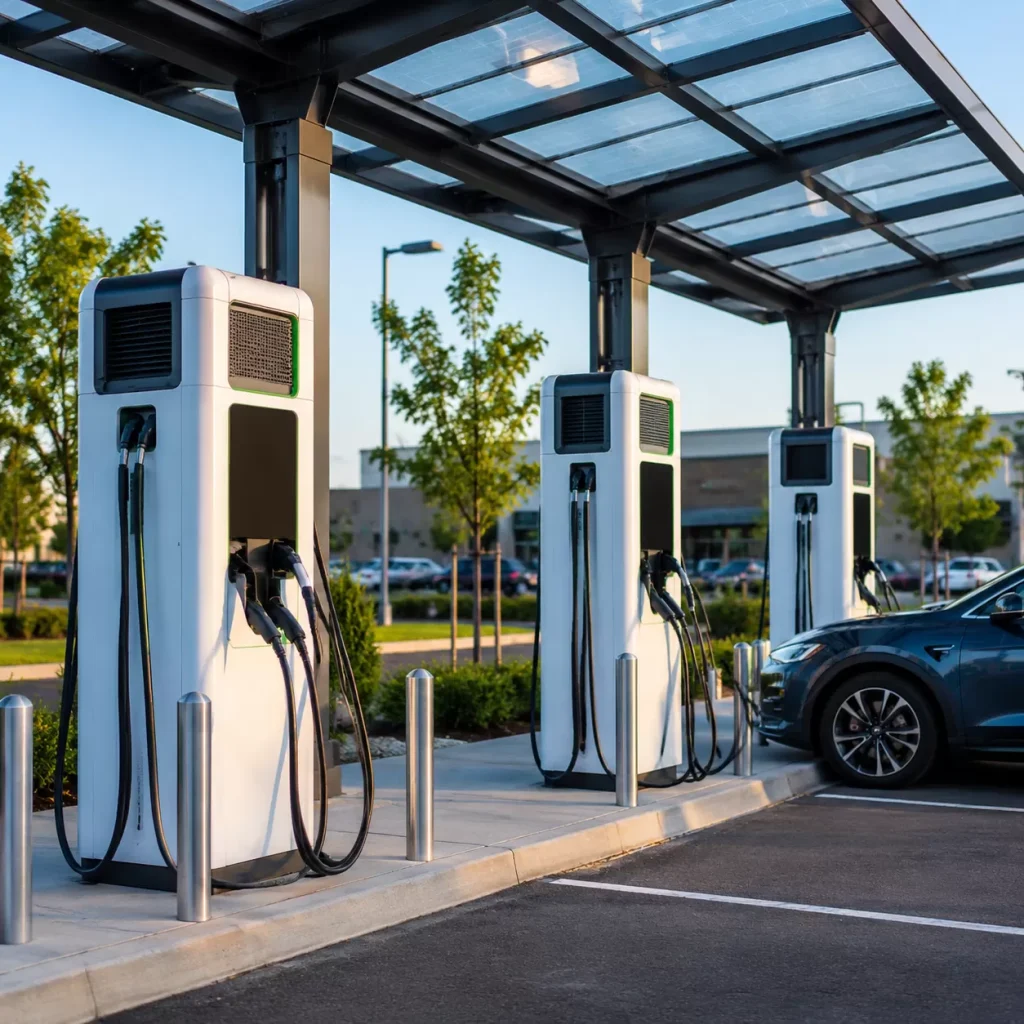
To support the widespread adoption of 800V EV battery packs, innovative solutions are key. Modular and scalable DC fast charging system designs are at the forefront, allowing operators to expand capacity gradually as demand grows. Using modular power blocks, for example, makes it easy to add more power without overhauling the entire setup. Shared power cabinets can feed multiple charging dispensers, optimizing space and reducing costs.
Dynamic power allocation is another critical feature, enabling chargers to distribute energy efficiently across multiple stalls based on real-time needs. This flexibility helps manage high-power delivery, such as 150 kW, 350 kW, or even 500 kW+ chargers, which are essential for ultra fast DC chargers for 800V systems.
Energy storage integration is gaining traction. On-site battery storage can buffer peak grid loads, support weak or constrained grids, and reduce stress on local infrastructure. This is especially useful for rural or busy urban sites where grid capacity may be limited. Combining EV charging with home or commercial storage creates a synergy that enhances overall energy efficiency and stability.
Smart charging and intelligent load management are vital for balancing demand across multiple chargers and sites. Software-based load balancing helps optimize charging times, reduce demand charges, and improve user experience. For example, time-of-use optimization can shift charging to off-peak hours, saving costs and easing grid pressure.
Vehicle-to-grid (V2G) and bidirectional charging open new opportunities for energy flow, allowing EVs to act as mobile energy resources. This can further support grid stability and provide additional revenue streams for station operators.
Collaboration and standardization efforts are crucial for building a cohesive 800V infrastructure. Partnerships between OEMs, utilities, and charge point operators are working to harmonize charging standards, such as CCS Combo 2 connectors, ensuring compatibility and safety. Industry efforts are also focused on policy support and incentives, which will accelerate the buildout of ultra fast DC chargers for 800V EV battery packs across the US.
For more on how scalable EV charging infrastructure can evolve, check out this guide on modular EV charging systems.
Future Outlook for 800V DC Fast Charging Infrastructure
The future of 800V DC fast charging infrastructure looks promising, especially with emerging ultra-fast charging power levels reaching 500 kW and beyond. These higher power levels will significantly reduce charging times, making long trips more practical and convenient for U.S. EV owners. As charging stations evolve to support these ultra-fast chargers, station design and grid planning will need to adapt to handle increased power demands efficiently.
We’re also seeing a potential shift toward 800V systems becoming the new standard for EVs. This transition could streamline the charging network, helping to unify hardware and software standards across different brands. Additionally, integrating renewable energy sources like solar and wind into high-power charging hubs is gaining traction. These sustainable solutions can offset the high energy consumption of ultra-fast chargers, making the entire ecosystem more environmentally friendly.
Microgrids and local energy generation will play a key role in creating resilient charging sites, especially in areas with unreliable grid access. As 800V battery technology and charging protocols continue to evolve, improvements in battery chemistry and charging curves will boost efficiency, safety, and cost-effectiveness over time. This ongoing innovation will help lower the barriers for widespread adoption and support the long-term role of energy storage providers in the EV ecosystem, ensuring power availability even during peak demand periods.
 English
  German
  Chinese
  Spanish