
In the fast-evolving world of electric vehicles, the battery pack isn’t just a component—it’s the heart of performance, cost, and innovation. Whether you’re an OEM, fleet operator, or EV conversion specialist, choosing between a custom EV battery pack vs standard battery pack can make or break your project’s success.
Do you prioritize speed and budget with off-the-shelf options? Or is optimizing energy density, integration, and scalability with a tailored solution the smarter move? This guide dives straight into the critical differences, helping you navigate cost, performance, safety, and more—so you can make confident, informed decisions for your next EV program. Let’s get started!
What Is a Standard EV Battery Pack?
A standard EV battery pack is a pre-designed, off-the-shelf lithium-ion battery system built to serve a broad range of electric vehicles (EVs). These packs feature fixed packaging, chemistry, and battery management systems (BMS) that are ready to use without extensive customization. Their design is often modular and follows widely accepted industry standards for voltage, capacity, and safety.
Typical Characteristics
- Fixed form factor and dimensions set for easy integration
- Standard cell types like prismatic or cylindrical lithium-ion cells
- Generic BMS and thermal management solutions designed for broad applications
- Pre-certified safety and regulatory compliance
Common Use Cases
Standard battery packs are commonly used in:
- Entry-level EV models
- Fleet vehicles with consistent needs
- Prototypes and limited-production vehicles
- Applications requiring quick market deployment and proven reliability
Advantages of Standard Packs
- Lower cost upfront: Economies of scale and mass production reduce initial investment.
- Short lead times: Ready-made packs enable faster manufacturing and time-to-market.
- Reliable performance: Proven technology with years of field validation.
- Easier certification: Pre-certified to meet safety and regulatory standards, simplifying OEM approvals.
Limitations to Consider
- Fixed packaging: Limited flexibility to optimize battery shape or size to vehicle design.
- Lower energy density: Not optimized for maximum driving range.
- Thermal management: One-size-fits-all cooling systems may not maximize efficiency.
- Integration challenges: May require design compromises for fit, weight distribution, and electrical architecture.
In short, standard lithium-ion battery packs offer affordable, reliable solutions that minimize engineering risk and speed up production, but they may limit an OEM’s ability to customize for maximum range or vehicle-specific performance. For many projects, especially those with tight deadlines and budget constraints, they are the smart choice. However, if you’re after tailored energy density, power output, or packaging, custom EV battery packs may be worth considering.
What Is a Custom EV Battery Pack?
A custom EV battery pack is a tailor-made energy solution designed specifically for a vehicle’s unique requirements rather than using a one-size-fits-all approach. Manufacturers can customize key aspects such as battery chemistry, pack architecture, battery management systems (BMS), and safety features to better match performance and design goals. This customization allows precise control over energy density, power output, thermal management, and integration with the vehicle’s overall system.
Custom EV battery packs are common in premium models, high-volume manufacturers aiming for optimized platforms, and specialized applications like commercial fleets or performance EVs. Thanks to advanced designs like cell-to-pack (CTP) or cell-to-chassis (CTC) architectures, these packs offer benefits including enhanced driving range, superior power delivery, improved fitment within tight vehicle designs, and stronger safety compliance.
The main advantages of choosing a custom EV battery pack include:
- Optimized energy density for extended range
- Tailored power output to meet fast charging and performance targets
- Vehicle-specific packaging that maximizes space and weight savings
- Improved safety features aligned with regulatory standards
- Lower total cost of ownership (TCO) through efficiency gains and durability
However, custom packs require more upfront engineering effort and longer validation times before production, meaning development lead times can be longer compared to standard battery pack solutions. For detailed safety feature insights, exploring advanced battery pack design and safety standards can also guide effective custom pack development. For example, you can check out LEAPENERGY’s expertise in delivering custom EV battery solutions with advanced BMS and safety.
Head-to-Head Comparison: Custom vs Standard EV Battery Packs
Here’s a quick side-by-side look at custom EV battery packs versus standard battery packs, focusing on what really matters for US OEMs and EV makers:
| Feature | Custom EV Battery Pack | Standard EV Battery Pack |
|---|---|---|
| Upfront/NRE Cost | High due to engineering and validation | Lower, ready-made solutions |
| Cost per kWh at Scale | Can be competitive with volume | Generally lower at smaller volumes |
| Energy Density & Driving Range | Optimized for max energy density and longer range | Fixed specs, often lower range |
| Power Output & Fast-Charging | Tailored for high power and ultra-fast charging | Limited by standard design |
| Thermal Management Efficiency | Advanced systems customized to pack and vehicle | Standard solutions, may limit performance |
| Vehicle Integration & Packaging | Flexible layout to fit unique designs | Fixed formats, less adaptable |
| Safety & Regulatory Compliance | Custom safety features, designed for local rules | Certified standards, broad compliance |
| Development Lead Time & Time-to-Market | Longer development cycle | Shorter, off-the-shelf options |
| Scalability for Future Platforms | Built for adaptability across vehicle models | Limited scalability beyond the original design |
| Maintenance & Serviceability | Designed for easier servicing and diagnostics | Standard procedures may not be optimized |
Real-World Impact for OEMs
- Custom packs offer US automakers the ability to push performance and unique vehicle integration but require more upfront investment and a longer timeline.
- Standard packs are ideal for quick market launches or entry-level fleets where budget and speed are priorities.
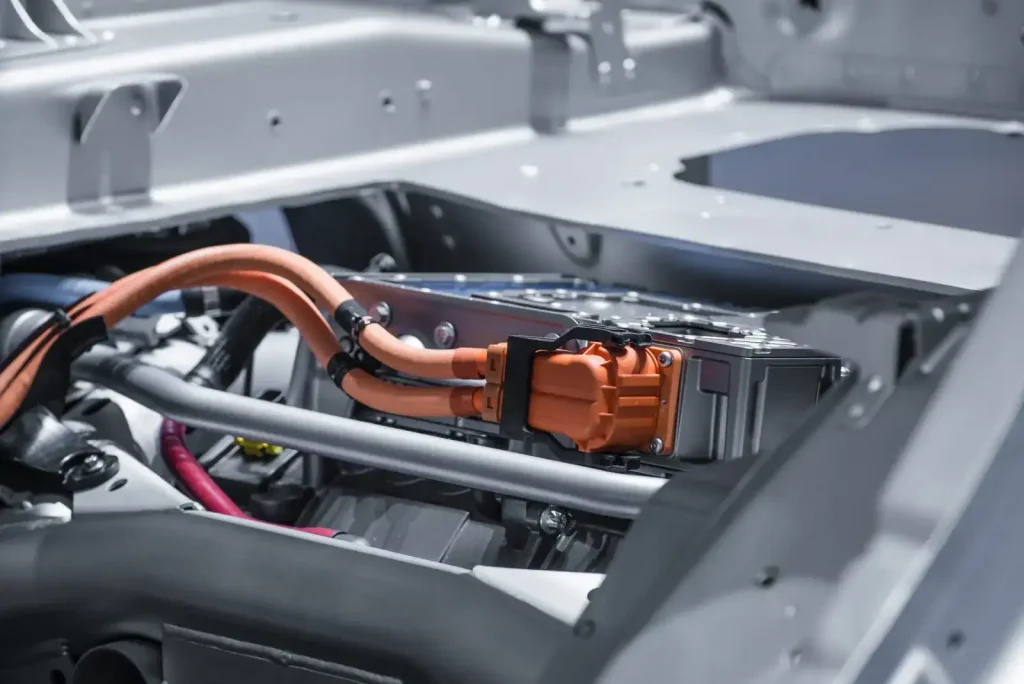
Choosing between these options means balancing your project’s scope, timeline, and how much you value customization versus speed and cost. For more on how battery pack integration can boost EV range and reduce costs, see our detailed insights on battery pack integration.
Key Decision Factors: How to Choose Between Custom and Standard EV Battery Packs
Choosing between a custom EV battery pack and a standard battery pack comes down to several crucial factors. Here’s a straightforward guide to help you decide based on your project needs and priorities:
| Decision Factor | Considerations |
|---|---|
| Project Timeline & Time-to-Market | Standard packs offer faster deployment; custom packs need longer development and validation. |
| Production Volume & Economies of Scale | Standard packs excel in low-to-medium volumes; custom packs are cost-effective at high volumes. |
| Performance & Range Targets | Custom packs can optimize energy density and ultra-fast charging; standard packs may limit top-end performance. |
| Vehicle Design Constraints | Custom packs offer greater flexibility for unique space, weight, and aerodynamic needs. Standard packs have fixed packaging. |
| Budget: Upfront vs Total Cost of Ownership (TCO) | Standard packs have lower upfront costs; custom packs may reduce TCO through efficiency gains and longevity. |
| Regulatory & Regional Compliance | Both types require certification, but custom packs can be tailored to specific regional standards. |
| Risk Tolerance & Supply Chain | Standard packs carry less technical risk and stable supply; custom packs may face supply chain challenges initially. |
| Platform Scalability & Second-Life | Custom packs can be designed for scalability across platforms and ease of recycling/second-life reuse. |
Practical Decision-Maker Checklist
- Are quick delivery and lower budget your top priorities? Lean toward a standard lithium-ion battery pack for EVs.
- Do you need maximum driving range and performance? Consider a custom EV battery with optimized energy density and fast-charging capability.
- Is your vehicle design unique or constrained by space? Custom packs allow tailored architecture and packaging flexibility.
- Are you planning for long-term sustainability and reuse? Choose a scalable battery platform that supports second-life use and recycling.
- Do you have high production volumes? Custom packs offer better cost efficiencies as you scale up.
- Do regulatory or regional specifics require specialized features? Custom packs can be adapted to fit these needs precisely.
Selecting the right battery pack is a balance between these factors. For a deeper dive into how battery pack design impacts range and charging speed, check out this detailed guide on how battery pack design shapes EV range and charging speed.
By aligning your choice with your project’s unique demands, you maximize both performance and cost-effectiveness in your EV development.
When Standard EV Battery Packs Are the Smarter Choice
Standard EV battery packs often make the most sense when budget and speed matter most. They are ideal for projects with tight cost constraints, like entry-level electric vehicles, fleet cars, or prototypes where quick deployment is critical. These packs come with established reliability, certified safety, and proven supply chains, which help reduce development risks.
For example, OEMs launching fleet vehicles that require fast-to-market solutions often choose standard lithium-ion battery packs to keep costs down and avoid lengthy engineering delays. Additionally, prototypes benefit from off-the-shelf battery systems to validate concepts without investing heavily in custom designs.

To mitigate risks when using standard packs, it’s smart to focus on proper supplier selection and thorough quality control. This can help maintain consistency and reliability despite the fixed packaging and modular nature of these batteries.
If you want to dive deeper into potential hidden risks and strategies for battery pack procurement, the guide on five hidden risks in battery pack procurement beyond technical specifications offers valuable insights.
Using standard battery packs can streamline your project timeline while managing costs effectively—especially when the application doesn’t demand specialized integration or ultra-high performance.
When Custom EV Battery Packs Deliver Superior Value
Custom EV battery packs shine in certain scenarios where standard packs fall short. Here’s when they make the most sense:
Ideal Scenarios:
- High-performance or luxury EV models demanding best-in-class power and range
- Large-scale production platforms needing tailored solutions for integration and scalability
- Vehicles with unique design or space constraints that require precise battery pack fitting
Advantages of Advanced Architectures:
| Feature | Benefit |
|---|---|
| Cell-to-Pack (CTP) Design | Reduces weight and size by eliminating modules, improving energy density and packaging flexibility. See our guide on module-to-pack integrated EV battery systems for deeper insights. |
| Cell-to-Chassis (CTC) | Integrates the battery directly into the vehicle chassis, boosting structural rigidity and lowering overall vehicle weight, ideal for premium EV platforms. |
Long-Term ROI Considerations:
- Optimized Energy Density: Custom packs deliver more range per kWh, meaning fewer battery replacements or upgrades over time.
- Tailored Thermal Management: Better cooling solutions reduce degradation, enhancing battery life and uptime.
- Total Cost of Ownership (TCO): Though upfront costs and development time are higher, the improved efficiency, safety, and vehicle integration lower maintenance and operational costs over the vehicle’s lifetime.
Choosing custom means investing early for lasting benefits, especially critical in competitive US markets focusing on range, safety, and user experience. This approach often leads to stronger customer satisfaction and fewer recalls or compliance issues down the road.
Emerging Trends Influencing the Decision
When deciding between a custom EV battery pack vs standard battery pack, several emerging trends are shaping the landscape for U.S. automakers and suppliers.
Integrated Pack Designs: CTP and CTC Advances
Cell-to-pack (CTP) and cell-to-chassis (CTC) architectures are revolutionizing custom EV battery designs by reducing weight and improving energy density. These integrated pack designs allow better space utilization, enhancing vehicle range and performance while streamlining manufacturing. Such advanced architectures are mainly available in tailored solutions, giving custom packs a clear edge for premium and high-performance models.
Cell Format Choices: Prismatic, Pouch, Cylindrical
The format of lithium-ion cells—prismatic, pouch, or cylindrical—also plays a key role in pack design. Prismatic cells suit compact, high-capacity needs but have fixed form factors. Pouch cells offer flexibility and weight savings but demand advanced thermal management. Cylindrical cells are known for reliability and thermal stability. Choosing the right cell format impacts everything from energy density to pack integration and thermal efficiency.
Advances in Thermal Management and BMS Intelligence
Better thermal management techniques and more intelligent battery management systems (BMS) help optimize battery performance and longevity. Custom packs often incorporate cutting-edge cooling solutions and smart BMS features that adapt in real time, improving fast charging and safety. For reliability-focused OEMs, learning how BMS affects pack durability can be a game-changer for total cost of ownership—more on this in the role of BMS in EV battery packs.
Modular-Yet-Custom Approaches
Modular battery pack designs are gaining traction, blending customization with scalability. This approach allows OEMs to tailor energy and power outputs per platform demand while benefiting from standardized modules to keep costs and lead times in check—offering a balanced solution between off-the-shelf and fully bespoke packs. More insights on these designs can be found in the discussion on modular vs monolithic pack designs.
Sustainability: Recycling, Second-Life, Circular Economy
Sustainability is becoming a top priority, driving innovations in battery recycling and second-life applications. Custom battery packs designed with dismantling and recycling in mind support circular economy principles, reducing environmental impact and future costs. Integrating these concepts early supports compliance with tightening U.S. and global regulations while enhancing brand reputation. Explore sustainable design practices in designing sustainable EV battery packs for easy recycling and second life.
By considering these emerging trends, OEMs can better assess whether a custom or standard battery pack aligns with their long-term vehicle goals, market requirements, and sustainability commitments.
How LEAPENERGY Helps You Make the Right Choice
Choosing between a custom EV battery pack and a standard lithium-ion battery pack for EVs can be challenging. That’s where LEAPENERGY steps in—with deep expertise in both standard and fully custom EV battery solutions tailored to your project needs.
Why Partner with LEAPENERGY?
| Benefit | Description |
|---|---|
| Engineering Excellence | Expert design teams optimize energy density, thermal management, and fast charging performance. |
| Quality & Compliance | Global EV battery safety standards and regulatory compliance rigorously maintained. |
| Concept-to-Production | Seamless support from initial design through scalable manufacturing and supply chain management. |
| Risk Reduction | Early collaboration mitigates development risks and accelerates validation cycles. |
| Cost Efficiency | Scalable costs tailored to your volume and platform needs, balancing upfront and total cost of ownership (TCO). |
LEAPENERGY’s engineers work closely with OEMs to align battery architecture with vehicle design constraints, ensuring superior vehicle integration and packaging flexibility. Early partnership means quicker time-to-market and better customization options tailored to your project’s scale and timeline.
For detailed insights on scalability in EV battery pack production and ensuring your project meets strict delivery schedules, explore our resource on scalability in EV battery pack production.
Ready to find the best battery pack solution? Consult LEAPENERGY’s specialists for personalized recommendations and get your EV project moving with confidence.
 English
  German
  Chinese
  Spanish