
Understanding the Importance of Battery Pack Traceability in High-Volume Production
In high-volume battery manufacturing, traceability is essential to ensure safety, compliance, and consistent quality. As production scales rapidly, tracking each battery’s origin, components, and manufacturing history becomes critical to prevent costly recalls and safety failures. Poor traceability can lead to severe brand damage, regulatory penalties, and compromised customer trust.
Modern traceability systems enable seamless data collection and management across the entire production process. They support rapid scaling by providing real-time insights, automating quality checks, and maintaining comprehensive records for each battery. This ensures that as output increases, quality remains uncompromised, and safety standards are upheld. Implementing robust traceability not only mitigates risks but also builds a resilient foundation for sustainable high-volume production.
Inline Quality Gates for Mass Production
I use inline quality gates to keep high-volume battery assembly stable, fast, and repeatable. In a mass-production line, manual checks are too slow and too inconsistent. Automated checks catch issues as they happen, before they turn into scrap or rework. In my scaling EV battery pack manufacturing from prototype to mass production process, this is a key control point.
| Quality gate | What it checks | Why it matters |
|---|---|---|
| Weld integrity | Laser welding quality control, bond strength, weak spots | Prevents hidden pack failures |
| Cell alignment | Position, spacing, fit accuracy | Reduces assembly stress and defects |
| Defect detection | Surface flaws, missing parts, process drift | Catches problems in real time |
| AOI checks | Automated Optical Inspection (AOI) battery assembly | Speeds up inspection without slowing the line |
Why it works
- Real-time defect detection keeps high-throughput lines moving.
- MES-linked data logs each step, weld, and module integration.
- 100% AI inspection coverage supports consistent output across automated production lines.
- SPC-friendly controls make process drift easier to spot and fix early.
For me, the point is simple: find the defect on the line, not after shipment. That is how I protect quality, protect throughput, and keep mass production under control.
MES and AI Monitoring
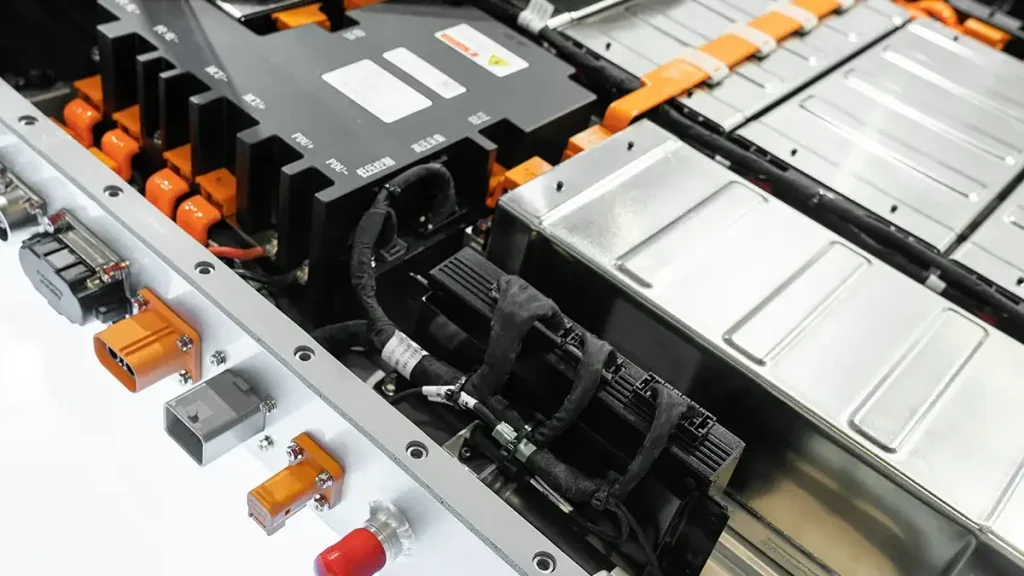
I tie Manufacturing Execution Systems (MES) into AI-powered inspection so I can watch battery pack production in real time, not after the batch is finished. On a high-volume line, that means I can track line speed, defect rates, and process deviations as they happen.
- MES logs each key step, including welds, bonds, and module integration
- AI inspection supports 100% coverage across automated production lines
- Real-time alerts help catch defects early and keep the line stable
- Faster detection means less scrap, less rework, and more consistent output
This is how I keep Battery Pack Traceability and Quality Control in High-Volume Production practical at scale: tight data capture, fast decision-making, and repeatable quality from one pack to the next.
Dual Certification Standards: UL 2580 and ISO 26262
Achieving dual certification for battery packs—namely UL 2580 for safety and ISO 26262 for functional safety—is essential for high-volume production. These standards set rigorous benchmarks that influence every stage of design, testing, and manufacturing, ensuring reliable and compliant products. UL 2580 certification confirms that battery systems meet strict safety protocols, including thermal management, mechanical robustness, and electrical safety. Meanwhile, ISO 26262 addresses functional safety, focusing on fault detection, risk mitigation, and system integrity within automotive applications.
Securing these certifications requires comprehensive validation and testing protocols, including simulated extreme environmental conditions, mechanical stress tests, and electrical safety assessments. This process guarantees that each battery pack can withstand real-world operational challenges while maintaining consistent safety performance. For manufacturers, adhering to these standards not only ensures regulatory compliance but also builds trust with global automakers and end-users.
Leveraging advanced validation methods and rigorous testing protocols is crucial to meet the demanding criteria of UL 2580 and ISO 26262, ultimately enabling scalable, safe, and high-quality battery solutions for the global market.
Advanced Validation and Testing for Safety and Reliability
Ensuring battery pack safety and reliability requires rigorous validation and testing under extreme conditions. Leading manufacturers simulate environments such as temperature fluctuations, vibration, and water ingress to verify performance across diverse scenarios. These tests are critical for meeting international safety standards like UL 2580 and ISO 26262, which demand comprehensive validation protocols.
Over 2,000 environmental and mechanical tests are performed, including thermal cycling, vibration endurance, and waterproof assessments. These tests validate the robustness of the battery pack, ensuring it withstands real-world stresses during operation and transportation. Using validated test results, manufacturers can confidently demonstrate compliance with global safety regulations, reducing risks and enhancing customer trust.
Implementing such advanced validation processes is essential for high-volume production, where quality consistency directly impacts brand reputation and safety. It also supports the development of resilient battery systems capable of performing reliably in diverse markets and environmental conditions.
Digital Battery Passport for Battery Pack Traceability and Quality Control in High-Volume Production
I treat every pack as a traceable asset from day one. With Direct Part Marking (DPM) and laser cell serialization, each battery gets a unique digital ID that stays linked to build data, test results, and lifecycle records.
| Traceability step | What I capture | Why it matters |
|---|---|---|
| Cell serialization | DPM code on each cell | Fast unit-level tracking |
| Build record | Assembly and test data | Cleaner quality control |
| Digital passport | Full asset history | Easier compliance checks |
| Second-life record | Use, reuse, and recycling data | Better reuse decisions |
Why it works
- End-to-end traceability: one record from manufacturing to recycling
- Compliance support: helps align with digital battery passport and global regulatory requirements
- Quality control: faster root-cause tracing when a fault appears
- Second-life reuse: detailed history makes asset sorting and repurposing simpler
- Sustainability: closed-loop tracking supports lower waste and can cut carbon footprint by 34%
Hardware Optimization and Cell-to-Chassis (CTC) Integration
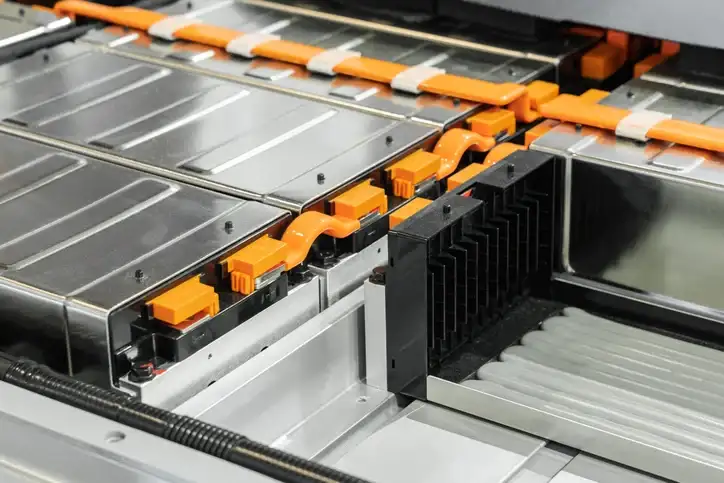
Effective hardware design is key to reducing BOM costs and minimizing physical fault points in high-volume battery production. By adopting Cell-to-Chassis (CTC) architecture, manufacturers can eliminate unnecessary components, streamline assembly, and enhance overall reliability. This approach simplifies wiring and connections, which lowers the risk of defects and short circuits.
Implementing non-thermal propagation features is critical for safety. CTC designs incorporate safety mechanisms that prevent thermal runaway from spreading across cells, ensuring safer operation even under fault conditions. This not only protects the battery pack but also reduces costly recalls and safety incidents.
The CTC architecture also accelerates assembly processes. By integrating cells directly into the chassis, it reduces the number of assembly steps, improves quality control, and enhances consistency across mass production lines. This approach supports scalable, reliable manufacturing, aligning with the demands of high-volume EV battery systems.
AI-Driven BMS and Predictive Maintenance
Integrating AI into Battery Management Systems (BMS) significantly enhances SOC (State of Charge) accuracy and fault detection capabilities. Advanced AI algorithms analyze real-time data to identify subtle thermal anomalies and performance deviations that traditional systems might miss. This proactive approach enables early warnings, allowing maintenance teams to address issues before they escalate, thus reducing downtime and preventing costly failures.
Leveraging cloud analytics further strengthens predictive maintenance by aggregating data across fleets and operational environments. Continuous monitoring of line speed, defect rates, and process deviations provides a comprehensive view of battery health, enabling precise diagnostics and timely interventions. This integration not only improves safety margins but also lowers maintenance costs, ensuring higher reliability in high-volume production.
By adopting AI-powered BMS and cloud-based analytics, manufacturers can achieve a smarter, safer, and more cost-efficient battery production process, aligning with global standards for quality control and safety compliance.
Securing the Global Supply Chain for High-Volume Production
Building a resilient supplier network for raw materials is essential to maintain high-volume battery pack production without disruptions. Reliable sourcing from trusted partners ensures consistent quality and reduces risks associated with supply shortages or delays. Implementing comprehensive quality control protocols upstream, such as rigorous incoming material inspections and statistical process control (SPC), guarantees that only top-grade components enter the manufacturing line.
Managing logistics and compliance across borders is equally critical. Navigating different regulatory environments, customs procedures, and transportation standards requires a robust supply chain management system. Leveraging digital tools like blockchain for traceability and real-time tracking enhances transparency and accountability. This approach not only streamlines operations but also ensures adherence to global safety and environmental standards, supporting scalable and compliant high-volume production of battery packs.
Future Trends in Battery Traceability and Quality Control
Emerging technologies like blockchain, IoT sensors, and machine learning are set to revolutionize battery pack traceability and quality control in high-volume production. Blockchain can provide tamper-proof records for every component and manufacturing step, ensuring full transparency and compliance with global regulations such as the EU Battery Directive. IoT sensors enable real-time data collection during manufacturing and operation, allowing for instant detection of anomalies and improved predictive maintenance.
Digital twins are increasingly used to simulate battery performance and safety under various conditions, helping manufacturers optimize design and manufacturing processes before physical production. Smart factories leverage these digital models and automation to scale production efficiently while maintaining rigorous quality standards.
Preparing for upcoming regulatory and safety standards requires integrating these advanced technologies into the manufacturing ecosystem. This proactive approach ensures compliance with evolving international safety protocols like ISO 26262 and UL 2580, while also supporting innovations in battery pack traceability and quality control. Staying ahead in these trends is crucial for manufacturers aiming to deliver safe, reliable, and compliant battery systems at scale.
 English
  German
  Chinese
  Spanish