
Trying to choose between prismatic, cylindrical, and pouch cell formats for EV battery packs?
You’re in the right place.
In this guide, I’ll break down the real differences that matter most: energy density, thermal performance, cost, mechanical safety, and pack-level efficiency.
Because when you compare cell formats the right way, the best choice for an EV application becomes much clearer.
Let’s dive in.
What Are Prismatic, Cylindrical, and Pouch Cells?
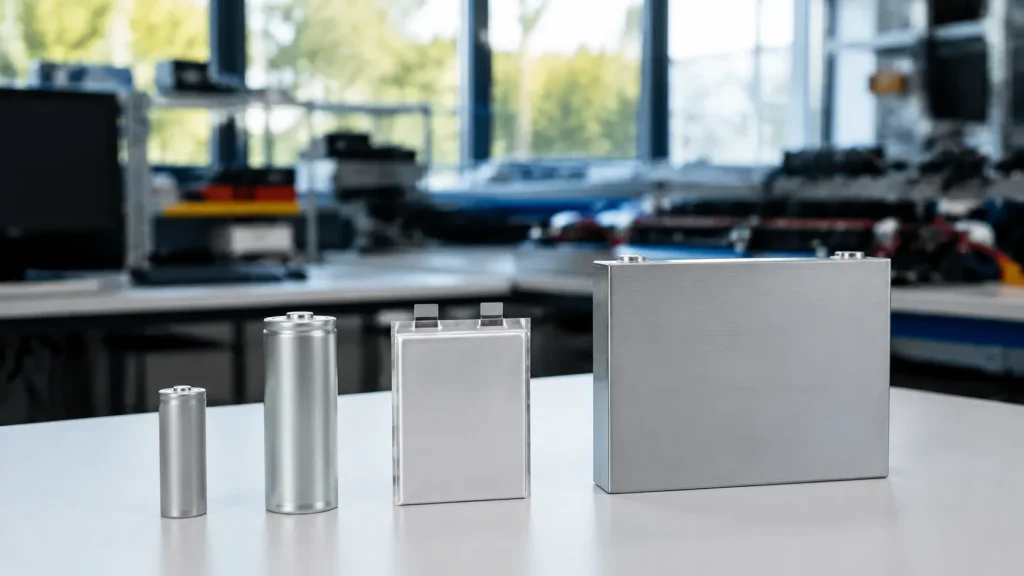
In EV battery packs, the choice of cell format is crucial for performance, safety, and design flexibility. Prismatic EV battery cells are rectangular, box-shaped units that provide a compact and scalable solution, making them popular for large-scale EV applications. Cylindrical EV battery cells are round, tube-like cells known for their robustness and widespread use across various industries. Pouch EV battery cells are lightweight, flexible, and flat, offering high energy density but requiring careful thermal management. Each cell format works differently within EV batteries, influencing pack design, safety, and manufacturing processes. Understanding these basic definitions helps in selecting the right cell type for specific vehicle architectures and performance needs.
Advantages and Disadvantages of Prismatic Cells
Prismatic EV battery cells are widely used in EV battery pack design due to their high energy density and straightforward packaging. Their rectangular shape allows for efficient stacking and space utilization, which helps reduce overall pack size and weight. This makes them ideal for scalable, high-capacity applications, especially in larger vehicles or those requiring longer range.
However, prismatic cells also present some challenges. Thermal management can be more complex because their large, flat surfaces tend to trap heat, increasing the risk of hotspots. Effective cooling solutions, such as 6-side liquid cooling, are essential to maintain safety and performance. Additionally, their weight can be higher compared to other formats, which may impact the overall efficiency and handling of the vehicle.
Despite these drawbacks, prismatic cells remain a popular choice for EVs that prioritize energy density and ease of integration. Their compatibility with high-voltage platforms (400V & 800V) makes them suitable for next-generation EV battery technology, ensuring safety and performance in demanding applications.
Cylindrical EV Battery Cells
I use cylindrical EV battery cells when I want a tough, proven format with good thermal management in EV batteries. The round shape helps heat move more evenly, and that makes it a practical choice for EV battery safety and long-term battery cell durability.
What works well – Robust design that handles stress well – Good thermal management for demanding use – Widely used, so scaling and sourcing are more familiar
What holds it back – Lower battery cell energy density than prismatic or pouch options – More battery cell packaging complexity in EV battery pack design – Can reduce space efficiency during EV battery pack integration
For me, cylindrical cells are a solid choice when reliability matters, but they are not the easiest path if I need maximum battery cell energy density in a tight pack layout.
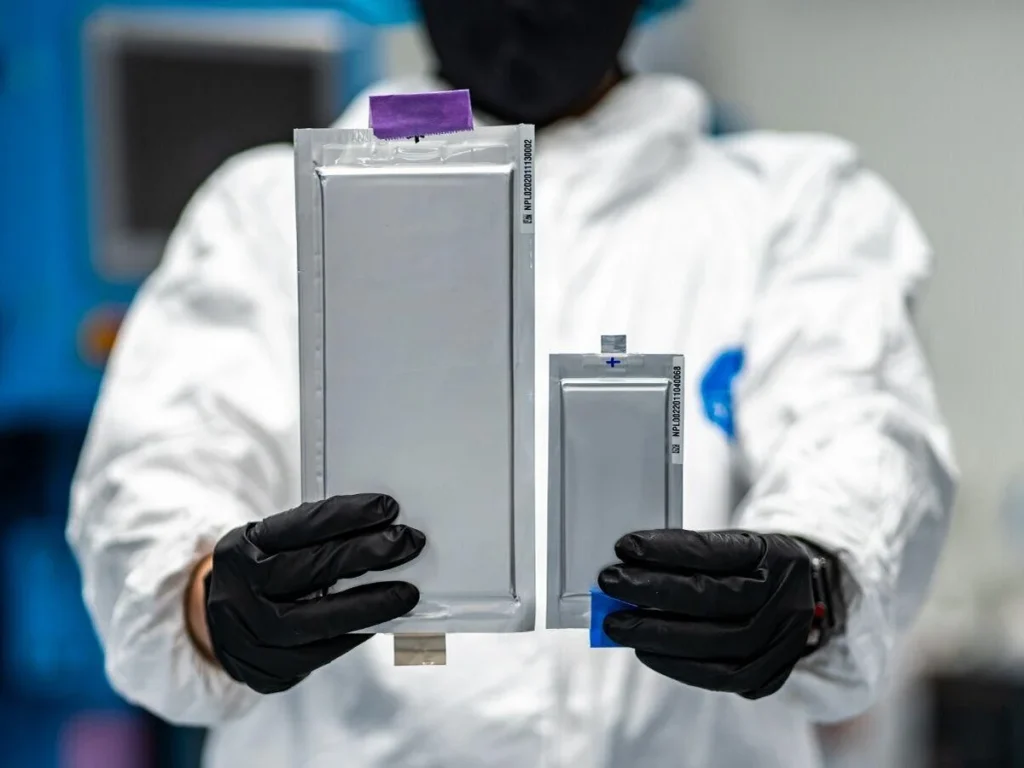
Pouch EV battery cells offer several advantages that make them appealing for certain applications. Their lightweight and flexible design allow for innovative packaging, enabling engineers to optimize space and shape the battery pack to fit specific vehicle architectures. This flexibility often results in higher battery cell energy density, which helps extend driving range and improve overall vehicle performance. Because pouch cells can be customized into various shapes, they are especially useful in compact or irregularly shaped EV battery packs.
However, pouch cells also come with notable disadvantages. Their fragile structure makes them more vulnerable to physical damage and mechanical stress, which can compromise safety and longevity. Managing heat effectively is another challenge, as pouch cells tend to have less robust thermal management compared to other formats. Without proper cooling solutions, pouch cells can overheat, increasing the risk of thermal runaway. For this reason, careful design and advanced thermal management systems are essential when integrating pouch cells into EV battery packs.
In the context of EV battery pack design, understanding these pros and cons helps manufacturers decide if pouch cells are the right choice for their specific needs. They are ideal for lightweight, high-energy-density applications but require careful handling and cooling strategies to ensure safety and durability.
Prismatic vs Cylindrical vs Pouch Cell Formats for EV Battery Packs: Energy Density and Power Output
When I compare prismatic EV battery cells, cylindrical EV battery cells, and pouch EV battery cells, I focus on two things first: how much energy the pack can hold and how well it can deliver power under load.
| Cell format | Energy storage | Power delivery | Best fit |
|---|---|---|---|
| Prismatic | High and space-efficient | Strong for large packs | EV battery pack integration and scalable platforms |
| Cylindrical | Solid, but less space-efficient | Very stable under high demand | Applications that need robust thermal behavior |
| Pouch | High energy density potential | Good, but more sensitive to pack design | Lightweight pack concepts with careful thermal control |
What stands out
- Prismatic cells work well when I need strong packaging efficiency and a clean EV battery pack design.
- Cylindrical cells are a safe pick for steady power delivery and thermal stability.
- Pouch cells can hold a lot of energy in a compact shape, but they need tighter control in thermal management in EV batteries.
My short take
- If the goal is maximum pack efficiency, I lean toward prismatic battery cell packaging.
- If the goal is stable power and durability, cylindrical cells stay competitive.
- If the goal is high energy density in a light design, pouch cells can work, but the pack design has to do more of the heavy lifting.
For global EV battery pack integration, I keep the choice simple: the best battery format for electric vehicles is the one that balances battery cell energy density, power output, thermal management, and battery lifecycle performance without making the system harder to build or maintain.
Thermal Management and Safety Concerns in EV Battery Cells
Thermal management is critical for ensuring safety and performance in EV battery packs. Prismatic EV battery cells, with their larger, standardized shapes like 148mm, 208mm, and 300mm, are designed to support efficient liquid cooling systems that optimize heat dissipation across the pack. This helps maintain a stable operating temperature, reducing thermal runaway risks and extending battery lifespan. Their robust structure also provides high mechanical safety, making them suitable for high-voltage platforms like 400V and 800V.
Cylindrical EV battery cells are known for their inherent thermal stability due to their compact, uniform shape. Their design allows for effective natural air cooling or liquid cooling solutions, which help manage heat during fast charging or high power output. This widespread use in consumer electronics and EVs underscores their proven safety record. However, their lower energy density can sometimes lead to packaging complexities when scaling up for larger packs.
Pouch EV battery cells offer high energy density and lightweight design, but thermal management presents unique challenges. Their thin, flexible structure makes them more prone to thermal runaway if not properly cooled. To counter this, advanced cooling techniques such as micro-channel liquid cooling are employed, but these add complexity to the system. Their fragility also demands careful handling and safety measures, especially in high-impact scenarios.
Overall, each cell type’s approach to heat management directly impacts EV safety. Prismatic cells benefit from their structural robustness and efficient cooling integration, while cylindrical cells excel in thermal stability due to their shape. Pouch cells require sophisticated thermal management systems to mitigate safety risks associated with their high energy density and fragile structure. Proper thermal management not only enhances safety but also prolongs battery lifecycle and performance reliability.
Manufacturing and Cost Considerations for EV Battery Pack Design
For me, the biggest cost driver is not just the cell itself, but how much work the format adds to EV battery pack integration. Prismatic EV battery cells are usually the easiest to standardize when I want cleaner packaging, fewer parts, and faster scale-up. With standardized prismatic cells in 148mm, 208mm, and 300mm widths, I can match more vehicle platforms without redesigning the full pack each time.
Format cost at a glance
- Prismatic EV battery cells: Strong fit for large-scale EV battery pack design, with simpler layout and better space use.
- Cylindrical EV battery cells: Easier to source in many cases, but the higher number of cells usually adds connection work and assembly steps.
- Pouch EV battery cells: Flexible in shape, but they often need more structural support and careful handling during integration.
What I focus on
- Battery manufacturing costs: I look at total system cost, not just cell price.
- Scalability: Standard cell sizes help me move faster from sample builds to mass production.
- BOM control: My Gen3 battery packs reduce BOM cost by 20%, cut component count by 18%, and lower weight by 7% to 10% compared with earlier designs.
- Delivery speed: Sample builds take 3-4 weeks, and mass production takes 6-8 weeks, which helps reduce time-to-market pressure.
In real projects, the format that scales best is the one that cuts rework, simplifies battery cell packaging, and keeps the pack architecture stable across platforms. For global EV programs, that usually means choosing a design path that supports repeatable production, predictable battery lifecycle performance, and lower total system cost.
Design Flexibility and Packaging
Pack Fit
I treat EV battery pack design as a vehicle packaging job first. The cell shape changes how cleanly I can fit the pack, how many parts I need, and how smoothly the system integrates into different EV architectures.
| Cell format | Packaging fit | What it means in practice |
|---|---|---|
| Prismatic | Strongest fit for standard layouts | Standardized prismatic cells (148mm/208mm/300mm) make EV battery pack integration cleaner, especially for CTP 2.0 and CTC mechanical layouts |
| Cylindrical | Flexible, but more complex | Cylindrical EV battery cells can work well, but they often add more connection points and module planning |
| Pouch | Compact, but structure-sensitive | Pouch EV battery cells can save space, but they need tighter enclosure control and careful pack support |
My Packaging Rule
- I use prismatic EV battery cells when I want a simpler layout and faster platform matching.
- I keep cylindrical EV battery cells in mind when the design needs a different module strategy.
- I choose pouch EV battery cells when compact packaging matters and the structure can support it.
- I prioritize battery cell packaging that keeps cooling, service access, and EV battery safety practical.
What Matters Most
- A good shape is not just about size; it affects battery cell packaging, wiring paths, and enclosure design.
- For global EV programs, I look for a format that supports scale, safety, and clean EV battery pack integration.
- High-strength housing and well-planned layouts help me protect the pack without wasting space.
Durability and Lifecycle Performance in EV Battery Pack Design
When I look at battery cell durability, I do not judge the cell shape alone. I look at the full EV battery pack design, because long battery lifecycle performance depends on structure, thermal management in EV batteries, and EV battery safety as much as it does on the format itself.
For long service life, prismatic EV battery cells fit well with standardized pack layouts and CTP 2.0 or CTC mechanical layouts, which helps support stable EV battery pack integration. Cylindrical EV battery cells are known for their rugged form, while pouch EV battery cells need more structural protection to hold up over time.
What Supports Longer Life
- 6-side liquid cooling optimization helps keep temperature differences tight across different cell geometries.
- High-strength steel housing and IP67 protection add another layer of durability.
- AI-powered BMS monitoring helps catch faults early and track battery cell energy density changes and aging trends.
- Health prediction supports a 3,500-cycle target, which is a strong benchmark for battery lifecycle performance.
My Take
If I want a pack that stays reliable over time, I focus on the full system: battery cell packaging, cooling, protection, and control. That is what gives prismatic EV battery cells their strongest advantage in real-world use, especially for global applications where uptime, safety, and battery recycling and environmental impact all matter.
Environmental Impact and Recycling in EV Battery Pack Design
I treat battery recycling and environmental impact as a full-pack issue, not just a cell-format choice. Prismatic EV battery cells, cylindrical EV battery cells, and pouch EV battery cells all need a clear end-of-life plan, but the strongest sustainability results come from closed-loop lifecycle management built in from the start.
- Closed-loop use: I use lifecycle tracking and online residual value estimation to support reuse, repair, and second-life planning.
- Lower footprint: Second-life usage can cut carbon footprint by 34%, which makes battery lifecycle performance a real sustainability factor.
- Practical recovery: Standardized pack structures support cleaner EV battery pack design, safer handling, and better end-of-life processing.
- Eco-friendly focus: The most sustainable battery cell packaging is the one that balances durability, service life, and responsible recycling.
Future Trends and Innovations in EV Battery Cells
Emerging technologies are shaping the future of EV battery cells, especially for prismatic, cylindrical, and pouch formats. Advances in solid-state batteries promise higher energy density and improved safety, potentially transforming prismatic and pouch cells by replacing liquid electrolytes with solid materials. This shift aims to deliver longer lifespan and faster charging, reducing thermal management challenges.
Additionally, innovations in cell design, such as modular and scalable architectures, will enhance manufacturing efficiency and customization for different EV platforms. For example, next-generation cylindrical cells are expected to feature improved thermal management through integrated cooling channels, boosting power output and safety.
Smart manufacturing techniques, including automation and AI-driven quality control, will lower production costs and increase scalability across all cell formats. Furthermore, research into recyclable and eco-friendly materials aims to minimize environmental impact, making all cell types more sustainable.
Overall, these emerging trends will push prismatic, cylindrical, and pouch cells toward higher performance, better safety, and greater environmental responsibility, ensuring they meet the evolving demands of future EV battery technology.
FAQs about EV Battery Cell Formats
Choosing the right cell format for electric vehicle (EV) batteries is a common question among OEMs and fleet operators. The decision impacts energy density, safety, manufacturing costs, and overall vehicle design.
One of the main considerations is whether prismatic, cylindrical, or pouch cells best fit your EV battery pack design. Prismatic EV battery cells, with their standardized sizes like 148mm, 208mm, and 300mm, are often favored for their ease of integration into high-voltage platforms and robust structural housing. They are ideal for scalable, high-capacity packs with strong thermal management, especially in demanding applications.
Cylindrical EV battery cells are known for their durability and widespread use, thanks to their simple manufacturing process and excellent thermal management. However, they typically offer lower energy density compared to prismatic or pouch cells and can be more complex to pack efficiently.
Pouch EV battery cells are lightweight and flexible, making them suitable for compact designs and high-energy density applications. Still, their fragility and thermal management challenges require careful engineering to ensure safety and longevity.
When selecting the best battery format, consider your specific needs for energy storage, power output, safety standards, and manufacturing scalability. Advances in EV battery technology continue to evolve, with innovations aimed at improving all three formats’ performance and sustainability. For detailed insights on how to optimize your EV battery pack design, exploring top questions buyers ask can help clarify key decision factors.
 English
  German
  Chinese
  Spanish