
Why Automotive-Grade Matters
When it comes to electric vehicles (EVs), the quality of the battery pack isn’t just a matter of performance—it’s a matter of safety and reliability. Using consumer or industrial lithium-ion battery packs in EVs might seem like a cost-saving shortcut, but it comes with serious risks. These packs often lack the rigorous safety standards and certifications required for automotive applications, which can lead to dangerous failures.
Real Risks of Using Non-Automotive Battery Packs in EVs:
- Safety Failures: Consumer-grade packs may not meet automotive lithium-ion battery pack safety standards like IEC 62660 or UN38.3, increasing the risk of thermal runaway, fires, or explosions.
- Recalls and Downtime: Safety issues can force costly recalls, halting vehicle production and damaging brand reputation.
- Warranty and Liability Problems: OEMs could face significant warranty claims and liability if battery failures cause accidents or damage.
Why OEMs Demand Strict Qualification
Automotive OEMs require automotive-grade lithium-ion battery packs that pass strict qualification standards. These standards ensure the battery packs are designed, manufactured, and tested to withstand the demanding conditions of automotive use—extreme temperatures, vibrations, and crash scenarios. This rigorous qualification process helps prevent safety failures, guarantees long-term durability, and ensures compliance with global EV battery certification standards. Ultimately, it’s about delivering safe, reliable, and high-performance EVs to consumers.
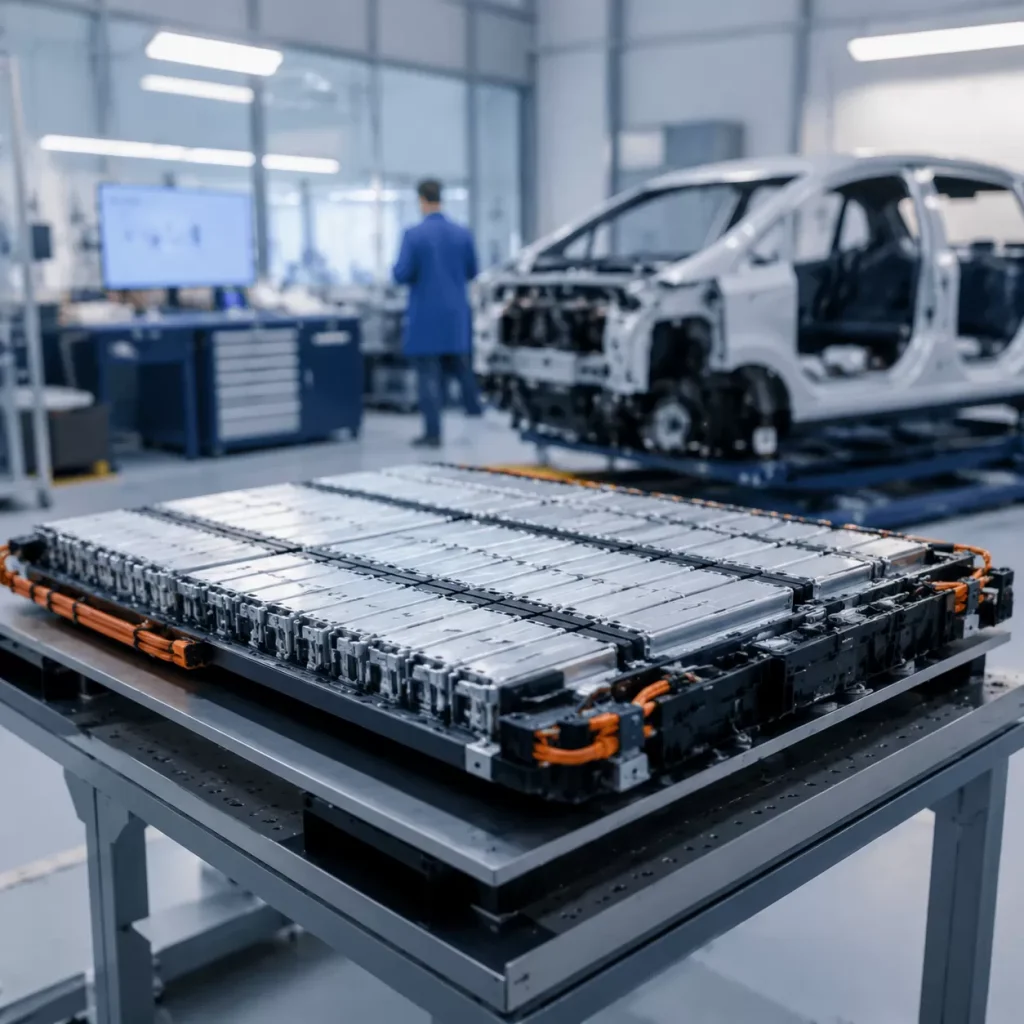
Automotive-Grade Battery Pack Standards and Certifications
When I evaluate automotive-grade lithium-ion battery packs, I start with the standards. In the U.S. market, OEMs want proof that a pack is safe, transport-ready, and built for long-term use in a high-voltage EV battery pack system.
Safety first
- ISO 26262 functional safety helps make sure the pack and BMS battery management system automotive controls respond safely when something goes wrong.
- UN38.3 battery certification and UN3480 compliance are required for shipping lithium-ion packs by air, sea, or ground.
- IEC 62660 standard testing checks how cells perform under real EV load conditions.
- FMVSS performance requirements matter because the pack has to support vehicle safety rules in the U.S.
Component qualification
- AEC-Q automotive qualification is the baseline for key electronic parts in the pack.
- AEC-Q100 covers integrated circuits.
- AEC-Q200 applies to passive components like resistors and capacitors.
OEM approval expectations
I also look at how the pack will pass the EV battery pack OEM approval. Global OEMs expect:
- Clear test reports
- Repeatable build quality
- Traceable parts and materials
- Stable lithium-ion battery pack safety standards
- Long-term battery pack thermal runaway prevention
- Consistent lithium battery pack cycle life
If a pack cannot show this level of proof, it usually will not meet EV battery certification standards for passenger EVs, fleets, or REEV programs in the U.S. market.
Core Performance Requirements
When it comes to automotive-grade lithium-ion battery packs, meeting core performance standards is essential for safety, reliability, and longevity. Here’s what OEMs look for:
| Feature | Why it matters | Key points |
|---|---|---|
| Energy density & efficiency | Determines how much power the pack can store and deliver per size | Higher energy density means longer driving range without adding weight. Efficiency reduces energy loss during operation. |
| Power density & fast charge/discharge | Ensures the battery can handle quick bursts of power and fast charging | Critical for acceleration and quick turnaround times at charging stations. Look for packs with high power density for better performance. |
| Thermal stability & temperature range | Prevents overheating and thermal runaway | Automotive-grade packs are designed to operate safely across wide temperature ranges, even in extreme U.S. climates. Proper cooling systems are key. |
| Cycle life & long-term degradation | Affects how long the battery lasts before needing replacement | OEMs demand batteries that can endure thousands of charge cycles with minimal capacity loss. This reduces total cost of ownership. |
| Voltage stability & BMS coordination | Maintains consistent performance and safe operation | A well-integrated Battery Management System (BMS) ensures voltage stays within safe limits, preventing damage and ensuring longevity. |
Choosing a battery pack that hits these core performance metrics is vital for delivering a reliable, safe, and cost-effective EV. For example, packs built with high-quality cells and advanced BMS systems can significantly improve cycle life and thermal stability, which are critical for U.S. drivers facing diverse weather conditions.
Automotive Battery Pack Design
Cell Selection
I start with the right cell chemistry and grade for the job. For U.S. EV use, that usually means comparing LFP vs NMC battery pack options based on range, cost, heat control, and safety.
- I sort cells by capacity, internal resistance, and matching tolerance.
- I reject weak cells early so the automotive battery pack stays consistent over time.
- I choose prismatic, cylindrical, or pouch cells based on space, weight, and service needs.
Pack Architecture
The pack layout has to fit the vehicle and hold up in real use. A high-voltage EV battery pack needs a clean mechanical layout, solid busbar design, and stable electrical spacing.
| Pack Type | Main Benefit | Best Use |
|---|---|---|
| Prismatic | Simple layout, strong energy density | OEM EVs and fleets |
| Cylindrical | Good heat flow, easy scaling | High-cycle applications |
| Pouch | Lightweight, flexible fit | Space-limited designs |
BMS Protection
I build the pack around the BMS battery management system automotive layer, not around the cells alone. That is what keeps the pack safe in real driving, charging, and storage conditions.
- I monitor voltage, current, and temperature in real time.
- I add overcharge, overdischarge, short-circuit, and imbalance protection.
- I match the pack with SiC MOSFET applications in EV systems when the design needs tighter control and better efficiency.
- I use SiC power modules built for high-voltage EV systems when the pack needs stronger power handling and lower losses.
Thermal And Safety Design
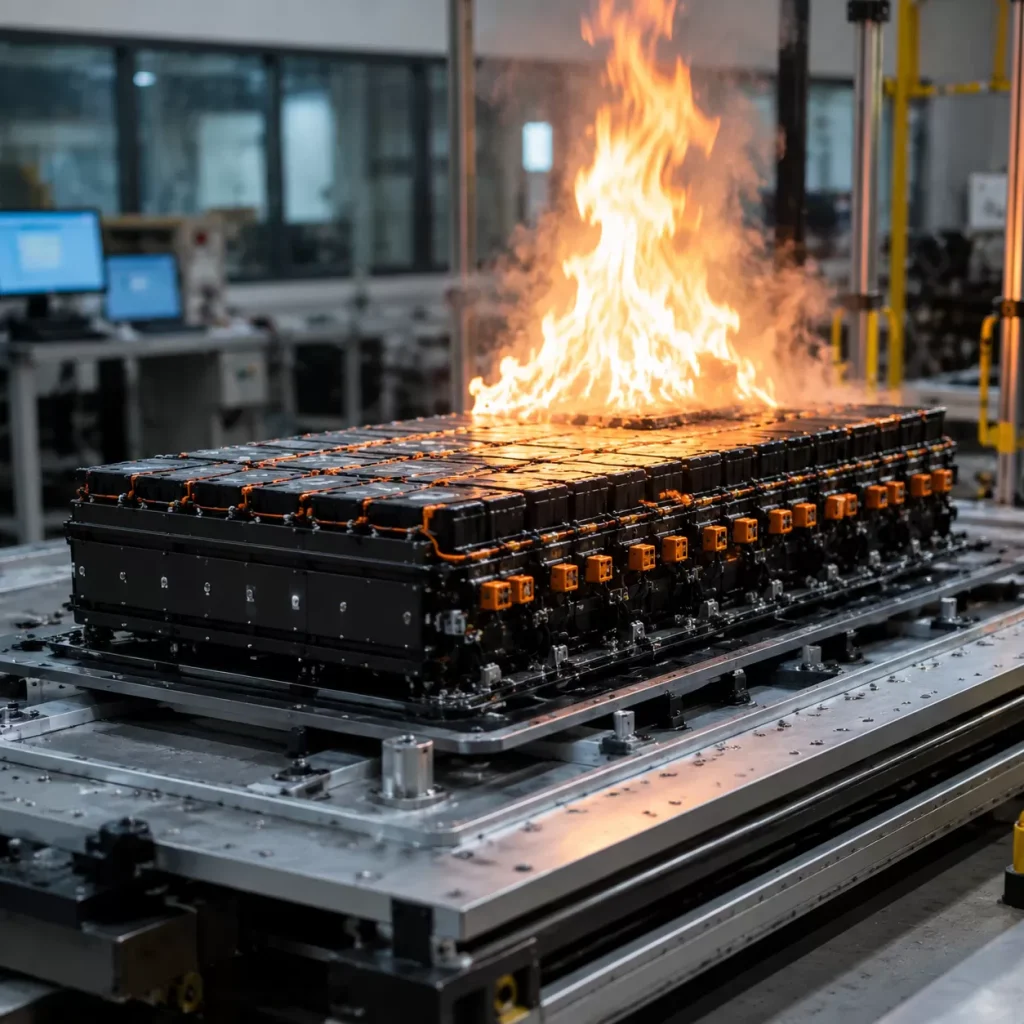
Battery pack thermal runaway prevention starts with thermal design, not just testing. I focus on cooling, spacing, and enclosure strength so heat does not spread fast.
- I design cooling paths for steady charge and discharge performance.
- I reinforce crash zones so the pack stays protected in a collision.
- I use proper sealing and IP rating targets for dust, water, and road use.
Manufacturing Consistency
Pack consistency comes from in-house automotive battery pack manufacturing and tight process control. That is how I keep the build repeatable for OEM battery pack approval and long-term field use.
- I control cell grading, welding, and assembly at each step.
- I verify fit, torque, insulation, and balance before shipment.
- I keep the same build standard across passenger EVs, fleets, and REEVs.
What Makes a Battery Pack Automotive Grade? Safety Testing
I treat safety testing as the line between a pack that works in the lab and one that can handle real U.S. roads, weather, and daily charging. For automotive-grade lithium-ion battery packs, I look for testing that proves the pack can survive abuse, stay stable, and keep working under stress.
Abuse Test Standards
I validate the pack against common failure cases, not just normal use:
- Nail penetration, crush, and overcharge abuse testing
- Short-circuit and overcurrent protection checks
- Thermal runaway prevention and propagation control
- Clear pass/fail data tied to EV battery certification standards
Environmental Durability
A pack also has to hold up in real-world conditions across the U.S.:
- Vibration testing for rough roads and fleet use
- Humidity exposure for coastal and southern climates
- Temperature cycling for hot summers and freezing winters
- Sealing checks for the right IP rating and enclosure protection
End-of-Line Quality Control
I also expect tight automotive battery pack manufacturing control at the end of the line:
- Cell matching and pack consistency checks
- BMS battery management system automotive validation
- Voltage, insulation, and leak-current testing
- Final verification before shipment and field use
Why It Matters
If the testing is weak, the risk goes up fast:
- Faster lithium battery pack cycle life loss
- More downtime for EV fleets and OEM service teams
- Higher recall risk, warranty claims, and safety exposure
- Lower trust in a high-voltage EV battery pack program
What I Look For
For me, a true automotive-grade pack shows:
- Real battery pack thermal runaway prevention
- Strong quality control from cell selection to final test
- Proof of compliance with lithium-ion battery pack safety standards
- Reliable performance in both OEM and aftermarket use
LEAPENERGY’s Automotive-Grade Approach
We build automotive-grade lithium-ion battery packs with a focus on safety, consistency, and real-world use. Our automotive battery pack manufacturing base and global partner network help us support both OEM programs and aftermarket demand in the U.S. market.
Built for U.S. EV Needs
I design custom battery systems for:
- Passenger EVs
- Fleet vehicles
- REEVs and other high-voltage EV battery pack platforms
That means I can match the pack to the vehicle’s duty cycle, charging pattern, and temperature range instead of forcing a one-size-fits-all setup.
Long-Life, High-Safety Design
Our packs are built around:
- BMS battery management system automotive control for stable operation
- Strong battery pack thermal runaway prevention measures
- Long service targets for lithium battery pack cycle life
- Clean integration with EV battery certification standards and EV battery pack OEM approval needs
I keep the design practical: safe under stress, steady in daily driving, and easier to support over time.
OEM and Aftermarket Ready
For OEMs, I focus on qualification, repeatability, and pack consistency. For aftermarket buyers, I focus on fit, safety, and long-term value. The goal is the same either way: high-safety designs that hold up in everyday use, not just on paper.
Automotive-Grade vs Consumer-Grade Battery Packs
When choosing a battery pack for electric vehicles, understanding the key differences between automotive-grade lithium-ion battery packs and consumer-grade options is crucial. Automotive-grade packs are built with safety, longevity, and strict certification standards in mind, making them more reliable for long-term use in EVs. In contrast, consumer-grade packs might be cheaper upfront but often fall short in areas like lifespan and safety, which can lead to costly issues down the line.
Safety, lifespan, certification, and cost differences are the main factors that set these two apart. Automotive-grade packs undergo rigorous safety testing, including abuse tests like nail penetration and thermal runaway prevention, ensuring they can handle real-world conditions. They also meet standards like ISO 26262 for functional safety and UN38.3 for transport safety, which are essential for OEM approval and long-term performance. Consumer-grade packs, on the other hand, may not meet these strict standards, increasing the risk of safety failures, recalls, and warranty problems.
A common mistake in buying battery packs is repurposing consumer or industrial packs for EV use without proper qualification. This can lead to reduced cycle life, unpredictable thermal behavior, and safety hazards. To avoid these risks, it’s important to verify the authenticity and compliance of the battery pack. OEMs typically require proof of certification—such as IEC 62660 performance standards and AEC-Q100 component qualification—to ensure the pack is suitable for automotive use.
In the end, investing in an automotive-grade battery pack means prioritizing safety, durability, and compliance, which ultimately saves money and protects your reputation in the long run.
Future Trends in EV Battery Packs
The future of EV battery packs is shaping up to be more innovative and sustainable. Solid-state batteries are gaining attention because they promise higher safety, longer cycle life, and better thermal stability compared to traditional lithium-ion packs. These batteries use a solid electrolyte, which significantly reduces the risk of thermal runaway and improves overall safety—key factors for automotive-grade lithium-ion battery packs. You can explore how solid-state technology is evolving and its potential impact on automotive safety standards.
Another exciting development is sodium-ion batteries, which could lower costs and reduce reliance on cobalt and nickel. This aligns with the push for lower-cobalt chemistries and more sustainable materials, making EV batteries more eco-friendly and affordable. As OEMs demand stricter qualification and certification, these innovations are expected to meet or exceed current EV battery certification standards like IEC 62660 and UN38.3.
Smart BMS (Battery Management Systems) are also becoming more sophisticated, enabling better vehicle-to-grid (V2G) integration. This allows EVs to act as energy storage units, helping balance grid demand and improve overall energy efficiency. The integration of advanced BMS technology is crucial for ensuring safety, longevity, and optimal performance of automotive battery packs.
Sustainability is a growing focus, with recycling initiatives, lower-cobalt chemistries, and improved manufacturing processes. These trends aim to reduce environmental impact while maintaining high safety and performance standards. As the industry moves forward, OEMs will continue to prioritize automotive-grade lithium-ion battery packs that meet strict safety, durability, and certification requirements, ensuring reliability for U.S. consumers and fleets alike.
 English
  German
  Chinese
  Spanish