
Understanding EV High-Voltage Architectures: 400V vs 800V Systems
Electric vehicle (EV) high-voltage battery platforms primarily operate at either 400V or 800V architecture. These voltage levels define the electrical system’s design, impacting performance, efficiency, and vehicle integration.
- 400V Systems: The most common EV architecture today, 400V systems balance cost, availability, and infrastructure compatibility. They use standard components designed for moderate voltage, making them reliable and widely supported across markets.
- 800V Systems: Emerging as a higher-voltage alternative, 800V architectures double the voltage level, enabling faster charging and improved power delivery. This higher voltage reduces current for the same power, which cuts wiring size and weight, enhancing overall vehicle efficiency.

Key Differences
- Voltage Level: 400 volts vs. 800 volts
- Current Flow: 800V systems operate at roughly half the current of 400V for similar power output, reducing heat generation and energy losses.
- Component Requirements: 800V platforms demand advanced insulation and power electronics compatible with higher electrical stress but offer potential integration benefits such as SiC (silicon carbide) inverters.
For OEMs, understanding these fundamental differences is critical when evaluating EV platform migration strategies and long-term vehicle architecture planning, especially as the 800V EV architecture gains traction for premium and performance segments.
Core Technical Comparison: Performance, Efficiency, and Thermal Behavior
When comparing 400V vs 800V EV battery systems, the differences in charging speed, efficiency, and thermal management are key factors that OEMs must understand.
Charging Speed & Power Delivery
- 800V systems allow for much faster charging—up to twice the voltage of 400V—enabling ultra-fast DC charging rates and reduced time at the charger.
- Higher voltage means reduced current for the same power, leading to lower heat generation and less stress on components.
- This translates into quicker power delivery to the motor and potentially better acceleration performance.
| Feature | 400V Systems | 800V Systems |
|---|---|---|
| Max Charging Voltage | ~400V | ~800V |
| Typical DC Fast Charge | Up to ~150 kW | Up to 350+ kW |
| Charging Time | Longer | Significantly shorter |
| Current Levels | Higher (more heat loss) | Lower (improved efficiency) |
Efficiency & Energy Loss
- Higher voltage architectures reduce resistive losses in wiring and connectors, improving overall system efficiency.
- This improves driving range while enhancing regenerative braking efficiency since less energy is lost during power conversion.
- 800V systems generally show noticeable gains in battery-to-wheel energy conversion compared to 400V systems.
Thermal Management Advantages
- 800V platforms generate less heat during charging and discharging due to lower current, simplifying cooling system requirements.
- Better thermal behavior allows tighter packaging and improved reliability.
- Advanced thermal management systems, like those detailed in LEAPENERGY’s approach to EV battery thermal management, help maintain optimal battery temperatures at higher voltages.
Power Electronics & Motor Integration
- High-voltage 800V systems make greater use of silicon carbide (SiC) or gallium nitride (GaN) devices that operate efficiently at these voltages, reducing size and weight of inverters.
- Wiring harnesses are lighter and shorter due to lower current needs, cutting material weight and complexity.
- The integration benefits link directly to higher efficiency and reduced component costs over time.
Ultimately, the jump from 400V to 800V architecture unlocks significant performance, efficiency, and thermal management gains that OEMs need to factor in when designing next-gen EV platforms. For a detailed dive on platform distinctions, see the comprehensive guide on 400V vs 800V EV battery pack platforms.
Cost and Supply Chain Implications for OEMs
When comparing 400V vs 800V EV battery systems, cost and supply chain factors play a big role for OEMs. Mature 400V components benefit from established supply chains and economies of scale, making parts generally more affordable. Meanwhile, 800V systems, still emerging in the US market, often come with higher upfront costs due to newer, less mass-produced components like SiC inverters and specialized connectors.
One clear advantage of 800V systems is the wiring harness weight and material savings. Because higher voltage allows for lower current at the same power, wiring thickness can be reduced significantly. This cuts weight and cost, impacting the vehicle’s overall bill of materials (BOM) positively. Lighter wiring also supports easier assembly and better efficiency, critical for OEMs aiming to hit strict vehicle weight and cost targets.
However, shifting from a 400V to an 800V platform comes with challenges:
- Tooling and validation costs rise due to new configurations and safety requirements.
- Sourcing complexity increases as OEMs need suppliers for high-voltage insulation materials and emerging semiconductor tech.
- Platform migration risks require thorough testing to guarantee reliability and compliance, adding to time-to-market.
OEMs can manage these hurdles by carefully planning product roadmaps and leveraging integrated battery pack designs to cut manufacturing costs and improve range, as detailed in battery pack integration boosts EV range and cost. Overall, while 800V platforms carry higher initial component and validation costs, the long-term savings in wiring, system efficiency, and performance often justify the investment for premium and performance-focused vehicles.
Infrastructure Compatibility and Real-World Charging Experience
When it comes to fast charging, the current landscape is mixed but evolving quickly. Most public fast chargers in the U.S. still support 400V EV battery platforms, which means 400V systems pair smoothly with existing infrastructure. However, 800V EV architecture advantages shine through with ultra-fast DC charging compatibility, enabling much higher charging speeds and reduced wait times where chargers support this voltage.
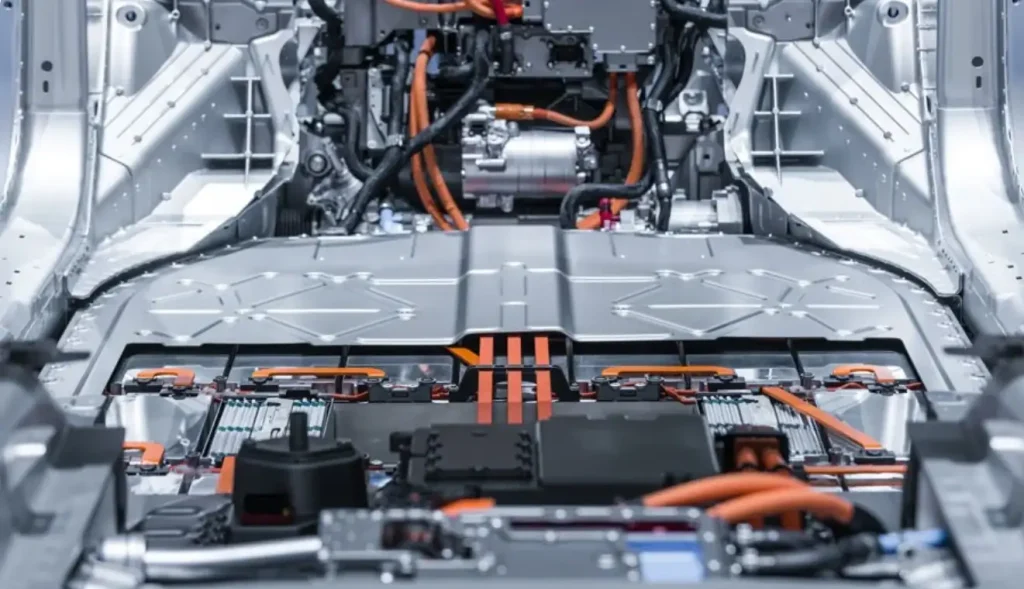
To bridge this gap, many OEMs are adopting vehicle-side solutions that allow dual-voltage support. These setups use intelligent Battery Management Systems (BMS) that can safely switch between 400V and 800V charging modes depending on the station. This flexibility improves the customer charging experience by maximizing compatibility without compromising safety or battery health.
OEMs also focus on future-proofing their offerings by developing smart BMS strategies and hardware that can adapt as more ultra-fast 800V chargers roll out across the country. They prioritize seamless integration with the current charging infrastructure while preparing for higher-voltage standards. This approach minimizes customer frustration and ensures smooth platform migration.
For OEMs looking for comprehensive support in this area, LEAPENERGY’s expertise in advanced battery pack design and validation offers valuable resources to optimize charging strategies for both 400V and 800V systems. Their experience in customizing solutions helps OEMs deliver better range and reliability under real-world conditions. Learn more about how battery pack design shapes EV range and charging speed for practical insights.
Safety, Reliability, and Regulatory Considerations
When comparing 400V vs 800V EV battery systems, safety and reliability are top priorities. Higher voltage systems like 800V come with increased risks around high-voltage insulation and arcing. Meeting stringent safety standards such as ISO 6469 and ECE R100 is essential to ensure robust protection against electrical faults and shorts. OEMs must design insulation and protective barriers carefully to prevent hazards linked with elevated voltages.
Thermal management also plays a role in safety. While 800V systems can improve efficiency, they add complexity to battery management systems (BMS), requiring sophisticated controls to detect and prevent thermal runaway promptly. The BMS in 800V platforms often involves advanced diagnostics and active monitoring strategies to maintain system integrity under stress.
Crashworthiness is another key area where 800V EV architectures demand special attention. The higher voltages require updated homologation and testing protocols, ensuring the vehicle maintains safety even under severe collision conditions. OEMs developing 800V platforms need to comply with evolving regulations and perform rigorous validation to meet safety benchmarks without compromising performance.
For more on safety architecture and diagnostic strategies, see how advanced battery system architecture and safety diagnostics help OEMs navigate these challenges effectively. Also, integration of Battery Disconnect Units (BDUs) with the BMS plays a critical role in enhancing EV battery safety, detailed in this resource on BDU and BMS integration.
In , while 800V systems offer clear performance advantages, OEMs must balance these with comprehensive safety planning focused on electrical insulation, thermal runaway prevention, and crash protection to meet both regulatory demands and customer expectations.
Vehicle Segment Fit and Strategic Decision Framework
Choosing between 400V vs 800V EV battery systems largely depends on the vehicle segment and how the vehicle will be used. For mass-market EVs, 400V platforms remain popular due to their mature supply chain, cost-efficiency, and compatibility with current charging infrastructure. These vehicles typically focus on practicality, moderate range, and budget-friendly pricing.
On the other hand, premium and performance EVs benefit more from 800V EV architecture advantages. Higher voltage systems enable faster charging, improved thermal management, and greater efficiency—key selling points for luxury buyers demanding longer range and quicker turnaround times. Hybrids and plug-in hybrids often strike a balance, choosing flexible voltage platforms suited to both internal combustion engine integration and electric range needs.
Key factors in the strategic decision framework include:
- Range requirements: Vehicles targeting longer trips or higher range benefit from 800V efficiency gains.
- Duty cycle and usage: Daily city drivers may not need ultra-fast charging, favoring 400V systems; meanwhile, high-performance drivers benefit from 800V fast-charging consistency.
- Regional infrastructure: Areas with growing ultra-fast DC charging stations support the shift to 800V architectures.
- Brand positioning: Premium brands leverage 800V as a technological edge, while mass-market brands optimize for cost and simplicity.
Emerging trends show OEMs adopting multi-voltage and flexible platform concepts to cover diverse market demands without full platform migrations. These systems can dynamically switch or integrate both 400V and 800V components, offering scalability and future-proofing.
For a deeper look into regional influences on battery platforms and adoption drivers, OEMs can benefit from insights in battery pack demand drivers by region, which informs voltage strategy aligned with market realities.
Implementation Challenges and Mitigation Strategies
Shifting from 400V to 800V EV battery systems brings several engineering challenges that OEMs need to tackle. High-voltage insulation creepage and partial discharge risks become more critical as voltages increase, requiring advanced materials and precise manufacturing controls. Semiconductor supply constraints, especially for SiC components vital in 800V power electronics, can delay projects and push costs up. On top of that, software calibration for battery management systems (BMS) gets more complex, needing detailed tuning to handle thermal and performance variations correctly.
Validation testing and thermal simulation are must-haves to ensure what works on paper performs safely and efficiently in real life. These steps help predict potential failures and optimize thermal management strategies for the higher voltage packs.
A smart way to ease this migration is by partnering with specialized suppliers who offer flexible modular pack designs. These designs support smooth voltage scaling and platform adaptation while keeping development time and costs down. For example, LEAPENERGY’s expertise in modular and integrated battery packs significantly supports this process by providing validated, durable solutions that accelerate OEM EV platform migration strategies without sacrificing reliability or cost-effectiveness. See how modular pack design can simplify your transition here: modular vs monolithic pack designs.
By addressing these implementation challenges head-on, OEMs position themselves to benefit from the efficiency and performance gains of 800V architectures while managing risk effectively.
Future Outlook: Trends Beyond 800V and Coexistence Scenarios
As we look ahead to 2030, the EV landscape is set to evolve beyond the current 400V vs 800V battery systems debate. Emerging 900V+ architectures are gaining attention, promising even faster charging speeds, improved efficiency, and lighter wiring harnesses. These higher-voltage platforms aim to push the boundaries on performance and range, especially for premium and high-performance vehicles.
However, the coexistence of 400V and 800V platforms will remain the reality for most vehicle segments in the near future. Mass-market EVs will likely continue to favor mature 400V systems due to cost-effectiveness and established infrastructure. Meanwhile, 800V and higher voltage solutions will dominate in premium and long-range categories, where performance and efficiency gains matter most.
Supporting technologies like advanced battery chemistries, solid-state cells, and enhanced grid integration will play a critical role in shaping future voltage trends. These innovations could enable safer, more energy-dense packs compatible with higher voltages while balancing thermal management and safety requirements. To stay competitive, OEMs must watch these shifts closely, especially as flexible platforms capable of multi-voltage operation become more common.
For more insights on how evolving battery technologies and platform strategies impact OEM decisions, see our detailed electric battery pack guide. This resource highlights key trends and technological advances essential for future-proofing EV designs.
How LEAPENERGY Supports OEMs in Both Architectures
LEAPENERGY excels in delivering advanced EV battery solutions tailored to both 400V and 800V EV high voltage battery platforms. Our expertise spans design, manufacturing, and rigorous validation, ensuring OEMs receive reliable packs optimized for performance and efficiency. Whether it’s enabling faster charging speeds or enhancing thermal management, LEAPENERGY’s flexible platforms adapt seamlessly to your specific needs.
We’re committed to pushing innovations in battery management systems (BMS) and thermal control that maximize safety and durability for both voltage architectures. This focus helps OEMs reduce complexity while improving system integration, including support for SiC inverters and wiring harness weight reduction. By balancing performance, cost, and time-to-market, LEAPENERGY supports smooth OEM EV platform migration strategies without compromising quality.
To help your team avoid common pitfalls in battery supplier selection, check out our detailed insights on how OEMs evaluate EV battery pack suppliers. Additionally, our expertise in early-stage validation can guide your prototype development for either 400V or 800V systems through proven battery system supplier evaluation methods.
With LEAPENERGY, OEMs gain a partner ready to tackle the challenges of emerging EV voltage trends, delivering efficient, scalable, and future-ready battery solutions that meet demanding U.S. market expectations.
 English
  German
  Chinese
  Spanish