
The Current Landscape: Solar Plus Storage for Energy Independence
Today, more homeowners are turning to solar plus storage solutions to take control of their energy needs. With rising electricity costs and frequent power outages, the push for residential energy storage systems (ESS) has never been stronger. Solar panels generate clean energy during the day, but without a reliable home battery system, much of that power may go unused or dumped back to the grid. This results in missed opportunities for savings and independence.
The Core Problem: High Bills and Unreliable Power
The traditional grid keeps many of us tethered to fluctuating utility rates and vulnerable to blackouts. Time-of-use tariffs and peak electricity pricing mean you often pay more for energy precisely when you need it most. Worse, outages—whether due to storms or grid instability—can leave your home in the dark, without backup power for critical loads.
Many residential solar homeowners face:
- Limited ability to store excess power
- Dependence on the grid for 24/7 power
- No protection against blackouts
- High energy bills during peak hours
The Solution: Integrated Solar PV with Residential Energy Storage
Integrating a residential solar ESS with a LiFePO4 home battery and a hybrid solar inverter offers a clear path to energy independence. This setup stores your solar energy during the day and intelligently manages its use to maximize self-consumption optimization and provide reliable backup power when the grid fails. By coupling solar panels with robust battery technology, you can cut energy costs, avoid peak rates, and enjoy blackout protection.
Introducing LEAPENERGY: Your Partner in Energy Freedom
At LEAPENERGY, we understand the unique challenges U.S. homeowners face with energy management. That’s why our residential ESS solutions are designed for long lifecycle, safety, and top-tier performance—with modular battery systems and smart energy management systems (EMS) built to adapt to your needs.
We empower you to:
- Optimize your solar plus storage system
- Achieve true energy independence
- Lower your electricity bills with time-of-use optimization
- Secure your home with reliable blackout protection
LEAPENERGY stands for quality, safety, and innovation in residential solar and energy storage—a trusted choice for your journey to energy freedom.
System Architecture: AC vs. DC Coupling and Hybrid Inverter
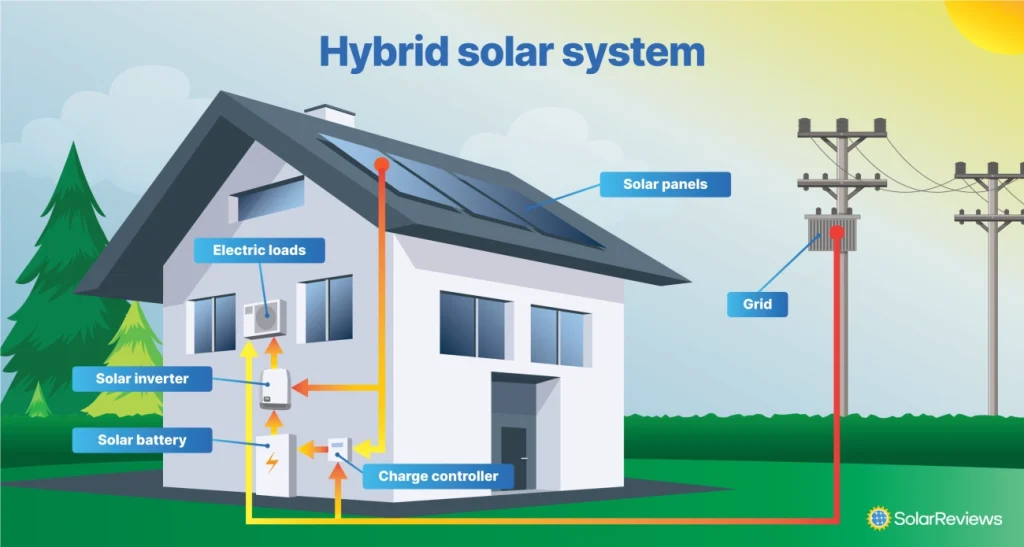
When integrating solar PV with residential energy storage, understanding the system architecture is crucial. The two main setups are AC coupling and DC coupling, each with distinct benefits.
- AC Coupling connects the solar panels and home battery system via separate inverters, converting DC solar power to AC before feeding it into the battery through the inverter. This setup is flexible and ideal for adding storage to existing solar systems but can have slightly lower efficiency due to multiple conversions.
- DC Coupling links the solar panels directly to the battery bank through a single hybrid inverter. This method offers higher efficiency by minimizing power conversions and is perfect for new installations designed for energy independence.
A hybrid solar inverter plays a vital role here. It manages both solar generation and battery storage in one unit, simplifying installs and optimizing energy flow between the PV system, battery, and grid. Hybrid inverters support time-of-use optimization and self-consumption optimization, helping homeowners maximize savings and resilience.
Choosing the right architecture depends on your setup and energy goals. For more on hybrid solutions tailored to home battery systems, check out our detailed insights on home energy hybrid solar battery systems and discover the latest in residential ESS technology.
The Heart of the System: Battery Technology
When it comes to residential energy storage systems, the battery is truly the core. Choosing the right battery technology impacts your home’s energy independence, system reliability, and overall performance. Chemistry matters — and today, lithium iron phosphate (LiFePO4) batteries lead the way. These LiFePO4 home batteries are prized for their long cycle life, enhanced safety, and stable thermal performance compared to traditional lithium-ion types, making them ideal for household energy storage.
A modular and stackable design adds another layer of flexibility. Modular battery systems let you scale your residential ESS as your energy needs grow, with easy expansion without a full system overhaul. This scalable approach fits perfectly whether you’re aiming for peak shaving, backup power, or full off-grid power system functionality.
Another important aspect is the choice between high-voltage and low-voltage battery systems. High-voltage battery systems deliver more power with fewer cables and improved efficiency, which suits larger residential solar plus storage setups. Low-voltage systems, meanwhile, offer simpler installation and are often easier to integrate with existing home ESS and hybrid solar inverter setups.
Understanding these battery design elements will help you get the most out of your home battery system, ensuring safety, efficiency, and real energy independence. For a deeper dive into battery pack types and chemistry trends, check out our detailed electric battery pack guide featuring the latest technology.
Self-Consumption Optimization and Time-of-Use (TOU) Arbitrage
Maximizing your solar plus storage setup means using as much of your own energy as possible—this is where self-consumption optimization comes in. By intelligently managing when your home draws power from your residential energy storage system (ESS), you reduce reliance on the grid and cut down on electricity bills. Especially with time-of-use (TOU) optimization, your system charges batteries during off-peak hours when electricity rates are low and discharges during peak times to shave those expensive energy costs. This smart load shifting supports peak shaving, keeping your home energy efficient and economical.
Resilience Mode for Blackout Protection
One of the biggest advantages of integrating a LiFePO4 home battery with your solar PV system is reliable blackout protection. In resilience mode, the system automatically isolates from the grid during outages, powering critical loads like refrigerators, lighting, and communication devices. This backup power ensures your home stays safe and comfortable when the grid goes down, serving as an emergency energy supply until regular service resumes.
Together, self-consumption optimization, TOU arbitrage, and resilience mode deliver a smart, flexible residential ESS that lowers costs and guarantees power when you need it most.
Safety First: Protecting Your Home and Energy Investment
When integrating solar PV with residential energy storage, safety comes first. Advanced thermal runaway protection is built into modern home battery systems to prevent overheating and fire hazards. This critical feature ensures your residential ESS keeps running safely even under stress.
A sophisticated battery management system (BMS) continuously monitors battery health, managing charge cycles, temperature, and voltage levels. The BMS also balances the cells for longer life and optimal depth of discharge (DoD)—key for reliable, safe power storage and usage. For a deeper dive into how BMS enhances battery safety, our guide on how BDU integrates with BMS to enhance EV battery safety offers great insights that apply to residential storage as well.
Intelligent control systems smartly manage energy flows between your solar panels, battery storage, and home loads. This keeps your solar plus storage system efficient, preventing overloads while maximizing self-consumption.
Remote monitoring platforms allow you to track energy usage, system status, and potential alerts right from your smartphone or computer. This feature is perfect for staying connected to your home battery system in real-time and quickly addressing any issues.
Finally, smart home integration ties your battery storage into your overall home energy management system (EMS). This lets you automate backup power for important devices, coordinate with EV charging, and optimize time-of-use tariff benefits without manual intervention—all while maintaining rigorous safety standards.
Together, these protections and smart features make your residential battery storage system a reliable, safe, and intelligent partner in your journey to energy independence.
Calculating ROI, Lifecycle Costs & Property Value Impact
When considering a residential energy storage system like solar plus storage, calculating the return on investment (ROI) is key. Upfront costs include the home battery system, installation, and any necessary upgrades. However, these are offset over time by savings on electricity bills, especially with time-of-use optimization and peak shaving strategies. Using a LiFePO4 home battery means longer cycle life and reduced replacement costs, improving your system’s lifecycle cost.
Beyond direct savings, installing a home energy storage solution can boost your property’s value. Buyers increasingly favor energy-independent homes with blackout protection and smart home energy management capabilities. This makes residential ESS not just an energy upgrade but a smart investment for your home’s long-term value.
To get the full picture, consider:
- Initial system cost vs. expected energy savings
- Maintenance and battery replacement expenses
- Impact on home resale value due to energy efficiency and backup power capabilities
For more precise cost and efficiency details, exploring system options like a hybrid solar inverter with modular battery design can help tailor the investment to your needs and maximize savings. Check out LEAPENERGY’s residential ESS solutions for options that balance cost and performance effectively.
Sizing Your System: The LEAPENERGY Advantage
Choosing the right size for your residential energy storage system is crucial to maximize energy independence and ensure cost-effective performance. The ideal home battery system balances your household’s energy usage, solar PV output, and backup power needs without overspending on unnecessary capacity.
How to Size Your Residential ESS
- Assess Energy Consumption: Review your average daily electricity usage in kWh, focusing on peak times.
- Match Solar PV Output: Factor in your solar panel system’s production to optimize self-consumption and reduce grid reliance.
- Plan for Backup Power: Decide which critical loads to support during outages for blackout protection.
- Consider Future Growth: Account for possible additions like EV charging or home expansions.
Why Choose LEAPENERGY?
LEAPENERGY leads the way with modular battery systems designed for easy scalability, letting you start with a smaller lithium iron phosphate (LiFePO4) home battery and expand as your needs grow. Their high-voltage battery systems offer better efficiency and longer life cycles, while integrated battery management systems (BMS) ensure top-tier safety and reliability.
With LEAPENERGY’s cutting-edge technology and smart home energy management features, you get an efficient residential ESS that adapts perfectly to your lifestyle and helps you achieve real energy independence. To learn more about their advanced battery platforms and why they are a top choice in residential energy solutions, see how LEAPENERGY leads in 800V battery technology and high-performance battery development.
 English
  German
  Chinese
  Spanish