
Understanding EV Battery Pack Voltage Fundamentals
When diving into EV battery pack voltage options, it’s essential to grasp some basic electrical principles: power, voltage, and current. Power (measured in watts) is the product of voltage (volts) and current (amps). Higher voltage allows for lower current to deliver the same power, which influences EV design, efficiency, and safety.
Nominal Voltage vs. Operating Voltage
- Nominal voltage is the typical or average voltage rating of a battery pack.
- Operating voltage varies based on the state-of-charge (SoC); a fully charged battery shows a higher voltage, which gradually drops as it discharges.
- This fluctuation impacts the vehicle’s performance and battery management systems.
Cell-Level Contributions and Chemistries
Battery packs consist of numerous individual cells. Common cell chemistries include:
- NMC (Nickel Manganese Cobalt): High energy density, favored for longer range and performance.
- LFP (Lithium Iron Phosphate): Offers longer cycle life and enhanced thermal stability, popular in budget and commercial EVs.
Each cell usually has a nominal voltage around 3.2V to 3.7V, depending on chemistry.
Series and Parallel Configurations
- Series connection increases overall pack voltage by adding cell voltages (V_total = V_cell × cells in series).
- Parallel connection raises capacity and current capability but keeps voltage constant.
Different vehicle types use varying configurations to balance range, power, and weight.
High-Voltage Safety Classifications and Requirements
High-voltage EV battery packs fall under strict safety standards to protect users, technicians, and first responders:
- Isolation monitoring detects any leakage currents or faults.
- Proper insulation, protective relays, and shutdown mechanisms are mandatory.
- Voltage classes often exceed 400V or 800V platforms, with correspondingly rigorous testing and regulations.
By understanding these foundational aspects, you’ll better appreciate the design choices behind today’s EV battery pack voltage options and their impact on vehicle performance and safety.
Common EV Battery Pack Voltage Options in Today’s Market

EV battery pack voltage options today mainly revolve around a few key platforms, each serving different vehicle types and market needs.
400V Platform: Mass-Market Standard
- Widely used in everyday electric cars like the Nissan Leaf and Chevrolet Bolt
- Balanced cost, weight, and compatibility with most public DC fast chargers
- Supports reliable charging speeds (typically up to 50-150 kW)
- Easier, less costly wiring and cooling system demands
800V Platform: Premium & Performance
- Found in high-end models like the Porsche Taycan and Hyundai Ioniq 5
- Enables ultra-fast charging (up to 350 kW+) and better efficiency at high speeds
- Lighter wiring harness reduces vehicle weight and thermal load
- Growing adoption for EVs targeting longer range and better performance
Transitional and Specialized Voltage Options
- 48V systems mainly power mild-hybrid setups for efficiency boosts, not full EVs
- Commercial EVs often use 600-700V systems balancing faster charging with durability
- Split-pack battery designs combine multiple voltages inside one vehicle for flexibility and safety
Real-World Voltage Variations
Battery pack voltage isn’t fixed — it changes due to:
- Temperature: Cold or hot conditions reduce nominal voltage
- State of charge: Voltage drops as the battery discharges
- Age and load: Battery degradation and high power demand affect actual voltage
| Voltage Type | Typical Use Cases | Charging Power | Key Features |
|---|---|---|---|
| 400V | Mass-market EVs | Up to ~150 kW | Cost-effective, broad compatibility |
| 800V | Premium/performance EVs | 150 kW – 350+ kW | Fast charging, lighter wiring |
| 48V | Mild hybrids | N/A | Efficiency boost, auxiliary power |
| 600-700V | Commercial EVs | Varies | Robust for heavy-duty use |
For deeper insight on voltage platforms and common design pitfalls, exploring LEAPENERGY’s analysis of OEM EV battery packs is recommended. Their scalable solutions also highlight smooth transitions between voltage levels suitable for different vehicle segments.
Key Advantages and Trade-Offs: 400V vs. 800V Architectures
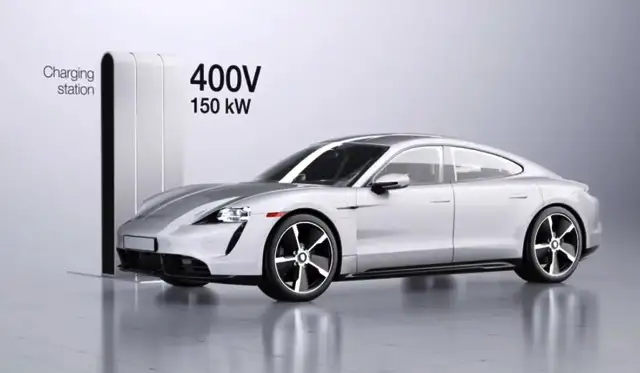
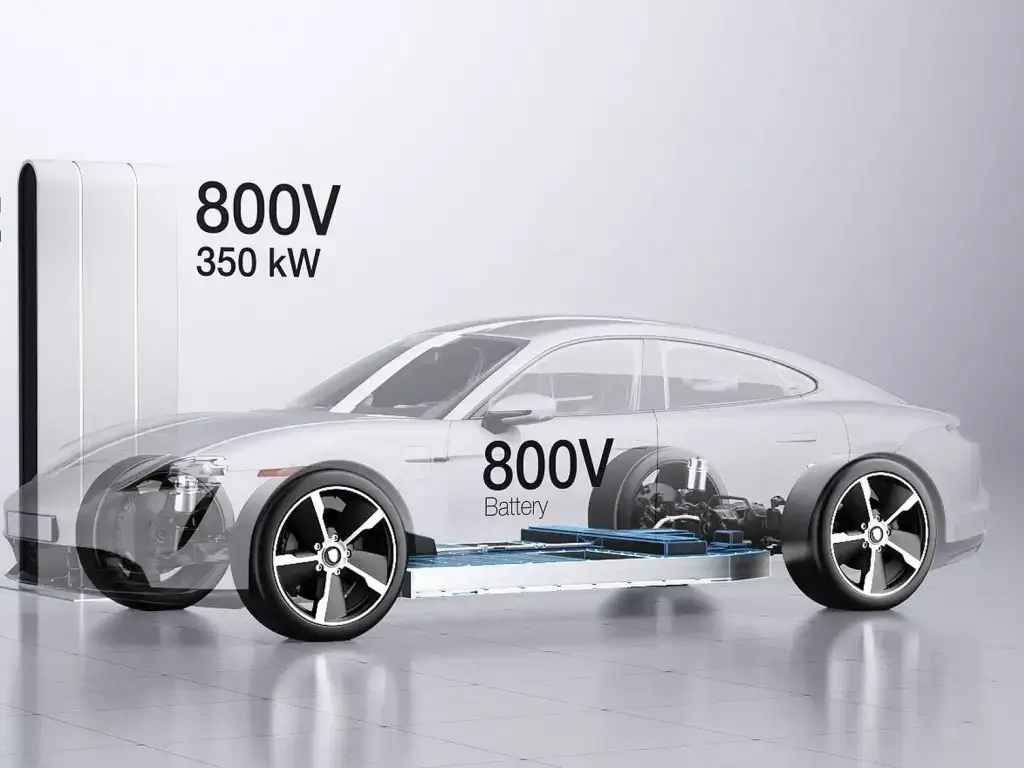
When choosing an EV battery pack voltage, 400V and 800V architectures dominate the conversation. Each comes with clear benefits and some trade-offs that impact cost, performance, and user experience.
400V Architecture
Benefits:
- Lower cost due to more mature technology and simpler power electronics
- High reliability with widespread use in mass-market EVs
- Strong compatibility with existing charging infrastructure across the US
Drawbacks:
- Requires higher current to deliver the same power, increasing heat generation
- Heavier wiring harnesses add weight and complexity
- Limits on fast charging speed because of greater thermal and electrical stress
800V Architecture
Benefits:
- Enables much faster DC fast charging, cutting charge times significantly
- Increases efficiency with lower current, reducing heat and energy losses
- Uses thinner, lighter wiring, leading to overall vehicle weight savings
- Enhances performance with higher voltage powertrain components
Drawbacks:
- Higher upfront cost for specialized components and power electronics
- Limited availability of 800V fast chargers in some regions
- Stricter high-voltage safety standards and design complexity
Comparison Table: 400V vs. 800V EV Battery Pack Voltage
| Feature | 400V Architecture | 800V Architecture |
|---|---|---|
| Charging Speed | Moderate (150-200 kW typical) | High (250-350+ kW possible) |
| Electrical Efficiency | Lower at high power | Improved efficiency at high power |
| Wiring Weight | Heavier | Lighter due to lower current |
| Cost | Lower upfront cost | Higher initial component cost |
| Infrastructure | Widely compatible | Growing but still limited |
| Heat Generation | Higher due to increased current | Lower heat, better thermal management |
| Use Cases | Mainstream vehicles, affordable EVs | Premium/performance, long-range EVs |
Choosing between 400V and 800V depends on your priorities: cost and reliability favor 400V, while fast charging and performance lead the 800V option. For a deeper dive into how battery pack voltage impacts EV range and charging speeds, check out this detailed guide on how battery pack design shapes EV performance.
Balancing these factors helps OEMs and customers decide the best fit based on vehicle type, cost tolerance, and charging access.
Impact on EV Performance, Charging, and Efficiency
Battery pack voltage directly influences an electric vehicle’s acceleration, top speed, and regenerative braking capability. Higher voltage systems like 800V architectures enable faster power delivery, allowing quicker acceleration and smoother recovery of energy during braking compared to traditional 400V setups. This means drivers experience more responsive performance and better overall efficiency.
Charging dynamics also benefit significantly from higher voltage packs. Operating at 800V reduces the current needed for the same power level, which lowers heat generation and stress on components. This leads to faster DC fast charging times and less wear on the battery. Real-world charging curves show 800V systems reach peak charge rates quicker, supported by preconditioning features that optimize battery temperature before charging. Still, compatibility with DC fast chargers remains a key factor, as not all stations currently support the higher voltage.
Efficiency gains extend beyond charging speed. Higher voltage allows for lighter wiring harnesses and less energy lost as heat, improving overall vehicle efficiency and extending driving range. Batteries also maintain healthier states over time due to reduced thermal strain.
For commercial vehicles, voltage requirements vary based on use cases, but many fleets leverage 600-800V systems for high-power depot charging. This supports fast turnaround times and better energy management in heavy-duty applications. For more details on temperature impacts during usage, refer to our insights on the impact of climate conditions on EV battery performance.
By balancing voltage, current, and thermal management, manufacturers optimize performance, charging speed, and battery longevity to suit different vehicle types and customer needs.

Safety, Design, and Manufacturing Considerations
When dealing with high-voltage EV battery packs, safety protocols are critical. High-voltage safety standards require robust isolation monitoring to prevent electric shocks and short circuits. This ensures that both the vehicle and users stay protected under all operating conditions.
Thermal runaway is a major risk influenced by battery voltage and pack design. Higher voltages can increase energy density but also demand advanced thermal management to avoid overheating and hotspots that could lead to failures or fires.
Modern EV battery packs often use modular designs combined with advanced Battery Management Systems (BMS) that can support a range of voltages. This flexibility helps manufacturers tailor solutions to different vehicle needs while maintaining safety and performance.
Material choices also play a role: higher voltage systems can save copper through lighter wiring harnesses, but they require enhanced insulation and specialized connectors to handle increased electrical stresses safely. Balancing these factors is key for reliable, cost-effective pack manufacturing.
For more on cutting-edge safety features and design best practices, check out LeapENERGY’s insights on key safety features in EV battery packs and their standards driving safety.
Future Trends in EV Battery Voltage Options
The EV battery landscape is rapidly evolving, with a clear shift toward 800V+ battery packs becoming the new industry standard. This trend is driven by demands for faster charging, improved efficiency, and lighter wiring harnesses that benefit both passenger and commercial vehicles.
Rise of 1000V+ Platforms
For heavy-duty trucks and ultra-performance electric vehicles, 1000V and above platforms are gaining traction. Higher voltage levels reduce current flow, enabling:
- Even faster charging speeds
- Smaller, lighter cable designs
- Better overall power delivery for demanding applications
These platforms promise to push EV capabilities forward, especially in commercial fleets and sports cars where power and uptime matter most.
Key Innovations Shaping the Future
- Solid-state batteries offer safer, higher energy density cells with more flexible voltage designs, expanding future pack options.
- Bidirectional charging will let EVs support grid services and home power, requiring adaptable voltage architectures.
- Flexible voltage packs that can adjust output for different vehicle types or modular setups will grow in popularity.
LEAPENERGY’s Scalable Solutions
LEAPENERGY leads the charge by providing scalable battery technologies that allow OEMs to smoothly transition between voltage levels without major redesigns. Their systems support multiple chemistries and include advanced battery management solutions critical for future EV models.
| Voltage Platform | Typical Use Case | Advantages | Challenges |
|---|---|---|---|
| 400V | Affordable passenger EVs | Cost-effective, reliable | Higher current losses, heat |
| 800V | Premium and performance EVs | Faster charging, lighter wiring | Higher cost, safety complexities |
| 1000V+ | Heavy-duty and ultra-performance EVs | Super-fast charging, efficiency | Infrastructure and cost barriers |
For car makers looking ahead, adopting these evolving voltage standards linked with innovations like solid-state batteries can help build EVs that meet diverse U.S. market needs. For more on scalable production and future battery tech, see LEAPENERGY’s insights on scalability in EV battery pack production and the electric battery pack guide 2026.
Choosing the Right Voltage for Your EV Needs
Picking the right EV battery pack voltage depends a lot on your vehicle type, driving habits, budget, and access to charging infrastructure. Here’s a simple framework to help decide:
- Vehicle type: Smaller city cars or urban commuters often do well with lower voltage packs, while long-haul or performance vehicles benefit from higher voltage systems.
- Usage: Frequent fast charging and longer drives lean toward 800V systems for efficiency and speed.
- Budget: 400V platforms remain more affordable upfront and have better compatibility with existing charging stations.
- Charging access: If you mainly rely on public DC fast chargers, check what voltage they support to avoid costly upgrades.
- Total cost: Consider not just the vehicle price but also maintenance, wiring complexity, and potential energy savings over time.
Practical Recommendations
- 400V systems suit mainstream buyers focused on affordability and widespread infrastructure. Ideal for family SUVs and everyday commuting.
- 800V systems offer better efficiency, faster charging, and future-proofing but come with higher initial costs and slightly less charger availability.
Real-World Scenarios
- Family SUV owner: A 400V battery pack will keep purchase and repair costs manageable, while still providing reliable daily performance.
- Fleet manager: Choosing 800V packs may reduce downtime thanks to faster charging and better thermal management, important for commercial operations.
- Urban commuter: A 400V EV works well in cities with shorter trips and abundant 240V home charging options.
- Long-haul driver: An 800V system helps maximize range and minimize charging stops on highways, enhancing overall convenience.
For those ready to explore advanced options with 800V technology, you might find insights on how these platforms are shaping the future of electric mobility in LEAPENERGY’s scalable solutions. Considering all these factors ensures you pick an EV battery voltage that fits your lifestyle and budget perfectly.
 English
  German
  Chinese
  Spanish