
Understanding C&I BESS Applications and Sizing Drivers
Commercial & Industrial (C&I) battery energy storage systems (BESS) serve distinct value streams, each influencing how you size your battery system. The main applications include:
- Peak shaving: Focused on reducing demand charges by cutting peak power (kW) spikes, this approach relies on a power-led (kW) sizing strategy.
- Time-of-Use (TOU) arbitrage: Shifting energy consumption to lower-cost periods, this use case demands more emphasis on total energy capacity (kWh).
- Backup/resilience: Ensures critical loads remain powered during outages, needing a balance of power and energy tailored to outage duration.
- Solar-plus-storage hybrid: Integrates solar generation with storage, optimizing both energy shifting and peak demand management.
Your facility’s load profile shape—specifically the peak-to-average ratio and whether peaks are sharp spikes or broad plateaus—directly impacts the kW/kWh ratio of the battery. For example, a short spike requires high power but less energy, while a longer plateau demands more energy capacity.
Using 12–24 months of 15-minute interval load data dramatically improves accuracy in sizing over monthly utility bills. This granular data reveals daily, weekly, and seasonal trends critical for properly aligning system size with real operational needs. Monthly bills, by contrast, hide these details, risking both oversizing and underperforming battery deployments.
Have you collected detailed interval data to unlock precise commercial battery energy storage capacity calculations? That’s the first essential step toward an optimized C&I BESS size that maximizes ROI and operational benefits.
Step-by-Step C&I Battery Storage Sizing Methodology
Sizing a commercial & industrial energy storage system starts with detailed data and clear targets. Here’s how to approach it:
1. Collect and Analyze Load Data
- Gather at least 12–24 months of 15-minute interval load data for accuracy—this outperforms relying on monthly bills.
- Identify your peak load profile: spot the highest demand periods and understand if peaks are sharp spikes or sustained plateaus.
- Calculate the target peak reduction (kW) goal based on demand charges or other cost drivers.
2. Size the Power Requirement (kW)
- Use the formula:
Target Peak Reduction (kW) = Current Peak Load – Desired Peak Load - For example, if your peak is 500 kW and aim to reduce 100 kW, size your battery’s power capacity around 100 kW to cover that demand.
3. Determine Usable Energy (kWh)
- Multiply the power requirement by the expected discharge duration:
Usable Energy (kWh) = Power (kW) × Discharge Time (hours) - For a 100 kW target with a 2-hour discharge window, size for 200 kWh usable energy.
4. Apply Correction Factors
- Account for round-trip efficiency (RTE), typically 90–92%, meaning some energy is lost during charge/discharge.
- Include an operating reserve buffer (10–20% state of charge) to avoid deep cycling and extend battery life.
- Factor in degradation margin and end-of-life (EOL) capacity to ensure long-term system reliability.
5. Convert to Installed Capacity and Select Configurations
- With adjusted usable energy, calculate installed battery capacity. For instance, a 200 kWh usable estimate might need roughly 220–240 kWh installed, depending on buffers.
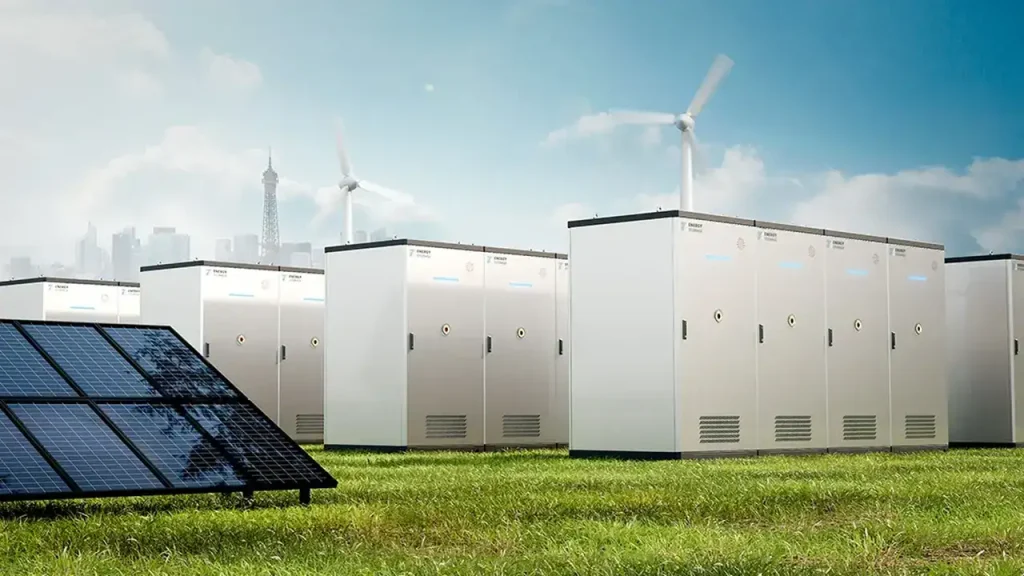
- Choose modular cabinet options that align with your site space and future expansion plans—modular systems offer flexibility and easier maintenance. For insight on modular designs, see our guide on modular vs. monolithic pack designs.
6. Validate Feasibility Gates
- Confirm your system fits within interconnection limits from your utility.
- Check the recharge window allows the battery to fully recharge between discharges.
- Ensure siting and fire safety compliance with current codes.
- Secure insurance pre-approval to avoid unexpected costs.
Following this methodical sizing approach with precise load data and practical correction factors ensures your commercial battery energy storage capacity calculation fits your unique needs and maximizes ROI.
Technical Considerations That Directly Impact Size and Performance
When sizing commercial & industrial energy storage systems (C&I BESS), understanding key technical factors is crucial to maximize performance and lifespan.
Depth of Discharge (DoD) & Cycle Life Trade-offs
- Deeper DoD means using more battery capacity per cycle but reduces overall cycle life.
- Shallower DoD extends battery life but requires a larger system to meet energy needs.
Finding the right balance depends on your specific load profile and usage patterns.
Power Conversion System (PCS) & Inverter Sizing
- PCS and inverter capacity must match peak power demands to avoid underperformance.
- Typical sizing is 1.0–1.2× the battery’s max discharge power to handle surge loads and ensure reliability.
| Factor | Typical Range | Impact |
|---|---|---|
| Depth of Discharge (DoD) | 70–90% | Cycle life vs. usable capacity |
| PCS Sizing Ratio | 1.0–1.2× battery kW | Efficiency and peak handling |
Battery Chemistry Advantages: LEAPENERGY’s EV-Grade LFP Cells
- Safety: LFP chemistry is less prone to thermal runaway, enhancing fire safety.
- Longevity: LFP supports thousands of cycles with minimal degradation.
- Thermal Stability: Performs well across temperature ranges, reducing cooling needs.
Check out more about LEAPENERGY’s advanced thermal management for EV batteries to understand performance under various conditions.

Degradation Modeling
- Battery wear is non-linear; degradation accelerates after a certain number of cycles.
- Higher charge/discharge rates (C-rate) and thermal stress speed up aging.
- Accurate modeling helps predict realistic end-of-life capacity for better sizing.
Future-Proofing Your BESS
- Design modular systems that allow capacity expansion as needs grow.
- Plan for increasing EV-charging loads common in commercial fleets or industrial setups.
- Modular containerized energy storage solutions simplify scaling with demand.
By considering these technical factors—DoD, PCS sizing, battery chemistry, degradation, and expansion—you ensure your commercial battery energy storage system delivers optimal performance over its operational life. For more on integrated module-to-pack EV battery systems that power such reliability, explore LEAPENERGY’s innovative designs.
Economic Analysis and ROI Optimization
When sizing a commercial and industrial energy storage system, understanding the economic impact is just as important as the technical fit. Simple payback, net present value (NPV), and levelized cost of storage (LCOS) are key financial metrics that help determine if the investment makes sense. Using real inputs like energy rates, demand charges, and operating costs ensures your calculations reflect actual savings.
Two factors that heavily influence ROI are the demand ratchet and time-of-use (TOU) rate spreads. Demand ratchets can lock in higher demand charges based on peak usage, making peak shaving with your battery system even more valuable. Meanwhile, TOU arbitrage benefits grow as the gap between peak and off-peak electricity prices widens, affecting the optimal battery size for cost savings.
Don’t overlook incentive stacking—combining the Investment Tax Credit (ITC) with local or state grants can drastically improve your payback timeline and project viability. These incentives often make larger battery systems financially attractive, altering the sizing strategy.
For ease, use a quick ROI calculator framework designed for commercial battery energy storage capacity calculation. This helps you model different battery sizes, financial assumptions, and rate structures, giving a clear picture of when you can expect to recover your investment.
Balancing these economic factors alongside technical sizing ensures you optimize both system performance and financial returns. If you want to dive deeper, consider how to evaluate battery system suppliers during prototype stages for choosing the right tech that complements your financial goals.
Regulatory, Safety, and Implementation Best Practices
When sizing and installing a Commercial & Industrial Energy Storage System (C&I BESS), understanding and adhering to fire code Maximum Allowable Quantities (MAQ) is critical. Regulations like NFPA 855 and International Fire Code (IFC 1207) set clear limits on battery storage capacities and the necessary mitigation strategies. These codes guide proper fire suppression methods, ventilation, and safe siting, which help prevent hazards and ensure regulatory compliance.
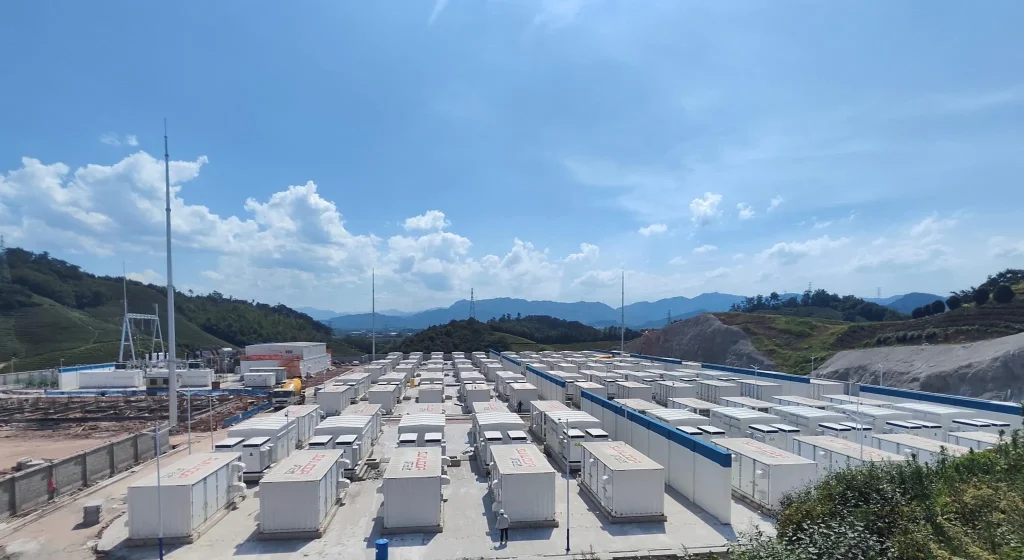
Starting in 2026, updated requirements for siting, spacing, and fire suppression will be enforced more strictly. This means when designing your containerized C&I energy storage system, you must plan for adequate physical separation, approved fire suppression technology, and clear access routes for emergency responders.
Another key consideration is warranty versus performance guarantees in procurement contracts. It’s important to negotiate terms that protect your investment, not only against hardware failure but also against underperformance or accelerated degradation over the project lifetime.
Lastly, integrating an energy management system (EMS) allows for automated dispatch and real-time battery control, enhancing both safety and system efficiency. EMS integration optimizes battery use while respecting operational limits and preventive safety checks, making your commercial battery energy storage capacity calculation more accurate and reliable.
For details on safe battery system operation, you can also reference LEAPENERGY’s insights on EV battery system architecture and safety diagnostics, which provide valuable parallels for C&I BESS applications.
Real-World Case Studies
Manufacturing Plant: 250 kW / 250 kWh System with 18-Month Payback
One manufacturing facility installed a commercial & industrial energy storage system (C&I BESS) sized at 250 kW power and 250 kWh energy capacity, focused primarily on peak shaving. By targeting their highest demand spikes, the system lowered peak demand charges substantially. This sizing approach, driven by detailed 15-minute interval load data analysis, achieved an impressive 18-month payback. The key was accurately matching the battery’s power-to-energy ratio to their load profile, ensuring the battery provided enough discharge duration without oversizing components.
Warehouse with Solar: Hybrid Sizing, Capturing Demand Charges and TOU Savings
Another example comes from a warehouse combining solar panels with battery storage. Here, the hybrid system was sized to tackle both demand charge reduction and time-of-use (TOU) arbitrage. This dual focus required balancing peak shaving with energy shifting to lower electricity costs across multiple value streams. Leveraging solar-plus-storage hybrid sizing principles helped maximize savings, demonstrating how integrated systems can capture diverse revenue streams effectively. For more on hybrid solar and battery systems, consider exploring LEAPENERGY’s home energy hybrid solar battery systems.
Lessons Learned: The Cost of Ignoring Data or Oversizing
In some cases, skipping detailed load data or oversizing the battery system led to disappointing results. Without reliable 12–24 months of granular consumption data, the C&I BESS sizing missed key load spikes or undervalued the required energy capacity, resulting in missed demand charge reductions. Oversizing, meanwhile, caused unnecessary upfront costs and extended ROI periods. These real-world lessons highlight the importance of robust data collection and careful sizing methodologies to optimize commercial battery energy storage capacity.
Together, these case studies illustrate how precise sizing, based on thorough load analysis and understanding of C&I value streams, leads to better payback and operational performance. Ignoring those can quickly erode the financial benefits of your industrial ESS investment.
Selecting the Right Partner and Technology
When sizing a commercial or industrial energy storage system, choosing the right manufacturer is crucial. Look for partners who provide transparent cycle life data, clear state-of-health (SoH) guarantees, and flexible modular container options. These factors ensure your battery system remains reliable and scalable as your energy needs evolve.

LEAPENERGY stands out by using repurposed EV cell technology, giving their C&I BESS solutions unmatched safety, energy density, and longevity. Their batteries combine EV-grade lithium iron phosphate (LFP) cells known for thermal stability and long cycle life, making them a smart choice for commercial storage applications. Learn more about their advanced battery packs and safety features in the detailed EV battery pack manufacturer custom solutions.
Ready to get started? LEAPENERGY offers a free load-data review and a preliminary sizing consultation to help you optimize your system’s power and energy capacity precisely. Partnering early ensures your system is economically and technically balanced, maximizing ROI on your commercial battery energy storage capacity calculation.
 English
  German
  Chinese
  Spanish