
Understanding Diesel Generators and Battery Energy Storage Systems (BESS)
When choosing between a Diesel Generator (DG) and a Battery Energy Storage System (BESS), it’s important to understand how each technology works and their typical applications.
Diesel Generators: Basics and Configurations
Diesel generators produce electricity by burning diesel fuel to power an internal combustion engine connected to an alternator. They come in three common configurations:
- Standby: Used as backup power during outages, usually idle until needed.
- Prime: Provide continuous power where grid supply is unreliable.
- Continuous: Designed for nonstop operation in off-grid settings.
Diesel gensets are widely used in industrial sites, remote locations, and emergency power applications due to their robustness and relatively simple maintenance.
Battery Energy Storage Systems (BESS): Core Components and Advantages
BESS store electrical energy chemically using lithium-ion cells, managed by key components:
- Battery Cells: LEAPENERGY’s EV-grade lithium-ion batteries offer superior cycle life and safety.
- Power Conversion System (PCS): Converts stored DC power into usable AC.
- Energy Management System (EMS): Oversees performance, efficiency, and system health.
- Thermal Management: Keeps batteries within safe operating temperatures, enhancing longevity.
These systems support efficient energy storage and rapid discharge, making BESS ideal for modern energy applications including peak shaving, demand charge reduction, and backup power.
Key Technical Differences
- Response Time: BESS react in milliseconds, whereas diesel generators take seconds to start supplying power.
- Efficiency: Diesel generators typically operate at 35–40% efficiency, while BESS ranges from 80–95%, resulting in significant energy savings.
- Scalability: BESS modules can be easily expanded to meet varying capacity needs; diesel sets are less flexible.
- Noise and Emissions: Diesel generators emit significant noise and pollutants (NOx, CO2), while BESS operate silently with zero emissions.
Understanding these differences is crucial for assessing lifecycle cost BESS diesel generator comparisons, especially when considering reliability, environmental impact, and operational demands.
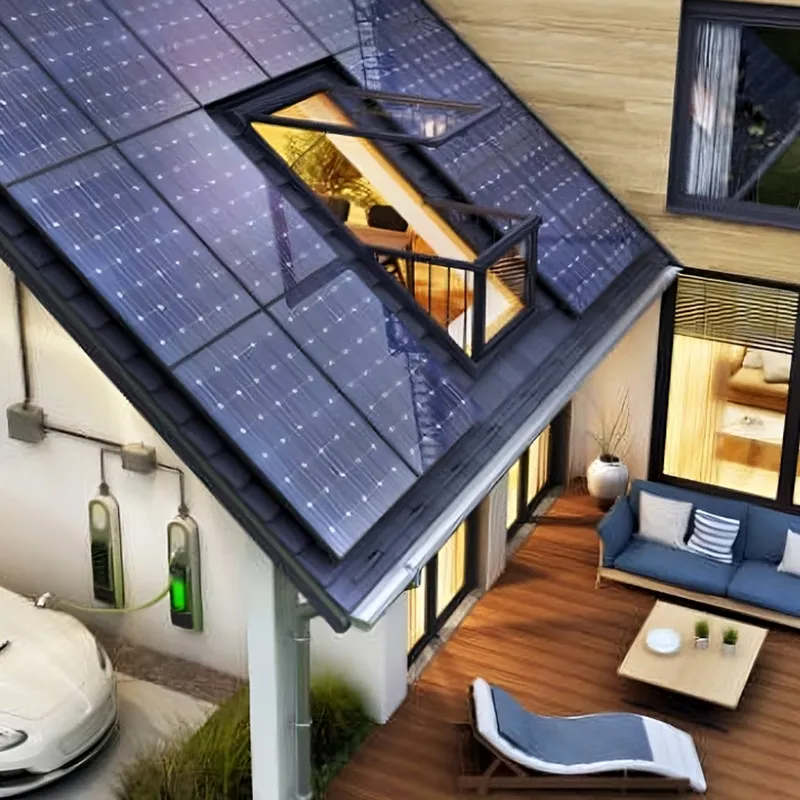
Upfront Capital Expenditure (CapEx) Breakdown
When comparing Battery Energy Storage System (BESS) vs Diesel Generator upfront costs, understanding the capital expenditure components is crucial.
Diesel Generator Installed Costs
A typical diesel generator installation includes several key parts:
- Generator and alternator: The core equipment producing electrical power.
- Automatic Transfer Switch (ATS): For seamless switching between grid and generator.
- Fuel tank: Storage for diesel fuel, sized to meet runtime needs.
- Civil works: Foundation, housing, and soundproof enclosures.
- Exhaust system: For emissions management and safety.
For a 500 kW generator, installed costs can vary widely but generally include considerable groundwork and infrastructure expenses. These capital costs often range higher in urban or industrial settings due to permit and installation complexity.
BESS Installed Costs
Battery Energy Storage Systems involve different components compared to diesel sets:
- Battery containers: Modular enclosures housing lithium-ion cells.
- Inverters and Power Conversion Systems (PCS): Converting DC battery power to AC usable by equipment.
- Energy Management System (EMS): Software control that optimizes battery use and grid interaction.
- HVAC and fire suppression: Ensuring battery safety and temperature control.
- Installation and commissioning: Labor and integration expenses.
EV-grade batteries like those from LEAPENERGY help reduce lifecycle costs due to superior durability and safety, which also influences initial sizing and installation complexity.

2026 Cost Benchmarks
Recent 2026 benchmarks show:
- Diesel Generator (500 kW, 2-hour runtime): Installed CapEx typically runs in the range of INR 35–40 lakh (~USD 42,000–48,000), depending on site conditions and equipment quality.
- BESS (500 kW, 2-hour duration): CapEx starts around INR 65–75 lakh (~USD 78,000–90,000), reflecting higher upfront material and integration costs.
However, BESS prices are declining steadily due to improved battery pack designs and manufacturing scale. Innovations like battery pack integration also reduce system complexity and cost, making BESS increasingly competitive. For a deeper dive on how engineering and integration serve to lower battery project costs, explore the insights on why engineering costs exceed purchase prices in battery projects.
In short, while diesel generator CapEx remains lower today, the rapid cost reductions and efficiency gains in BESS promise a compelling value proposition in the near future.
Operating & Maintenance Expenditure (OpEx) – The Real Cost Driver
When comparing Battery Energy Storage Systems (BESS) vs Diesel Generator from an operational perspective, OpEx often makes or breaks the cost case.
Diesel Generators: High and Volatile Operating Costs
- Fuel consumption: Diesel generators burn fuel continuously during operation. Fuel costs form the largest chunk of OpEx and are highly sensitive to market volatility, especially in the U.S. where diesel prices can swing ±20% annually.
- Maintenance: Engines require regular oil changes, filter replacements, and scheduled overhauls every few thousand hours to avoid breakdowns.
- Part-load inefficiency: Running below optimal capacity wastes fuel and adds wear, increasing expenses.
- Downtime risks: Mechanical failures or fuel shortages cause outages and repair bills, affecting reliability and adding hidden costs.
BESS: Lower and More Predictable Operating Costs
- Zero fuel use: Battery systems have no ongoing fuel costs, eliminating exposure to volatile diesel prices.
- Minimal routine maintenance: Maintenance mainly involves battery health checks, inverter servicing, software updates, and thermal management—far less intensive and infrequent than diesel.
- Battery augmentation: Over time, some capacity fade is expected, but high-cycle-life cells from providers like LEAPENERGY extend replacement intervals, improving total cost of ownership.
- Software updates: Continuous EMS improvements can optimize performance and extend system life with minimal cost.
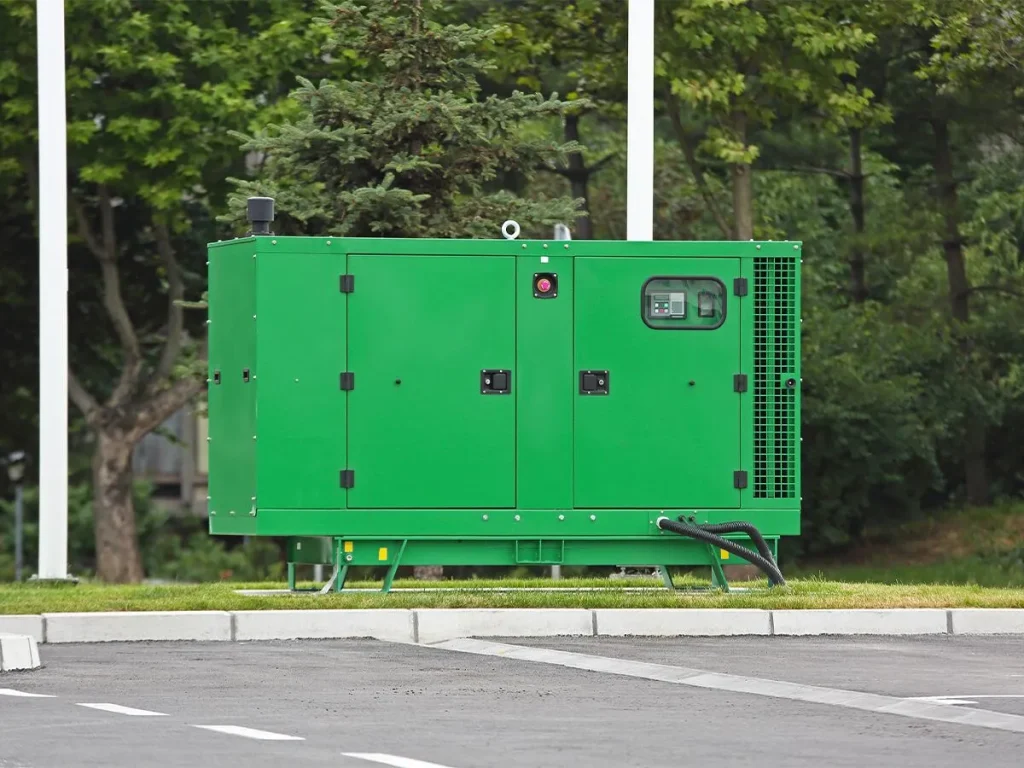
Cost Comparison and Projections
Over a decade, diesel generator OpEx tends to escalate with fuel price jumps and maintenance cycles, whereas BESS costs remain stable and often decline due to software and hardware advances. This balance significantly impacts the lifecycle cost BESS diesel generator debate, favoring battery systems especially in areas with high diesel volatility or strict emissions regulations.
For detailed insight into battery pack demand and regional cost drivers impacting BESS OpEx, explore LEAPENERGY’s analysis of battery pack demand drivers by region.
Below is a simplified annual cost for a typical 500 kW / 2-hour system to illustrate these differences:
| Expense Type | Diesel Generator (USD) | BESS (USD) |
|---|---|---|
| Fuel | $80,000 ±20% | $0 |
| Maintenance & Parts | $15,000 | $3,000 |
| Software & Updates | $0 | $1,500 |
| Total Annual OpEx | $95,000 ±20% | $4,500 |
Over 10 years, sensitivity to diesel price fluctuations can lead to cost swings of ±$160,000, while BESS remains more predictable, positioning it as the smarter choice for industrial and commercial users prioritizing stable operating expenses.
Full Lifecycle Cost Analysis: LCOE, LCOS & ROI
When comparing Battery Energy Storage Systems (BESS) to diesel generators, the full lifecycle cost tells the real story. We look at Levelized Cost of Energy (LCOE) and Levelized Cost of Storage (LCOS) to measure how much each technology costs over its entire lifespan—including installation, operation, maintenance, and replacement.
Methodology & Assumptions
- Load profile: Typical usage patterns relevant to US industrial and commercial sites
- Autonomy hours: How long the system runs without refueling or recharging (usually 2-4 hours for BESS)
- Discount rate: Usually set between 6-8% to account for time value of money
- Degradation: Battery capacity drops about 2-3% per year, factored into performance and replacement costs
10- and 15-Year Total Cost of Ownership (TCO)
BESS often shows higher upfront costs but significantly lower operating costs than diesel generators. Over 10 to 15 years, the total cost of ownership favors BESS owing to fuel savings and cheaper maintenance. Typical TCO tables indicate:
| System Type | 10-Year TCO (USD) | 15-Year TCO (USD) | Notes |
|---|---|---|---|
| Diesel Generator | $750,000 | $1,150,000 | Fuel costs and maintenance add up |
| 500 kW / 2h BESS | $600,000 | $900,000 | Battery replacement included |
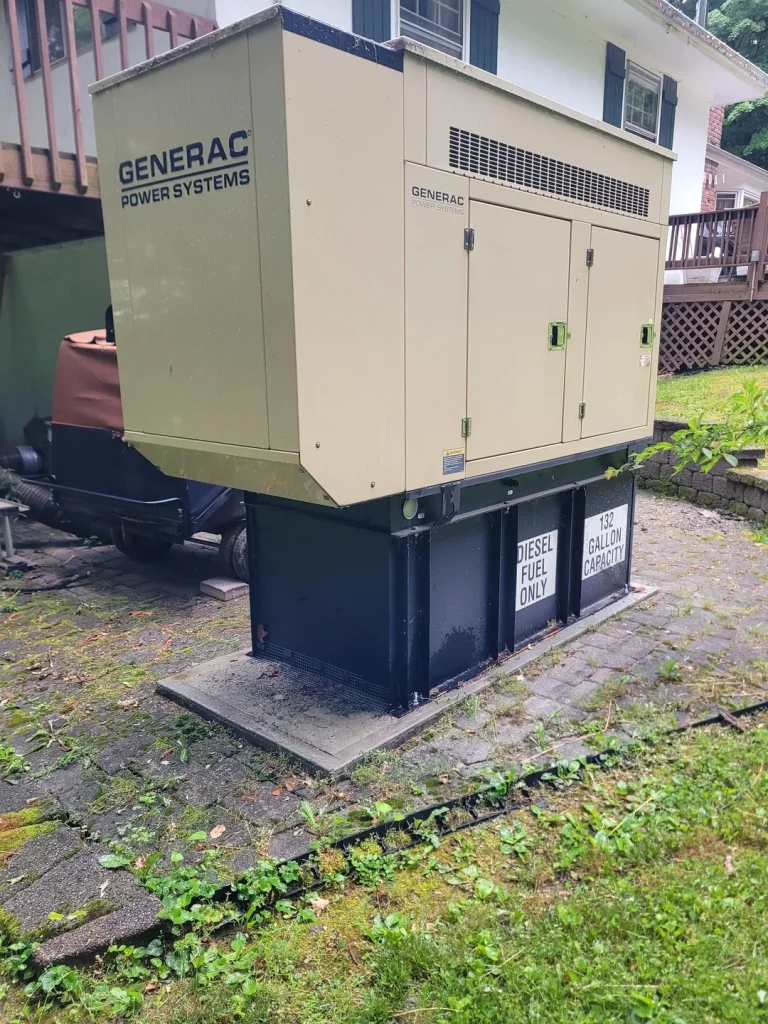
Payback Period & IRR
Thanks to zero fuel costs and lower downtime, BESS often crosses the breakeven line within 5-7 years depending on diesel fuel price volatility. Internal Rate of Return (IRR) calculations typically show:
- BESS IRR: 12-18%
- Diesel IRR: 5-8%
Additional Value Streams for BESS
BESS isn’t just about backup power—it unlocks extra savings by:
- Peak shaving: Reducing demand charges on utility bills
- Demand charge reduction: Lowering maximum electricity draw during peaks
- Energy arbitrage: Buying low-cost energy, selling or using during peak rates
- Ancillary services: Frequency regulation or grid support for additional revenue
This makes BESS a smart long-term investment, especially in markets focused on energy efficiency and cost savings. For more on how battery pack design impacts efficiency and lifecycle, see the detailed insights on LEAPENERGY’s innovative EV-grade battery technology.
By factoring in all these elements, businesses can make a well-informed choice between BESS and diesel generators based on accurate lifecycle cost data and ROI projections.
Non-Cost Factors That Tip the Scale
When comparing Battery Energy Storage Systems (BESS) vs Diesel Generators, cost isn’t the only thing to consider—non-cost factors often make a big difference.
Reliability and Uptime
BESS systems respond in milliseconds, offering near-instantaneous backup, while diesel generators take seconds to start. This translates to higher uptime for BESS—typically 95–99%—compared to 85–90% for diesel. This responsiveness is crucial in industries where power quality and continuity matter.
Environmental & Regulatory Impact
Diesel generators burn fuel, releasing CO₂, NOx, and other pollutants, pushing up operational costs indirectly through emissions regulations and future carbon taxes. BESS are clean, producing zero emissions on-site, which helps businesses improve ESG scores and comply with increasingly strict environmental standards.
Power Quality, Noise, Footprint, and Safety
BESS deliver stable power with minimal harmonic distortion, beneficial for sensitive equipment. Diesel generators are noisy and require bulky setups plus fuel storage, impacting the site’s footprint and community noise levels. Plus, BESS units are designed with advanced thermal and fire suppression systems and meet NFPA 855 safety standards—giving peace of mind in operation.
Scalability and Future-Proofing
BESS are easily scalable to meet changing energy demands, simply by adding more battery modules—an option diesel generators don’t offer without heavy mechanical upgrades. Plus, advances in battery tech, such as those highlighted by LEAPENERGY’s EV-grade battery packs, keep BESS future-ready for renewables integration and smarter grid management. For more on safety and battery standards, see LEAPENERGY’s detailed insights on EV battery pack safety standards.
In , beyond just the price, BESS systems’ superior reliability, cleaner operation, smaller footprint, and adaptability make them the smarter choice for modern energy resilience and sustainability goals.
Real-World Scenarios & Case Studies
When comparing Battery Energy Storage Systems (BESS) vs Diesel Generators, it’s crucial to look at real-world use cases to understand where each technology shines.
Scenario 1: Rare Outages – Diesel Still Viable
For facilities experiencing infrequent power interruptions, diesel generators remain a reliable and cost-effective backup. The upfront CapEx is lower, and since runtime is limited, fuel costs and maintenance are manageable. However, rising diesel fuel volatility impacts operating costs, keeping total cost of ownership on the rise.
Scenario 2: Frequent Peaks or Daily Cycling – BESS Dominant
Industrial sites with frequent peak loads or daily cycling find BESS more economical over time. Thanks to faster response times (milliseconds), higher efficiency (up to 95%), and zero fuel costs, the levelized cost of storage (LCOS) favors batteries. BESS also delivers value through peak shaving and demand charge reduction, improving ROI significantly. For these customers, LEAPENERGY’s EV-grade batteries stand out for their long cycle life and safety, helping reduce the 10-year total cost of ownership compared to diesel generators. You can explore LEAPENERGY’s tailored solutions in commercial battery storage on their commercial industrial ESS page.
Scenario 3: Hybrid BESS + Diesel for Extended Autonomy
Many businesses benefit most from hybrid systems that pair BESS with diesel generators. LEAPENERGY’s energy management systems (EMS) optimize dispatch to cut diesel runtime by 70–90%, dramatically lowering fuel spending and emissions. This approach combines diesel’s long runtime strengths with BESS’s efficiency and fast response—ideal for sites needing extended backup without excessive fuel costs. Proven real-world deployments show significant fuel savings and accelerated payback periods thanks to this strategy.
LEAPENERGY Customer Examples
Several anonymized industrial clients have reported measurable ROI improvements and fuel savings by switching to BESS or hybrid setups featuring LEAPENERGY batteries. These case studies reinforce how smart energy storage investment enhances financial and environmental performance, especially amid diesel price volatility impacting lifecycle cost calculations.
In , understanding the site’s outage frequency, load patterns, and desired autonomy is key to choosing between diesel, BESS, or hybrids. For a deep dive into custom battery pack options that enhance these applications, LEAPENERGY offers advanced solutions showcased on their custom EV battery packs page.
Hybrid Systems: The Best of Both Worlds
Combining LEAPENERGY’s Battery Energy Storage System (BESS) with existing diesel generators creates a hybrid solution that cuts diesel runtime by 70–90%, delivering substantial savings on fuel and maintenance costs. This hybrid BESS diesel system savings comes from the battery handling short bursts and peak loads, while the diesel generator kicks in for longer backup periods or high continuous loads.
An intelligent Energy Management System (EMS) optimizes when and how each power source runs. By prioritizing battery use during peak shaving and demand charge reduction moments, the EMS ensures the diesel generator operates only when necessary, minimizing fuel consumption and emissions. This also extends diesel engine life by reducing wear from frequent starts and part-load inefficiencies.
This approach offers a proven way to lower operational costs and meet stricter environmental regulations. Hybrid systems not only improve reliability and uptime but also enhance power quality and reduce noise—key factors for many industrial and commercial users. LEAPENERGY’s advanced EMS paired with EV-grade batteries from their lineup guarantees seamless integration and superior performance.
For users looking to future-proof their energy backup while benefiting from the levelized cost of storage (LCOS) advantages, a hybrid BESS diesel generator setup strikes the perfect balance. This hybrid strategy is ideal for businesses in the U.S. aiming to cut energy expenses without fully retiring their existing diesel infrastructure.
Learn more about how LEAPENERGY leads in 800V EV batteries designed for high cycle life and safety, a core strength that makes their hybrid solutions stand out.
Implementation Guide & Decision Framework
When considering a Battery Energy Storage System (BESS) vs. Diesel Generator, a clear implementation plan is key to success. Here’s a straightforward checklist to guide your decision:
- Load Analysis: Understand your power needs, peak demand, and backup duration. This shapes the right size and capacity for your BESS or diesel setup.
- Site Survey: Evaluate space, ventilation, and safety requirements. BESS needs compliant housing (like NFPA 855 standards), while diesel generators need exhaust and fuel storage areas.
- Financial Modeling: Calculate total cost of ownership including CapEx, OpEx, and lifecycle costs. Factor in incentives, financing, and local energy prices to estimate payback periods and ROI accurately.
Incentives & Financing Options
Many U.S. states offer rebates, tax credits, and financing programs for battery storage projects to promote clean energy adoption. These can significantly lower upfront costs and improve returns compared to diesel-only solutions. Checking policy support in your region helps maximize benefits and reduce financial risks.
Risk Mitigation Strategies
- Battery Warranties: Look for strong coverage on cycle life and capacity retention to protect your investment.
- Performance Guarantees: Choose vendors who back system uptime and efficiency to avoid unexpected costs.
- Vendor Bankability: Partner with reputable suppliers like LEAPENERGY, known for EV-grade batteries that excel in safety and reliability. This reduces risks around product support and future upgrades.
Taking these steps ensures a smooth transition to a cost-effective energy solution, balancing the lifecycle cost BESS diesel generator comparisons with practical site and financial realities. For a deeper dive into battery technology that powers efficient and reliable BESS, check our detailed electric battery pack guide.
For a deeper dive into tech innovations shaping battery storage markets, the insights on 2026 residential energy storage market trends and growth provide excellent context. Similarly, exploring how CTP and CTC technologies elevate EV battery performance highlights why LEAPENERGY batteries outperform in cycle life and safety.
In , the ongoing decline in upfront costs, coupled with evolving solid-state battery tech and stricter regulations, make BESS the smarter, more future-proof option versus diesel generators—especially as we approach 2030’s energy landscape.
 English
  German
  Chinese
  Spanish