
Why EV Owners Need More Than Just a Charger
The Grid Strain from Level 2 Home Charging
Owning an electric vehicle (EV) means relying on more than just a standard charger at home. Level 2 chargers, which deliver faster charging speeds, can place significant strain on your local electrical grid and household load limits. These chargers draw high power—typically between 3.3 kW to 19.2 kW—which can spike your home’s overall energy consumption, especially when multiple appliances are running. This heavy demand can risk overloading your home’s electrical panel or cause fluctuation on the neighborhood grid, leading to potential breaker trips and costly infrastructure upgrades.
The Cost of Convenience: Time-of-Use Tariff Challenges
Charging your EV in the evening, right after work, might feel convenient but can be expensive due to Time-of-Use (TOU) electricity tariffs. Utilities charge higher rates during peak evening hours when demand is at its highest. Without a residential energy storage system (ESS), charging your EV during these times means paying premium prices for electricity. This often leads to steep monthly bills, diminishing the financial benefits of owning an EV. Integrating a home battery system allows you to store energy during cheaper, off-peak hours—helping you avoid high electricity costs and optimize your charging schedule.
Energy Independence: Backup Power When You Need It
Your EV is only as reliable as the power source it depends on. During blackouts or grid outages, a Level 2 charger without backup power is essentially useless. This vulnerability leaves EV owners with stranded vehicles and no way to recharge at home. A residential ESS offers essential backup power, providing electricity not just for your EV but also critical household loads during outages. This energy independence ensures peace of mind and uninterrupted mobility, even when the grid goes down.
By addressing grid strain, high electricity costs, and blackout vulnerability, a smart residential energy storage system becomes more than just a convenience—it’s a necessity for today’s EV homeowners seeking efficiency, savings, and reliability.
The Mechanics of Smarter Charging: How ESS Works with EVs
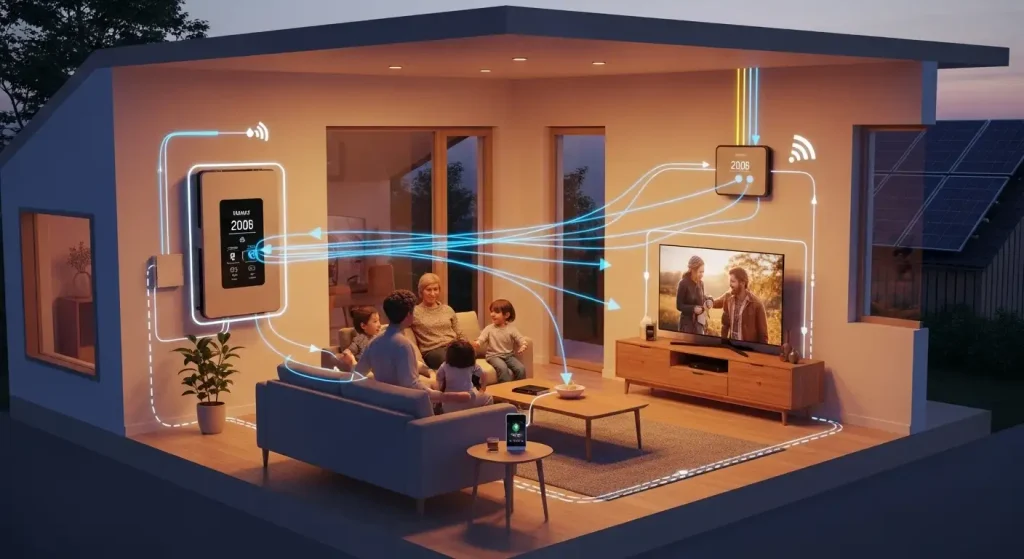
Residential energy storage systems (ESS) unlock smarter charging by syncing your EV with your home’s power flow. Here’s how it all comes together:
Solar Self-Consumption Optimization
During the day, your solar panels often produce more energy than your home needs. A residential ESS stores this excess solar power instead of sending it back to the grid. At night, when you’re ready to charge your EV, the system discharges that stored energy, allowing your vehicle to run on clean, self-generated electricity. This not only increases solar self-consumption but also reduces reliance on costly grid power during peak hours.
Peak Shaving & Load Shifting
Residential battery storage shines when it comes to peak shaving—using stored energy during high-demand periods to reduce your home’s peak load. By powering your home during peak price times, the ESS helps avoid higher Time-of-Use (TOU) rates. Meanwhile, your EV charges mostly off-peak, using either stored solar energy or lower-cost grid electricity. This load shifting balances energy use efficiently, cutting your overall electricity bill.
Load Prioritization & Management
A smart home energy management system (EMS) is key here. It balances the power draw between your home and EV charger, ensuring the total load stays within your breaker limits. This prevents breaker trips and overloads, providing seamless, safe energy flow. The EMS prioritizes critical loads and manages charging schedules, adapting in real time to your household’s energy needs and grid conditions.
Integrating these smart features, residential ESS paired with an advanced EMS offers a practical, efficient solution for EV owners. For comprehensive solutions that combine solar plus storage integration and smart load management, see how LEAPENERGY’s hybrid systems optimize home energy use with ease.
Explore LEAPENERGY’s residential energy system for smarter EV charging at home.
Technical Deep Dive: What Specifications Matter for EV Owners?
Power Output (kW) vs. Capacity (kWh)
For EV owners, power output and battery capacity are two key specs that often get mixed up but play very different roles:
| Specification | What It Means | Why It Matters for EV Charging |
|---|---|---|
| Power Output (kW) | How fast the battery can deliver energy | High power output means faster EV charging at home |
| Capacity (kWh) | Total energy stored in the battery | Larger capacity supports longer backup and daily usage |
A home battery with a high power output (say 5kW or more) can charge your EV quickly during off-peak hours. Meanwhile, proper capacity sizing ensures enough stored energy for daily commute needs and household use without stressing your system.
Battery Chemistry: Lithium Iron Phosphate (LFP)
Lithium Iron Phosphate (LiFePO4 or LFP) is the go-to chemistry for residential energy storage systems today, especially for EV owners because it offers:
- Safety: Lower risk of thermal runaway and fire than other lithium-ion types
- Stability: Maintains performance in wide temperature ranges
- Longevity: Longer cycle life, meaning the battery lasts well beyond typical warranties
This makes LFP batteries a reliable choice for daily EV charging and home energy storage.
High-Voltage vs. Low-Voltage Systems
High-voltage battery systems are becoming standard for residential ESS due to their:
- Higher efficiency: Less energy lost during charge and discharge
- Faster EV charging: Supports greater power output, optimizing your smart home power system
- Compact design: Saves space while delivering the needed performance
Low-voltage systems generally have lower upfront costs but can limit charging speed and efficiency.
Depth of Discharge (DoD) & Cycle Life
To ensure your home battery aligns with your solar panels and EV lifespan, consider:
| Specification | Ideal Range for EV Owners | Why It’s Important |
|---|---|---|
| Depth of Discharge (DoD) | 80-90% | Allows more usable energy, maximizing ROI |
| Cycle Life | 4,000+ cycles | Ensures battery will last 10+ years or more |
A deeper DoD with a high cycle life means you get consistent performance without frequent replacements—critical for protecting your investment in a residential energy storage system.
For a broader view on how battery design impacts EV range and lifespan, check out this resource on designing durable automotive-grade battery packs for long-term reliability.
Financial Analysis: ROI and Cost Reduction
Electricity Bill Savings
Residential energy storage systems (ESS) can significantly cut your electricity bills by optimizing when and how you use power. Through peak shaving and solar self-consumption, you reduce reliance on expensive grid power during peak hours. For example, your home battery system stores excess solar energy generated during the day and discharges it when electricity prices spike in the evening—leading to noticeable savings on Time-of-Use (TOU) tariff optimization. Many EV owners see bills shrink by up to 30% by balancing EV charging with stored solar energy rather than charging solely from the grid at costly times.
Protecting the Investment
A high-quality residential battery storage system doesn’t just save money—it’s designed to last. Effective thermal management systems maintain optimal battery temperature, preventing overheating and degradation. Alongside this, a reliable battery management system (BMS) monitors and safeguards the battery’s health, balancing charge and discharge cycles to extend lifespan. These features ensure your home energy storage system remains efficient and safe for years, matching the longevity of your solar panels and EV’s battery. For more about battery safety and management, the role of BMS in EV battery packs offers insightful details.
Incentives & Rebates
The upfront cost of a residential ESS can be offset with various federal and local incentives across the U.S. Programs like the Federal Investment Tax Credit (ITC) reward homeowners who install solar plus storage systems, making the switch more affordable. Many states also offer rebates or performance-based incentives focused on solar plus storage integration and backup power for critical loads, further improving return on investment. Staying informed about these options can maximize your savings while accelerating your move toward energy independence.
Investing in a home battery system today not only saves money but also future-proofs your home for smarter, more cost-effective EV charging.
LEAPENERGY Solutions: Engineered for the EV Era
Modular & Stackable Design
LEAPENERGY’s residential energy storage system is built to grow with your needs. Whether you have one EV or plan to add more, their modular battery system design allows you to easily stack additional home battery systems. This scalable approach means you can expand your home’s power storage without replacing your entire setup, making it perfect for families with multiple electric vehicles or increasing energy demands.
Safety First
Safety is a top priority with LEAPENERGY’s LiFePO4 home battery technology. Their battery safety design includes advanced thermal runaway protection and fire safety features, ensuring reliable operation even under stress. The systems are built to meet strict residential ESS certification standards, giving you peace of mind that your home power storage meets or exceeds safety requirements.
Smart Integration
Thanks to a sophisticated home energy management system (EMS), LEAPENERGY’s residential battery storage offers smart integration with your EV charger and solar setup. You get real-time energy monitoring and remote control through an easy-to-use app, allowing you to optimize solar self-consumption and time-of-use tariff savings right from your smartphone.
All-in-One Solution
LEAPENERGY simplifies installation with an integrated PCS inverter and a pre-wired, stackable design. This combination makes it faster and easier for authorized installers to set up your home battery system, delivering reliable off-grid EV charging and grid-tied energy storage without complicated wiring or bulky equipment. For more on safe, high-voltage battery technology designed for residential and EV use, check out LEAPENERGY’s guide on high-voltage battery systems for EV charging.
By offering scalable, safe, and smart energy storage, LEAPENERGY leads the way in making residential energy solutions a natural fit for EV owners who want smarter charging at home.
 English
  German
  Chinese
  Spanish