
Understanding Traditional Battery Pack Architectures
Traditional lithium-ion battery pack manufacturing relies heavily on a cell-module-pack hierarchy, where individual cells are grouped into modules before being assembled into the final pack. While this design has been standard in EV battery pack integration, it introduces multiple layers of complexity.
Why modules add complexity:
- Increased part count: Each module requires additional components like frames, connectors, and busbars, leading to a heavier and more complicated assembly.
- More assembly steps: Modules involve separate welding and testing processes, lengthening production time.
- Added weight and volume: Modules and their supportive structures increase overall battery pack weight and size, reducing energy density.
- Production challenges: The modular approach increases the chances of defects and failures due to more connections and interfaces.
- Supply chain dependencies: Procuring module-specific parts can complicate logistics and cause delays.
- Limited space utilization: Modules often leave unused gaps within the pack, reducing the effective volume for cells and thereby limiting energy density.
In essence, the traditional cell-module-pack architecture creates hurdles in battery pack production efficiency and cost, making it harder to optimize for the needs of modern EVs.
The Shift to Battery Pack Integration: Core Principles
Battery pack integration marks a major shift from traditional designs by focusing on connecting cells directly to the pack structure, cutting out the middle step of modules. This approach includes evolving technologies like Cell-to-Pack (CTP), Cell-to-Board (CTB), and Cell-to-Chassis (CTC), each streamlining how battery cells are organized and connected.
By eliminating intermediate modules, direct cell-to-pack integration simplifies the overall architecture, reducing parts and assembly complexity. This integration allows manufacturers to optimize the structural battery pack design, enhancing rigidity and durability while lowering weight.
Beyond structure, integration improves thermal management in integrated packs by enabling better heat distribution and more efficient cooling systems. It also boosts energy density by enabling tighter cell layouts and better volume utilization, leading to higher capacity within the same footprint.
These innovations not only simplify manufacturing but also enhance performance, making integrated battery packs a key driver in the future of EV battery pack integration. For more details on the benefits and design strategies, check our insights on module-to-pack integrated EV battery systems.
Key Ways Battery Pack Integration Reduces Manufacturing Complexity
Battery pack integration significantly cuts down manufacturing complexity by simplifying the overall design. By reducing the number of components by up to 40%, integration eliminates many intermediate parts like modules, connectors, and fasteners. This streamlined approach means fewer welding points and assembly steps, which not only lowers the chance of errors but also speeds up production.
With fewer parts to manage, automation becomes easier to implement, leading to up to a 50% increase in production throughput. This efficiency boost helps manufacturers scale up quickly while maintaining high quality. Plus, integrated packs simplify quality control and testing workflows, making it easier to spot defects early and improve yield rates.
This is why cell-to-pack (CTP) technology and other EV battery pack integration methods are gaining ground—they optimize manufacturing by cutting unnecessary complexity and supporting fast, reliable assembly. For a better sense of how these advancements impact production, you can explore LEAPENERGY’s expertise in streamlined lithium-ion battery pack manufacturing and integration.
Direct Cost Savings Achieved Through Integration
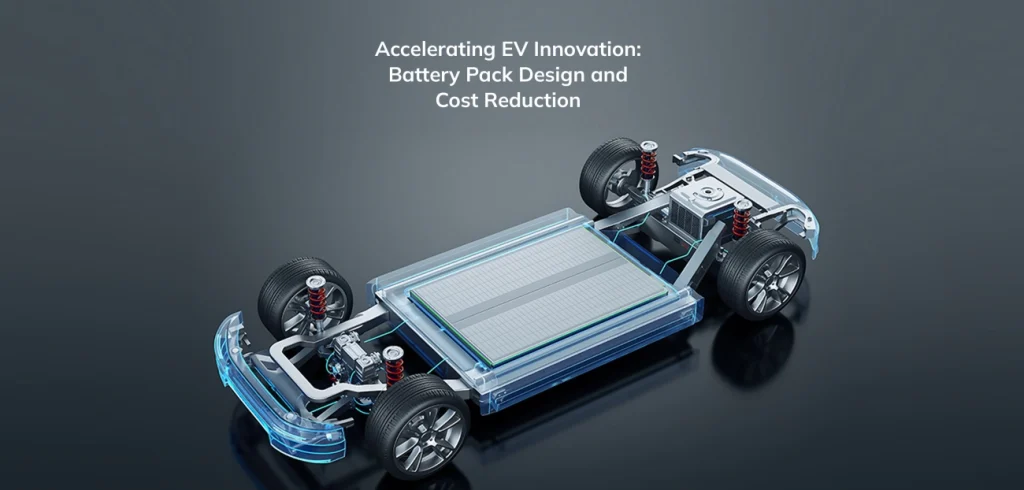
Battery pack integration significantly cuts costs by slashing the number of parts and simplifying assembly steps. Fewer components mean less material expense and lower labor costs, as manufacturers spend less time and effort putting packs together. This streamlined process also shortens production cycles, reducing manufacturing overhead and speeding up throughput.
Another key benefit is improved yield rates. With fewer connections and assembly points, the risk of defects drops, which means less waste and fewer costly reworks. Together, these savings lead to a lower cost per kWh—a crucial factor that helps make electric vehicles more affordable and competitive in the U.S. market.
For manufacturers looking to optimize lithium-ion battery pack manufacturing with efficient design and cost control, exploring advanced EV battery pack integration methods like Cell-to-Pack technology is a smart move. Companies like LEAPENERGY offer solutions that balance cost reduction with production efficiency, helping OEMs meet tight deadlines and budgets. Learn how streamlined battery module elimination can reduce EV costs in detail on LEAPENERGY’s products page.
Additional Performance and Efficiency Benefits
Battery pack integration delivers clear performance and efficiency advantages that matter to EV makers and drivers alike:
- Increased volume utilization: Integration boosts space efficiency by 15-30%, allowing more cells in the same pack size. This means better energy storage without increasing overall dimensions.
- Higher energy density: By eliminating modules, integrated designs can pack more lithium-ion cells tightly, improving gravimetric and volumetric energy density.
- Weight reduction: Fewer structural components and simplified designs reduce pack weight, directly enhancing vehicle range and handling.
- Integrated thermal management: Advanced thermal solutions built into the pack enhance safety and reliability by maintaining optimal cell temperatures and preventing overheating.
| Benefit | Impact |
|---|---|
| Volume utilization | 15-30% more cells per pack |
| Energy density | Improved kWh per kilogram & liter |
| Weight | Reduced pack weight |
| Thermal management | Higher reliability and safety |
These benefits not only improve the overall efficiency of the EV battery pack but also help drive down costs and improve vehicle performance. For those looking to maximize battery pack potential, exploring integrated designs is key.
Explore how battery pack solutions for commercial EVs optimize these advantages through smart integration and design.
Real-World Applications and Industry Examples
Major players in the EV battery market are already showcasing the benefits of battery pack integration. For instance, CATL’s Qilin pack uses advanced cell-to-pack (CTP) technology to eliminate modules, boosting energy density and simplifying assembly. Similarly, BYD’s Blade battery integrates cells directly into the pack, improving structural design and safety while cutting costs.
At LEAPENERGY, we apply these integration principles in custom high-voltage lithium-ion packs tailored for OEMs. Our approach reduces part counts and streamlines manufacturing, resulting in faster production cycles and higher yield rates. This not only helps OEMs scale efficiently but also ensures reliable performance for diverse EV applications.
Through concrete case studies, our clients have seen significant production capacity gains and benefited from LEAPENERGY’s hands-on engineering support. This level of collaboration ensures optimized battery pack design coupled with smooth integration—key factors for meeting demanding automotive standards. For more insights on how OEMs evaluate EV battery pack suppliers and the value of custom battery solutions, check our detailed guide on how OEMs evaluate EV battery pack suppliers and explore the benefits of custom vs. standard EV battery packs.
Addressing Potential Challenges and Trade-Offs
While battery pack integration offers clear benefits, it also comes with important challenges—especially around safety and maintainability. Integrated designs demand enhanced thermal runaway prevention measures and robust safety engineering since there are fewer layers separating cells from the pack level. This means manufacturers must carefully design for heat management and fail-safe mechanisms to ensure reliability.
Serviceability and long-term maintainability are other key considerations. Eliminating modules makes replacing individual cells more complex, so pack designs need to support efficient diagnostics and potential repairs without complete disassembly. That’s where LEAPENERGY excels, using advanced structural battery pack design and tailored custom EV battery integration solutions to balance safety with practicality.
By combining innovative engineering with customization services, LEAPENERGY helps OEMs overcome these challenges. Their expertise in battery pack integration, along with a strong focus on durability and safety, ensures integrated packs are both reliable in operation and easier to maintain over time. For deeper insight into their approach to battery pack safety and reliability, check out LEAPENERGY’s guide on designing durable automotive-grade battery packs for long-term reliability.
Why Partner with a Leading EV Battery Manufacturer Like LEAPENERGY
Choosing the right partner for EV battery pack integration can make all the difference. LEAPENERGY stands out with deep expertise in advanced battery pack integration, including cutting-edge cell-to-pack (CTP) technology and system-level optimization. This means they don’t just provide parts—they deliver solutions designed to simplify manufacturing and boost performance.
LEAPENERGY offers comprehensive support throughout the entire process—from initial engineering design and prototyping to full-scale production and OEM integration. Their focus on streamlined battery pack assembly helps reduce costs while improving reliability and efficiency.
With their commitment to cost-effective, high-performance battery packs, LEAPENERGY helps manufacturers meet the evolving demands of the U.S. EV market. Whether you need custom EV battery integration or support scaling up production, partnering with a top-tier automotive battery pack supplier like LEAPENERGY ensures your projects stay competitive and innovative.
Learn more about their expertise in CTP and CTC technologies and discover how leading EV battery pack manufacturers are shaping the future of electric vehicles.
 English
  German
  Chinese
  Spanish