
Understanding EV Battery Voltage Basics
When it comes to electric vehicles (EVs), voltage plays a crucial role in how the battery system performs. Most traditional EVs use a 400V architecture, meaning their battery packs operate around 400 volts nominally. This voltage is the standard baseline for many current EV powertrains, striking a balance between performance, cost, and safety.

Nominal vs. Operating Voltage Explained
It’s important to distinguish between nominal voltage and operating voltage:
- Nominal voltage is the average or typical voltage rating of a battery pack.
- Operating voltage refers to the voltage range during actual use, which can fluctuate based on charge level and load demand. For instance, a 400V system might range between about 350V to 450V in real-world driving.
Traditional 400V EV Architecture and Voltage Range
The 400V EV battery system powers most electric vehicles on the road today. It reflects a mature and widely adapted approach:
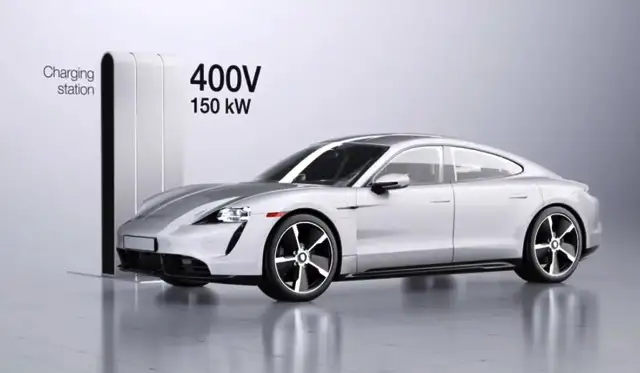
- Supports adequate charging speeds but faces limits around fast charging times.
- Requires relatively thicker cables and heavier components to carry the current needed for performance.
- Voltage range typically hovers around 350V–450V depending on state of charge and load.
Introduction to 800V EV Battery Architecture and System Integration
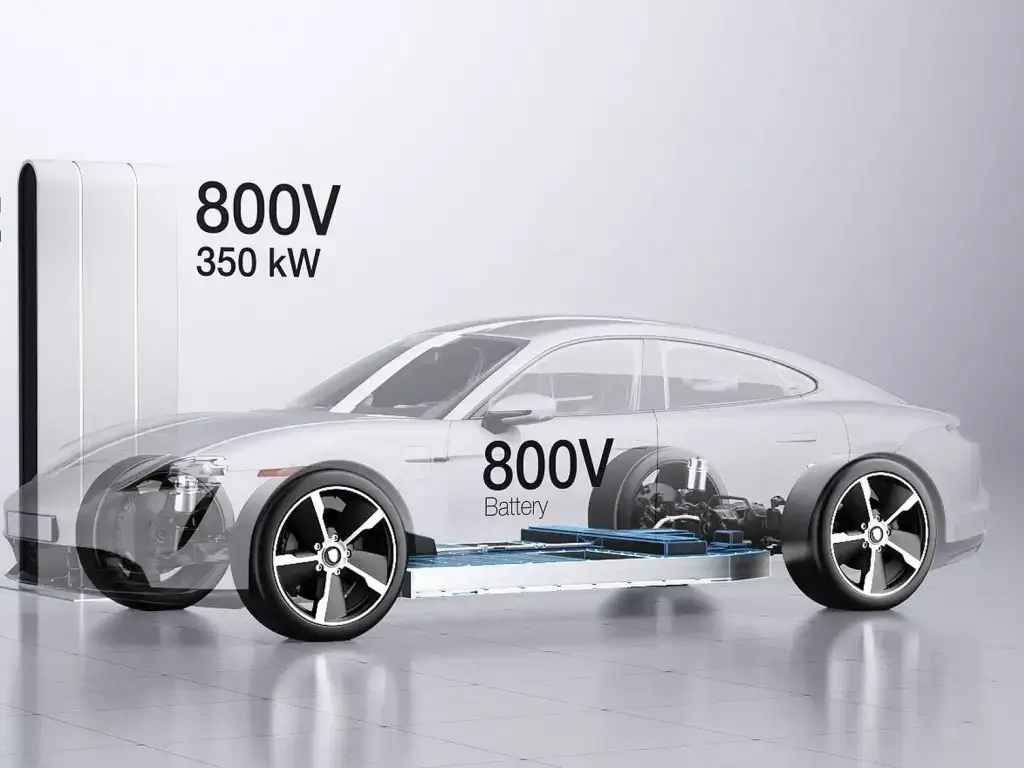
Recently, automakers have begun moving beyond the familiar 400V systems to embrace 800V EV battery systems. Doubling the voltage to 800V significantly changes the game in terms of power delivery and efficiency:
- 800V systems operate typically in the 700V to 900V range, giving ample voltage headroom.
- Higher voltage means lower current for the same power, which reduces resistive losses and allows thinner, lighter cables.
- System integration combines batteries, inverters, and chargers optimized for this voltage level, enabling ultra-fast charging and improved thermal management.
This shift to high-voltage EV battery systems is a key reason behind the move to ultra-fast EV charging, better performance, and efficiency improvements in the latest electric vehicles. Understanding this baseline helps us appreciate why 800V technology is becoming the new standard in the EV industry.
Core Technical Differences: 400V vs. 800V EV Battery Systems
At the heart of the shift from 400V to 800V EV battery systems lies the simple power formula:
Power = Voltage × Current
Raising voltage lets automakers deliver the same power with lower current. This has several big benefits:
| Aspect | 400V System | 800V System |
|---|---|---|
| Voltage Level | ~400 volts | ~800 volts |
| Current Required | Higher current | About half the current |
| Resistive Losses | Higher (I²R losses) | Reduced by roughly 75% |
| Heat Generation | More heat to manage | Less heat, easier cooling |
| Cable Thickness | Thicker, heavier cables | Thinner, lighter cables |
| Component Size | Larger components | Smaller, more compact parts |
| System Efficiency | Lower due to losses | Higher overall efficiency |
Why Does Lower Current Matter?
- Less heat means simpler thermal management, improving safety and reliability.
- Thinner cables reduce vehicle weight and free up space for better design and packaging.
- Components sized for lower current can be smaller and cheaper over time.
By reducing resistive losses, 800V systems boost overall energy efficiency — which means longer EV range and better performance. For a detailed dive into how battery pack voltage impacts system design, check out this EV battery pack guide explained.
This technical upgrade is a key reason why many automakers are moving beyond traditional 400V EV architecture toward high-voltage EV battery systems that support ultra-fast charging and enhanced driving dynamics.
Key Advantages Driving the Move to 800V
Switching from traditional 400V to 800V EV battery systems brings several clear benefits, especially for U.S. drivers who want faster, more efficient electric vehicles.
Ultra-Fast Charging Capabilities and Speed Comparison
800V systems enable much faster charging speeds by allowing higher power delivery without increasing current. This means:
- Charging from 10% to 80% in about 20-30 minutes on 800V vs. 40-60 minutes on 400V.
- Supports ultra-fast DC chargers at 350 kW+ for quick top-ups during road trips.
In simple terms, you spend less time waiting and more time driving.
Efficiency Improvements and Range Extension
800V batteries operate at reduced current for the same power output, which lowers resistive losses in cables and components. The result:
- Better overall system efficiency.
- Longer driving range for everyday use.
- Improved battery lifespan thanks to reduced heat generation.
These gains are tightly linked to improved battery pack integration, making the entire system smarter and more efficient.
Weight, Packaging Benefits: Thinner Cables and Lighter Components
Higher voltage means you can use thinner and lighter wiring because current drops significantly. This effect leads to:
| Benefit | 400V System | 800V System |
|---|---|---|
| Cable diameter | Thicker, heavier | Thinner, lighter |
| Component size | Larger | Smaller, compact |
| Vehicle weight impact | Higher | Reduced, improves efficiency |
Less weight and more compact parts help increase EV performance and free up space for other design innovations.
Enhanced EV Performance: Acceleration and Torque Boosts
With 800V architecture, power delivery to the motor is smoother and more responsive:
- Faster acceleration thanks to quick energy transfer.
- Higher torque output supports better drivability.
- Improved regenerative braking efficiency.
These perks elevate the driving experience without compromising battery life.
Long-Term Cost and Scalability Prospects
While 800V components cost more upfront, they offset expenses over time with:
- Reduced energy waste.
- Lower cooling system needs.
- Easier scalability for future EV models.
Automakers see 800V systems as a future-proof option, aligning with evolving EV battery pack production scalability and encouraging mass-market adoption.
By moving beyond 400V to 800V, automakers are unlocking a new era for electric vehicles—delivering faster charging, longer range, and better performance that perfectly suit the American market’s demand for efficiency and convenience.
Challenges and Limitations of 800V Systems
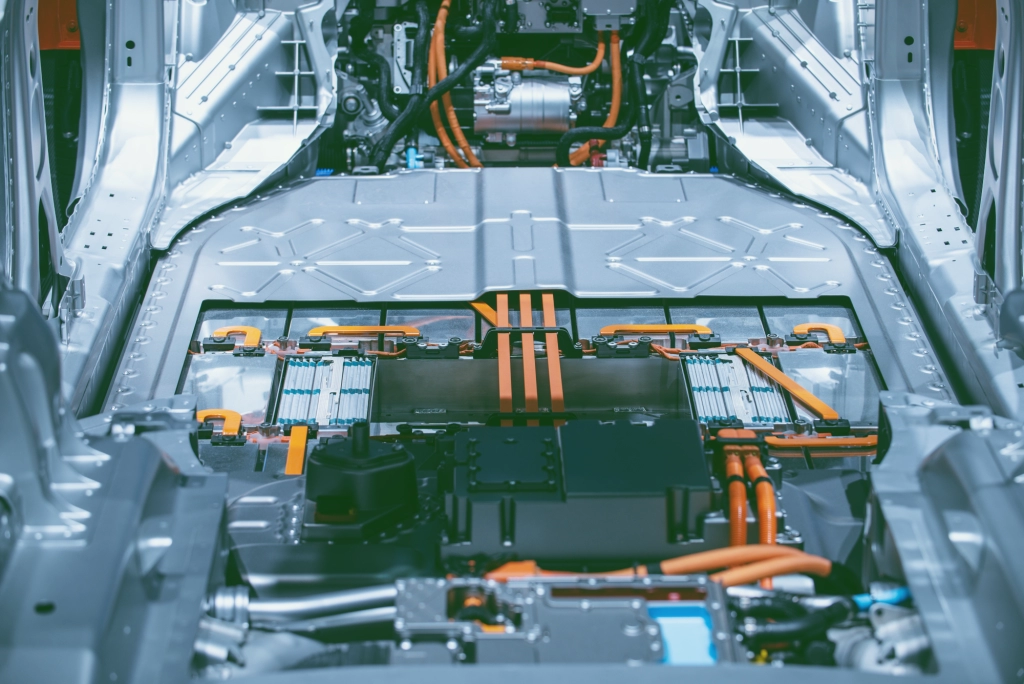
While 800V EV battery systems bring many benefits, they also come with some real challenges that can impact automakers and buyers, especially in the U.S. market.
Higher Component and Semiconductor Costs
- 800V systems require parts rated for higher voltage, which means pricier semiconductors and hardware.
- These components aren’t as common, pushing costs up compared to traditional 400V setups.
- This can increase the upfront price of EVs using 800V tech, making them less accessible for budget-conscious buyers.
Insulation and Safety Requirements
- Higher voltage leads to stricter insulation standards to protect passengers and technicians.
- Components and wiring must handle greater electrical stress, demanding more robust safety measures.
- This increases design complexity and might add weight or bulk if not carefully engineered.
Compatibility with Existing 400V Charging Infrastructure
| Aspect | 400V Chargers | 800V Systems Challenges |
|---|---|---|
| Charging Speed | Supports standard fast charging | Can’t fully exploit ultra-fast charging unless compatible |
| Adapter/Converter Need | Minimal | May require DC-DC converters or adapters to use 400V chargers |
| Infrastructure Spread | Widely available, common | Limited matching ultra-fast 800V chargers early on |
- While 800V EVs can usually charge at 400V stations with adapters, it cuts charging speed and convenience.
- The current rollout of 800V fast chargers in many U.S. regions is still limited, affecting real-world usability.
Adoption Barriers in Mass-Market and Affordable EV Segments
- Cost increases and infrastructure gaps make 800V systems less viable for low-cost EVs for now.
- Mass-market buyers often prioritize price and charging availability over ultra-fast charging or slight gains in efficiency.
- Manufacturers targeting more affordable models may hold off or use hybrid solutions before 800V becomes mainstream.
Despite these hurdles, 800V technology is steadily improving, and leading battery manufacturers are investing in solutions to bring down costs and boost safety. Understanding these challenges helps explain why the shift to higher voltage systems is happening gradually in the U.S. market.
Real-World Examples and Industry Adoption

The shift to 800V EV battery systems isn’t just theory—several leading automakers are already making the move. Pioneering electric vehicles like the Porsche Taycan and Audi e-tron GT showcase the benefits of 800V architecture with ultra-fast charging and enhanced performance. Similarly, the Hyundai Ioniq 5 and Kia EV9 utilize the industry’s emerging 800V platforms, like Hyundai’s E-GMP, to deliver impressive efficiency gains and reduced charging times. The Lucid Air also stands out with its advanced 800V system offering remarkable range and speed.
On the platform side, Volkswagen’s PPE and BMW’s Gen6 architectures are designed to integrate 800V battery systems, signaling that mainstream adoption is accelerating. These automakers have clear transition plans to gradually phase in higher-voltage EV powertrains, driven by the desire to improve charging infrastructure compatibility and boost overall vehicle performance.
For those interested in deeper insights on battery pack design that supports these system upgrades, the detailed guide on modular vs. monolithic EV battery pack designs offers valuable information on how battery architecture choices impact system integration and scalability. Likewise, understanding common pitfalls in OEM EV battery packs can help clarify challenges faced during this voltage transition, as outlined in the resource on OEM EV battery pack mistakes.
As more manufacturers commit to 800V systems, the market is set to see wider availability of faster, lighter, and more efficient electric vehicles in the near future.
Impact on Charging Infrastructure and Future Outlook
The shift to 800V EV battery systems is shaking up the charging infrastructure landscape, especially with the rise of high-power DC chargers delivering 350 kW or more. These ultra-fast chargers are crucial because 800V architecture allows EVs to handle higher voltage and current levels safely, slashing charging times dramatically compared to traditional 400V systems. This faster charging capability is a big deal for drivers who want quick top-ups during road trips or busy days.
On a global scale, the rollout of 800V-compatible charging stations is accelerating, but one key strategy is ensuring backward compatibility with existing 400V EVs. This helps avoid costly infrastructure overhauls and supports a smoother transition to higher-voltage systems. Automakers and charging networks are collaborating closely to expand access to 800V fast chargers in major markets, which will help pave the way for widespread adoption.
Looking ahead, experts forecast that 800V technology will dominate the EV market because of its clear benefits in speed, efficiency, and performance. As more vehicles from top brands embrace 800V platforms, the charging ecosystem will evolve to support higher power levels, making it easier for U.S. drivers to enjoy ultra-fast charging and longer ranges. For a deeper dive into how global trends shape EV battery tech, check out the up-to-date global EV battery pack market outlook.
 English
  German
  Chinese
  Spanish